Over 3,700 Money Laundering, FEMA Cases Under The Scanner Post Note Ban
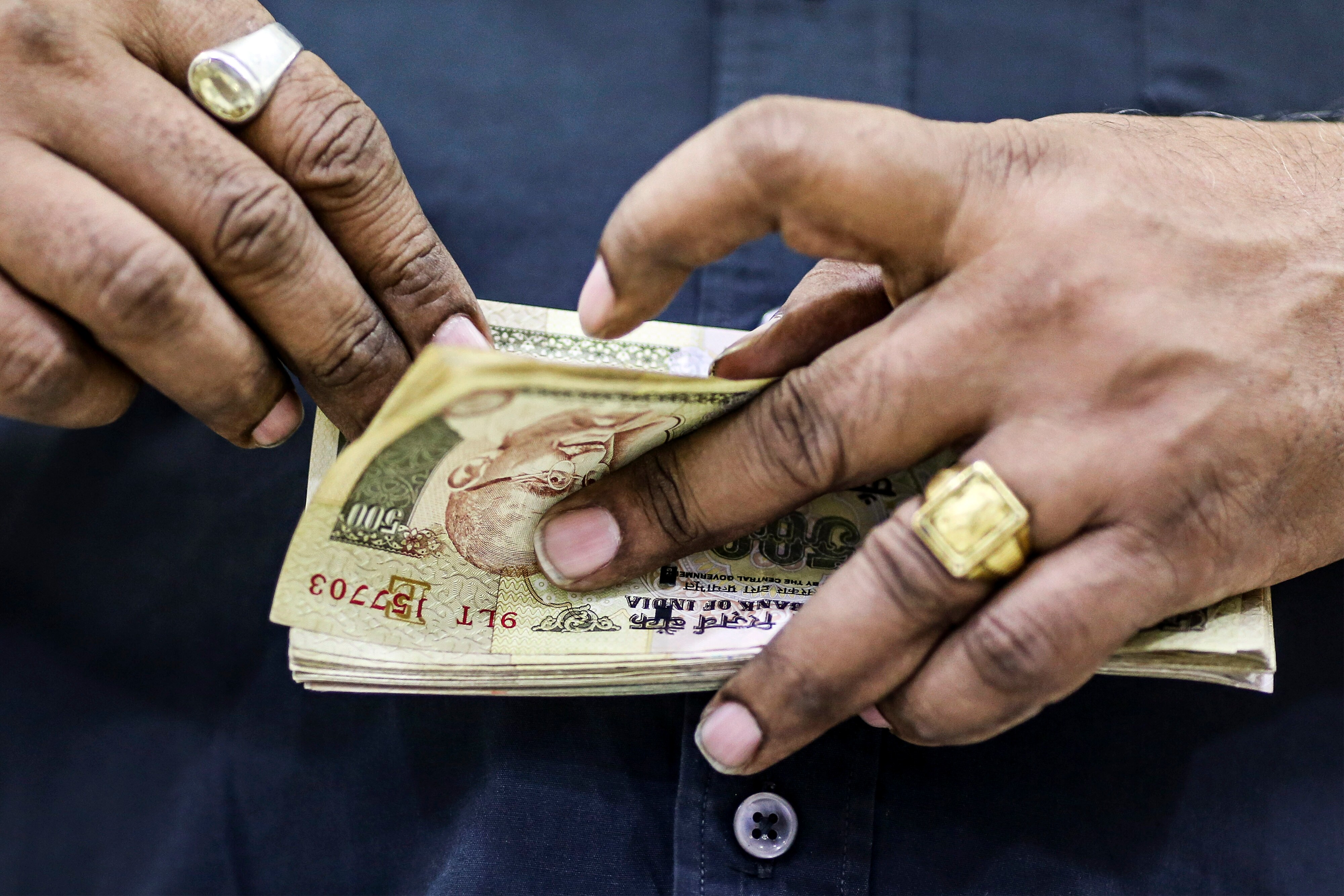
The Enforcement Directorate is investigating over 3,700 money laundering and hawala transaction cases, involving tainted assets worth Rs 9,935 crore, as part of its action against black money generated post demonetisation, an official report today said.
The central probe agency also carried out a “risk assessment” of these cases, registered post the note ban on Nov. 8 last year, and found that a majority of (43 percent) the financial crimes were carried out by perpetrating bank frauds and cheating financial institutions through a maze of shell firms.
The other category of post-note ban financial crimes being probed by the Enforcement Directorate include cases of corruption (31 percent), drugs and narcotics trade (6.5 percent), arms and explosives (4.5 percent) and others (8.5 percent).
Also Read: India Cancels 2.24 Lakh Suspected Shell Companies Post Demonetisation
“The head of this demon (of black money) is the money of corruption and illegal wealth acquired through banking frauds,” the report said.
A general review of the cases post demonetisation show that businesses and professionals have collaborated with each other to use shell companies for converting illegal wealth into legitimate assets.Enforcement Directorate Report
The agency was “committed to work against the menace of black money and corruption and to bring professionalism in its working,” ED Director Karnal Singh told newswire PTI .
The agency had registered and was probing a total of 3,758 cases (3,567 under forex laws and 191 under the anti- money laundering act), issued 777 show cause notices and attachment orders and has conducted 620 searches since Nov. 8 last year to September 2017.
The total value of assets and forex violation amount involved in these cases stands at Rs 9,935 crore with the agency attaching assets worth Rs 5,335 crore under the Prevention of Money Laundering Act (PMLA) and issuing notices under the FEMA involving an amount of Rs 4,600 crore, the report said.
The ED, that functions under the Union Finance Ministry, study also found that financial institutions like banks were the most “vulnerable” to money laundering crimes at 48 percent followed by real estate at 35 percent, precious metals like gold investments at 7 percent and the rest 10 percent in other sectors.
The agency, that enforces the PMLA and the Foreign Exchange Management Act (FEMA) in the country, also arrested 54 people postdemonetisation as part of these investigations.
The ED found that the “proceeds of crime were laundered mainly through financial institutions (like banks) using shell companies and real estate.”
Even in real estate sector the money for investments has been coming through financial institutions using a maze of shell companies. The shell companies, therefore, are the major modus operandi through which money is laundered.Enforcement Directorate Report
The agency, according to official sources, had a number of politicians and bureaucrats under its scanner as part of these investigations.
The probe in these cases involve scrutiny of voluminous paper documents and electronic records. Some of the cases require involvement of multiple agencies and the results would show sooner than later, they added.

The agency has also chronicled the various methods used to launder black funds like conversion of stash funds with the help of bank officials, hiring services of professionals like chartered accountants, investment in gold, bullion and jewellery and advance remittances against imports.
The other most noted money laundering techniques used post demonetisation involved investment of tainted assets in foreign currency, real estate and benami assets, the report said.
The ED had conducted country-wide searches against shell firms early this year and officials said more action against their beneficiaries and operatives would take place in the coming days.
“Most of these firms have dummy directors. They sign balance sheets and other documents on the instructions of the operators (called entry operators). Many such firms are either registered at fictitious addresses or at one-room locations,” the report added.
Also Read: Demonetision: Everything You Need To Know About The Note Ban And Its Impact - BQ Explains

-
Signature Play: The Classic Cocktail Is Dead. Or Is It?

Classic cocktails are disappearing from India's cocktail menus. But they're still being ordered, taught to bartenders and borrowed from. So, who's really having the last drink?
-
A New Samvat Wishlist: Inclusive Prosperity And Human Development
India has strengthened its economic foundations through infrastructure, digital access and enterprise. Its next growth chapter must deepen productivity, create better livelihoods and widen participation in prosperity.
-
Love, Sex Aur Dhokha: The Audacious Plot To Spy On Jensen Huang
A Taipei dinner, a Singapore chip buyer and a suspected Chinese asset: inside the alleged spy operation that got close to NVIDIA's Jensen Huang.
-
Ten Things I Learnt This Samvat
Patience can be a trap. Cheap stocks can stay cheap. Leverage can wipe you out. What did Samvat 2082 teach us? Niraj Shah writes on 10 lessons from the year gone by.
-
Talking Points This Week: Tech Nerves, FII Buying, And A Faraway Banking Shock
The global markets are not shining this Diwali. The exception in the large markets is, India.
-
Midterm Rally Lasted A Day. The Hard Reality Of A Divided US May Last Two Years | Opinion
Between a contested AI boom, a debt ceiling that arrives in 2027 and a president with every incentive to act alone, the next two years may prove more volatile than the first day's rally suggests.
-
Blue Wave Will Derail the AI Trade but Won't Dismantle the AI Era | Unhedged Position
The Democrats' sweep of the US Congress will see politics collide with economic forces both over the long and short term.
-
It's Time To Take The GST Council's Bet On Trust Global
Payment records can prove India's services exports, and clear, proportionate rules can bring foreign digital sellers into the tax net.
-
Opinion | India at 38: From Innovation Overperformer to Innovation Powerhouse
India now has 453 VC-backed deep science startups, 18 of them late-stage, after 117 percent growth since 2020. Laurus Labs, at USD 9.3 billion, is the most valuable deep science company in any middle-income economy outside China.









