HUL CEO Sanjiv Mehta Says Successor Faces Rush To Tap Giant Market
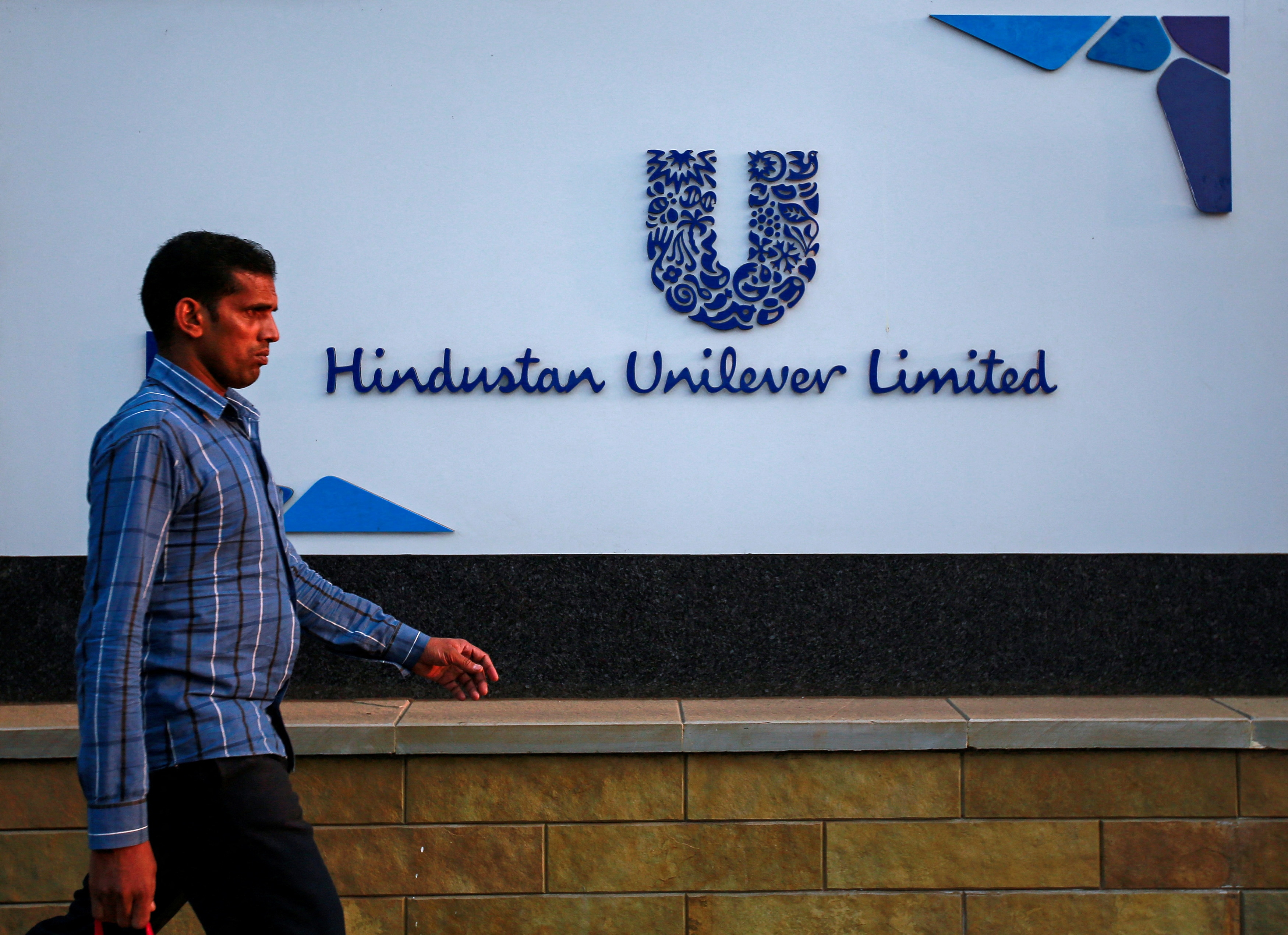
(Bloomberg) -- Unilever Plc's departing India chief cautioned that his successor will have to navigate increasingly heated competition, as global giants to powerful domestic tycoons — including Mukesh Ambani and Gautam Adani — race to get a foothold in the country's fast-growing consumer market.
International corporates are turning their attention to India, while large local firms have “big aspirations” to expand their reach, said Sanjiv Mehta, managing director and chief executive officer of Hindustan Unilever Ltd. Smaller companies and startups catering to niche segments also pose a potential threat to the maker of Dove soap, Lipton tea and Magnum ice creams, he said.

Mehta hands over the reins to fellow Unilever veteran Rohit Jawa later this month, at a time of intense investment interest in India. Local billionaires Ambani and Adani, as well as conglomerates like Tata Group, are expanding their reach into household staples to tap into its huge population, which may have already surpassed China as the world's most-populous nation.
That's enticing major global brands too, with Amazon.com Inc. planning to invest $12.7 billion in cloud infrastructure in India by 2030 and Apple Inc. considering three new stores. The South Asian nation is also making inroads in its push to challenge China's manufacturing dominance, particularly in chips and electronics, and is looking to draw more firms seeking to diversify their supply chains with ‘China-plus-one' strategies.
“Competition, we have to be absolutely clear, is going to keep increasing,” Mehta, 62, said in an interview at the company's headquarters in Mumbai. “There will be very few multinationals in whose strategy India would not feature right on top. Every big company would like to double down on it,” he said without elaborating on specific companies.
‘Inflection Point'
Mehta reiterated a prediction that India will inevitably become Unilever's largest market by revenue, potentially sooner than next decade. The company reported Indian turnover — a measure that comprises sales of goods after a deduction of discounts, sales taxes and estimated returns — of 6.87 billion euros ($7.4 billion) in 2022, trailing only the US's 12.1 billion euros.
“India is at an amazing inflection point,” Mehta said. “There are many things that are stacking up in the country's favor.”
Despite the broader, positive outlook for India, the company faces short-term challenges. Persistently high inflation has seen a lopsided post-pandemic recovery between its more affluent urban markets and rural areas, where about 70% of the population lives. Sector-wide rural market volume growth in the quarter through March was down 3% compared to last year, and Mehta warned that demand outside of cities will remain below pre-Covid levels for the coming year.
“Prices have to go down, deflate, and then there would be a capacity for the consumers to consume,” he said. “There has always been disparity of income in India — that's one of the challenges India has going forward. It is not just about growing the economy, but how do we have inclusive growth?”
Crisis Management
Mehta has spent more than three decades at the global consumer goods giant, more than quadrupling Hindustan Unilever's market capitalization to $76 billion since becoming CEO in 2013. He's also helmed almost a dozen acquisitions, including the purchase of GlaxoSmithKline Consumer Healthcare Ltd. — one of India's biggest household-goods deals.

Crisis management has been a defining feature of his career, even back in its earliest days. While working at Union Carbide India Ltd. in his 20s, he was involved in the firm's response to its gas-leak disaster in Bhopal that killed at least 3,800 people. In later posts at Unilever, where he headed up divisions in Bangladesh, North Africa and the Middle East, he navigated heightened anti-Western sentiment in the early 2000s and 2010s.
His tenure as Unilever's India chief was buffeted by multiple black swan events, including Prime Minister Narendra Modi's abrupt banknote demonetization in 2016, Covid chaos and the ensuing economic ructions. Meanwhile, in 2020 the firm renamed Fair & Lovely, a melanin-suppressing face cream that's one of the firm's best-sellers in India, after criticism it was promoting deeply entrenched concepts of Indian beauty that sees paler skin as desirable.
But Mehta's enduring legacy is likely to be his upending of Unilever's one-size-fits-all approach to India, that saw him break up its four-countrywide divisions into more than a dozen decentralized units.
“India is not a homogeneous country — we were not recognizing the heterogeneity and consequently the potential,” Mehta said.
‘Big Shoes'
That strategy has been replicated across most large goods companies in India, Jefferies analysts wrote in March when Mehta's retirement was announced. “While big shoes to fill, Sanjiv expects momentum to continue under Rohit Jawa, a long-timer with the group,” they said.
Jawa started as a management trainee with Unilever in 1988, and most recently was chief of transformation in London. He's previously held senior roles across Asia, and helped build up the China unit to the firm's third biggest business globally.
As for Mehta, he's in talks for a number of new opportunities that he expects to firm up in coming months. He's already a director at Air India Ltd., and will join French dairy giant Danone's board in July. “I'm not hanging my boots, I'm changing my socks,” he said.
And, despite rising competition in the consumer sector, Mehta's expectations for Unilever and Jawa are upbeat. “India's consumption story is just unfolding,” he said. “The aspirations of consumers are moving up everywhere.”
More stories like this are available on bloomberg.com
©2023 Bloomberg L.P.

-
Getting To Work Costs Women More | The Reason Why

It is not just about women paying more than men. It is about women paying much more in cities than in villages.
-
AI Bias In Investing Cannot Be Eliminated, But It Can Be Governed
Framing is a particularly important example as identical financial information presented in terms of gains rather than losses can lead an LLM to reach a different assessment.
-
Joining The Dots | Dark Skies, Steady Diya: Why Hope Holds This Diwali
With war, a weak rupee and foreign outflows weighing on sentiment, policymakers at the NDTV World Summit and market veterans at NDTV Profit Ignite: Diwali Edition offered the same advice: stay invested and filter out the noise.
-
The Curious Case of Equitas Small Finance Bank And A CEO Who Quit For Stock
PN Vasudevan believes persistent investor concerns over a perceived conflict of interest had become a governance overhang on Equitas Small Finance Bank's stock, even as the lender improved profitability and asset quality.
-
Talking Points This Week: AI Cash Burn, A Tiger Comeback And An India That Still Finds Its Own Path
India is not immune to higher oil or tighter global liquidity, yet its earnings base is broader, its domestic policy levers are still available.
-
Foreign Investors Own Half Of HDFC Bank and ICICI Bank. An LTCG Cut Could Matter Most Here
Foreign portfolio investors have US$115 billion parked in HDFC Bank, ICICI Bank. If the government cuts long-term capital gains tax, Jefferies says returning foreign money could land here first.
-
'Never Seen This Level Of Negativity': Sandeep Tandon Says The Next Rally May Be Closer Than You Think
Veteran investor Sandeep Tandon says foreign selling is easing, large-caps are due a comeback and mid-caps are crowded, while he turns positive on gold, power and pharma this Diwali.
-
Indians Stay With Family, Not In Hotels | The Reason Why
India still lacks enough clean, reliable and affordable hotels for budget-conscious travellers.
-
The Economic Imperative: Analysing The Material Driving Force Behind India-Canada Strategic Reset
This economic complementarity is further reinforced by deep institutional investment ties and talent mobility, which form the bedrock of the bilateral framework.
-
Medicine Pricing: Where Must Profit Stop?
India must confront excessive margins, hidden incentives and regulatory gaps that threaten the integrity of medicine.










