Outgoing SEBI Chief Ajay Tyagi On NSE Co-Location Probe, Governance And Unfinished Business
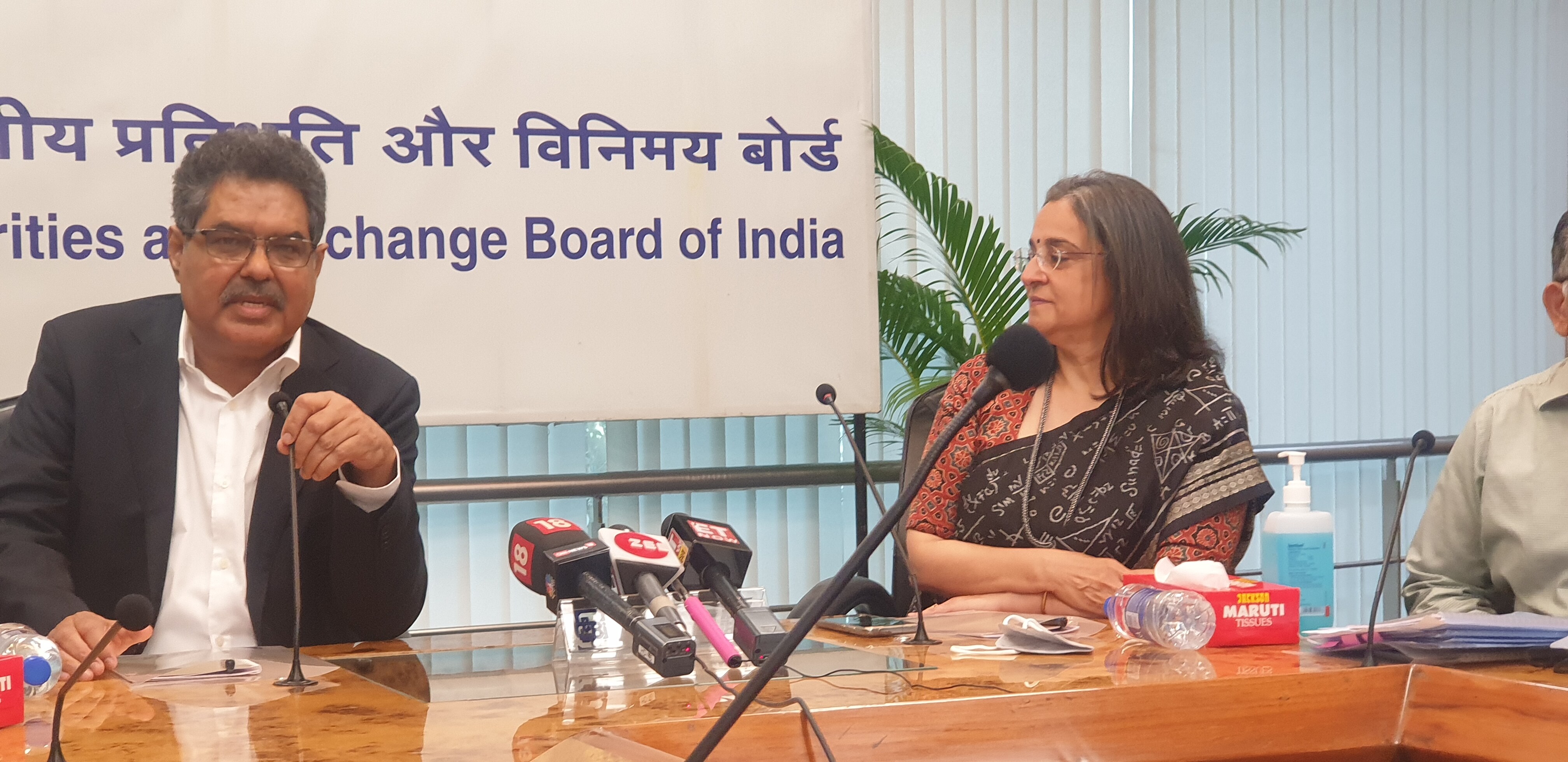
Ajay Tyagi gave way to Madhabi Puri Buch, who took charge as the tenth SEBI chief to become the first woman to head the markets regulator.
As he handed over the reins, Tyagi, for the first time, opened up about the NSE co-location probe that eventually led the regulator to identify governance issues at India's largest exchange. He also discussed enhancing governance in boardrooms and listed three unfinished agenda points.
NSE Order
In 2015, the Securities and Exchange Board of India had received a complaint alleging that a few high-frequency traders or brokers used the National Stock Exchange's system to their advantage via an arrangement with the bourse's staff.
At his last press meet as the chief of the regulatory body, Tyagi indicated that the investigation was sidetracked and the main issue got buried under the "burden of Yogi".
SEBI, he said, tried in right earnest. It started investigations on co-location which was a complex issue. “We came out with an order within our remit and our understanding," adding that the penalties imposed then were "perhaps the highest among any similar orders.”
“The adjudicating officer must show application of mind while penalising,” Tyagi noted. The regulator's order was criticised by the Securities Appellate Tribunal.
Tyagi said there are other enforcement agencies that have their own mandate. “Let other agencies come out with their order. Maybe SEBI missed something.”
Governance
SEBI has received considerable pushback on the issue of separation of chairman and managing director postx.
“We gave four years to comply on this front. At the end, just 56% of the companies complied. We received representation from industrialists and industry bodies. We need to look at practicality of implementing the order,” Tyagi said.
That forced the regulator to make the rule a matter of voluntary compliance. “Well, HUL went ahead to separate the post after SEBI made it voluntary.”
Tyagi also noted that public sector units have not been able to meet governance standards. PSUs and private companies should have the same level of regulations once they are listed, he said.
Unfinished Businesses
Tyagi listed three things that remained incomplete—better enforcement, expansion of bond market and commodity derivatives market.
Enforcement including investigation and adjudication: the pace at which SEBI has moved was “slow”, and he would have liked it much quicker.
Commodity markets: lack of policy clarity from the government did not allow expansion of the market.
Bond market: Though more than 8 lakh crore of bonds were issued, the depth of the market is limited only to AAA companies. SEBI failed to expand the depth to lower-rated issuers, he said.

-
Signature Play: The Classic Cocktail Is Dead. Or Is It?

Classic cocktails are disappearing from India's cocktail menus. But they're still being ordered, taught to bartenders and borrowed from. So, who's really having the last drink?
-
A New Samvat Wishlist: Inclusive Prosperity And Human Development
India has strengthened its economic foundations through infrastructure, digital access and enterprise. Its next growth chapter must deepen productivity, create better livelihoods and widen participation in prosperity.
-
Love, Sex Aur Dhokha: The Audacious Plot To Spy On Jensen Huang
A Taipei dinner, a Singapore chip buyer and a suspected Chinese asset: inside the alleged spy operation that got close to NVIDIA's Jensen Huang.
-
Ten Things I Learnt This Samvat
Patience can be a trap. Cheap stocks can stay cheap. Leverage can wipe you out. What did Samvat 2082 teach us? Niraj Shah writes on 10 lessons from the year gone by.
-
Talking Points This Week: Tech Nerves, FII Buying, And A Faraway Banking Shock
The global markets are not shining this Diwali. The exception in the large markets is, India.
-
Midterm Rally Lasted A Day. The Hard Reality Of A Divided US May Last Two Years | Opinion
Between a contested AI boom, a debt ceiling that arrives in 2027 and a president with every incentive to act alone, the next two years may prove more volatile than the first day's rally suggests.
-
Blue Wave Will Derail the AI Trade but Won't Dismantle the AI Era | Unhedged Position
The Democrats' sweep of the US Congress will see politics collide with economic forces both over the long and short term.
-
It's Time To Take The GST Council's Bet On Trust Global
Payment records can prove India's services exports, and clear, proportionate rules can bring foreign digital sellers into the tax net.
-
Opinion | India at 38: From Innovation Overperformer to Innovation Powerhouse
India now has 453 VC-backed deep science startups, 18 of them late-stage, after 117 percent growth since 2020. Laurus Labs, at USD 9.3 billion, is the most valuable deep science company in any middle-income economy outside China.









