Opinion: The World's Best Stablecoin Has Advice For Newbies
The celestial algorithm that keeps the moon in its orbit around the earth clearly works a lot better than the one that governed Luna and Terra. The cryptocurrency pair's collapse last week has put a question mark on the very premise of stablecoins: stability.
TerraUSD, or UST, was pegged to the dollar not by holding reserve assets in the U.S. currency but by the logic of arbitrage — the day-to-day pressure on the fixed price of the cryptocurrency was meant to be absorbed by a change in the quantity of its sister coin, Luna.
When Luna was valuable — it touched an all-time high of $119 just last month — it could support UST. But once UST skidded off the peg, speculators knew that arbitrageurs would buy it on the cheap in the market and swap it for Luna using Terra Station's protocol. The supply of Luna would explode and its price collapse.
Sure enough, on May 10, the market value of Luna dipped to less than half of UST's capitalization, meaning there was no feasible way to redeem all UST coins at par, according to Amit Chaudhary, head of decentralized finance research at Polygon and Ganesh Viswanath-Natraj, a finance professor at Warwick Business School. From that point on, the demise of the peg became a self-fulfilling prophecy.
Does this meltdown imply that stablecoins can never be stable? Not really. It's probably a warning against learning the wrong lessons from the world's most successful stablecoin, one that has come out unbroken through multiple crises: the Hong Kong dollar.

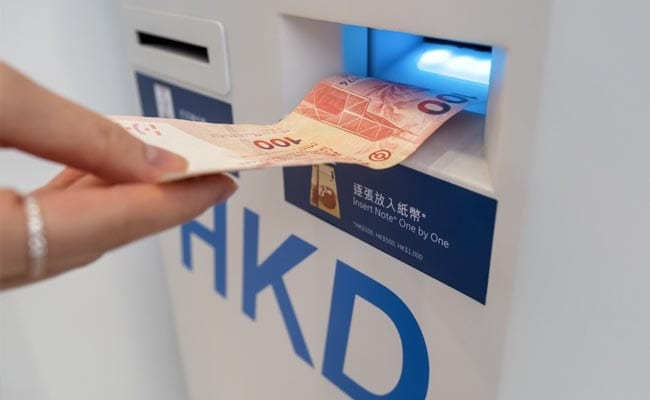
Pegged to the US dollar for nearly four decades, the currency in the Asian financial center is a stablecoin, albeit of the paper variety. Most days it relies — just like UST — on arbitrage to hold its value at 7.8 to the dollar. But there are two key differences. The Hong Kong Monetary Authority runs a pure currency board. All of HKMA's monetary base is backed 110% by US dollar assets. Second, while fixing the exchange rate, the authority deliberately lets interest rates float freely to absorb pressures on the peg. When the local currency gets sold off, there's a capital flight from Hong Kong. But that automatically raises interest rates enough to lure buyers back.
Terra worked differently. For one thing, the UST peg was “under-collateralized.” The Luna Foundation Guard, the nonprofit that acts as the network's treasury, says it held 80,394 Bitcoin on May 7. That ammunition, worth almost $3 billion, was almost fully spent in just a few days. Yet, the rescue mission was ultimately unsuccessful.
What's more, the network didn't leave interest rates to demand and supply: It attracted new capital even in normal times by offering a near 20% yield on UST deposited into Anchor Protocol, the main DeFi lending application on the blockchain.
Successful currency boards stay clear of messing with the price of money. Hong Kong has cared about interest rates only in rare circumstances, like during the Asian Financial Crisis in August 1998. Back then, hedge funds had raised HK$30 billion ($3.8 billion) from the debt market by swapping their US dollars. They had also bet on Hong Kong stocks to fall. Their goal was to dump their hoard of local currency, triggering automatic US dollar sales by the HKMA to suck out liquidity and stabilize the peg. The resultant spike in local interest rates would have crushed stocks, handing hedge funds a profit of HK$3.6 billion on a 1,000-point drop in the Hang Seng index within 100 days. (It was a HK$4 billion bet, and the funds' borrowing cost was HK$4 million a day.)
That's when Hong Kong, rather controversially, put its reputation for laissez faire on the line and dipped into its accumulated fiscal reserves to buy $15 billion of stocks in the second half of August, forcing speculators to leave with heavy losses. The city was more than prepared to live with high interest rates — a resolve it demonstrated in the prolonged period of high unemployment and deflation that lasted all the way to the 20th anniversary of the currency peg in 2003. But it didn't want the economic logic of the peg exploited to cause a self-fulfilling financial crisis.
Perhaps the Terra project got its priorities wrong. “If Bitcoin's contribution to cryptocurrency was immutability, and Ethereum expressivity, our value-add will be usability,” co-founder Do Kwon and others had written in their April 2019 white paper. When it comes to people using a currency, governments have an in-built advantage over the private sector. As long as Hong Kong collects taxes in the local dollar, there will be demand for it. Trying to drum up business with 20% yield on deposits may have bought Luna and Terra usability — but at the cost of stability.

-
Getting To Work Costs Women More | The Reason Why

It is not just about women paying more than men. It is about women paying much more in cities than in villages.
-
AI Bias In Investing Cannot Be Eliminated, But It Can Be Governed
Framing is a particularly important example as identical financial information presented in terms of gains rather than losses can lead an LLM to reach a different assessment.
-
Joining The Dots | Dark Skies, Steady Diya: Why Hope Holds This Diwali
With war, a weak rupee and foreign outflows weighing on sentiment, policymakers at the NDTV World Summit and market veterans at NDTV Profit Ignite: Diwali Edition offered the same advice: stay invested and filter out the noise.
-
The Curious Case of Equitas Small Finance Bank And A CEO Who Quit For Stock
PN Vasudevan believes persistent investor concerns over a perceived conflict of interest had become a governance overhang on Equitas Small Finance Bank's stock, even as the lender improved profitability and asset quality.
-
Talking Points This Week: AI Cash Burn, A Tiger Comeback And An India That Still Finds Its Own Path
India is not immune to higher oil or tighter global liquidity, yet its earnings base is broader, its domestic policy levers are still available.
-
Foreign Investors Own Half Of HDFC Bank and ICICI Bank. An LTCG Cut Could Matter Most Here
Foreign portfolio investors have US$115 billion parked in HDFC Bank, ICICI Bank. If the government cuts long-term capital gains tax, Jefferies says returning foreign money could land here first.
-
'Never Seen This Level Of Negativity': Sandeep Tandon Says The Next Rally May Be Closer Than You Think
Veteran investor Sandeep Tandon says foreign selling is easing, large-caps are due a comeback and mid-caps are crowded, while he turns positive on gold, power and pharma this Diwali.
-
Indians Stay With Family, Not In Hotels | The Reason Why
India still lacks enough clean, reliable and affordable hotels for budget-conscious travellers.
-
The Economic Imperative: Analysing The Material Driving Force Behind India-Canada Strategic Reset
This economic complementarity is further reinforced by deep institutional investment ties and talent mobility, which form the bedrock of the bilateral framework.
-
Medicine Pricing: Where Must Profit Stop?
India must confront excessive margins, hidden incentives and regulatory gaps that threaten the integrity of medicine.










