RBI's Autonomy Takes Another Hit As Viral Acharya Heads For Exit
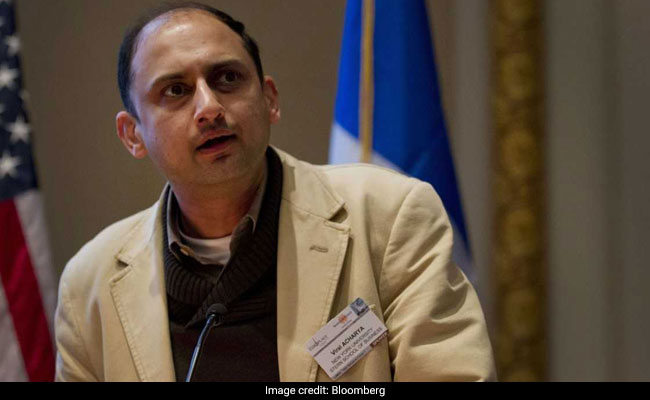
Viral Acharya's departure as a deputy governor of the Reserve Bank of India is worrisome, though not altogether surprising.
Last October, Mr Acharya delivered a hard-hitting speech on central bank independence. While that ostensibly dealt with Argentina in 2010, the thinly veiled similarity with Delhi's plan to raid the Reserve Bank of India's balance sheet didn't fool anyone, least of all an embarrassed and angry government.
A standoff over the government's intentions was temporarily resolved by pushing to a panel of experts the question of whether the RBI had excess capital and could return some of it to the finance ministry. That didn't prevent the central bank from losing autonomy in other ways. Governor Urjit Patel abruptly left in December, and was replaced by a former civil servant. The scope for dissent on the RBI's six-member monetary policy committee, of which Mr Acharya was a member, shrank.

Nowadays, the ministry and the central bank are mostly singing from the same prayer book. And that may not be a bad thing in the short run considering that a liquidity-constrained economy has staggered under an unfolding shadow-banking crisis, something that an inflation-focused RBI almost completely missed. Even Mr Acharya, who was arguing his dissenting position of "no-rate-cut" as late as April, reluctantly cast his vote with the majority when it lowered benchmark borrowing costs again in June.
The RBI isn't blameless. Yes, the government has played fast and loose with GDP data; it shied away from reforming the governance of troubled state-run banks, and didn't like it when the RBI, as the banking regulator, tried to discipline them. Delhi also saddled the monetary authority with a chaotic currency ban. Yet the central bank's own repeated modelling failures and maladroit supervision of financial firms have also weakened it.
The efficacy, and indeed the very survival, of the country's fledgling inflation-targeting regime is in doubt. Raghuram Rajan, the former governor who originally proposed the framework, wanted stable inflation expectations at home to spur greater use of the Indian currency abroad, leading to a permanent drop in the country's cost of capital. That longer-term goal may also get jettisoned.
For now, all this may not matter. With the U.S. Federal Reserve looking set to reduce rates, India, too, can afford to be adventurous with monetary policy to help paper over the cracks in its shadow banks. If that revives even an impression of growth, global investors will come in droves, especially when there's not much yield anywhere else.
However, this is the third hasty departure in three years of a top-ranking Indian central bank official who openly disagreed with Delhi. If perfect ideological consonance with a fiscally irresponsible government - a structural feature of India regardless of who's in power - becomes a prerequisite for a leading role at the monetary authority then one day, when markets are less forgiving, India will find itself lacking in credible institutions.
Mr Acharya says he's resigning six months prematurely for personal reasons, which may include a desire to rejoin the faculty of New York University for the fall term, according to reports in media.
But if the government goes ahead and helps itself to a dollop of the central bank's capital, investors will draw their own conclusions. Sooner or later, the "wrath of financial markets" awaits those that emasculate such an important regulatory institution, as Mr Acharya said in his October speech. It's a warning that may come back to haunt Delhi.
(Andy Mukherjee is a Bloomberg Opinion columnist covering industrial companies and financial services. He previously was a columnist for Reuters Breakingviews. He has also worked for the Straits Times, ET NOW and Bloomberg News.)
Disclaimer: The opinions expressed within this article are the personal opinions of the author. The facts and opinions appearing in the article do not reflect the views of NDTV and NDTV does not assume any responsibility or liability for the same.

-
India's Troika Of Good Luck | Joining The Dots

A weaker Trump, a cooling AI trade and resilient earnings have put Indian markets back in favour. Rising inflation could spoil the party.
-
Talking Points This Week: Leadership Shock At Nvidia, Earnings Strength, And The Fog Over Hormuz
The Anthropic IPO pricing and first trading day, Nvidia's upcoming earnings, and any fresh signals from Iran will set the tone for the following week.
-
Signature Play: The Classic Cocktail Is Dead. Or Is It?
Classic cocktails are disappearing from India's cocktail menus. But they're still being ordered, taught to bartenders and borrowed from. So, who's really having the last drink?
-
A New Samvat Wishlist: Inclusive Prosperity And Human Development
India has strengthened its economic foundations through infrastructure, digital access and enterprise. Its next growth chapter must deepen productivity, create better livelihoods and widen participation in prosperity.
-
Love, Sex Aur Dhokha: The Audacious Plot To Spy On Jensen Huang
A Taipei dinner, a Singapore chip buyer and a suspected Chinese asset: inside the alleged spy operation that got close to NVIDIA's Jensen Huang.
-
Ten Things I Learnt This Samvat
Patience can be a trap. Cheap stocks can stay cheap. Leverage can wipe you out. What did Samvat 2082 teach us? Niraj Shah writes on 10 lessons from the year gone by.
-
Talking Points This Week: Tech Nerves, FII Buying, And A Faraway Banking Shock
The global markets are not shining this Diwali. The exception in the large markets is, India.
-
Midterm Rally Lasted A Day. The Hard Reality Of A Divided US May Last Two Years | Opinion
Between a contested AI boom, a debt ceiling that arrives in 2027 and a president with every incentive to act alone, the next two years may prove more volatile than the first day's rally suggests.
-
Blue Wave Will Derail the AI Trade but Won't Dismantle the AI Era | Unhedged Position
The Democrats' sweep of the US Congress will see politics collide with economic forces both over the long and short term.
-
It's Time To Take The GST Council's Bet On Trust Global
Payment records can prove India's services exports, and clear, proportionate rules can bring foreign digital sellers into the tax net.









