Messy Yes Bank Rescue May Be Costliest Own Goal Since Notes Ban
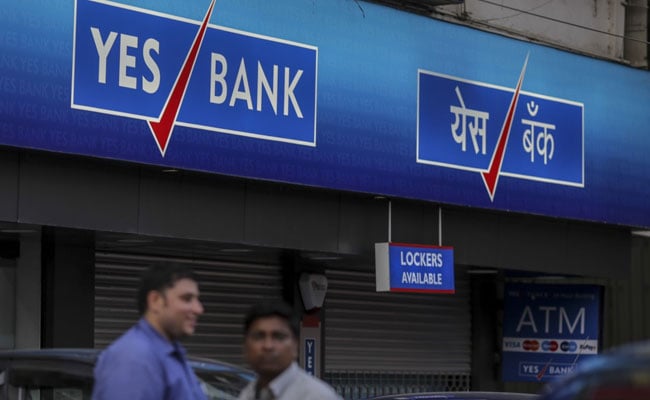
Bungling the rescue of a bank that has more than $20 billion in deposits is probably the costliest own goal India has scored since its foolish November 2016 ban on most currency notes.
Arm-twisting government-controlled State Bank of India to inject capital into failing Yes Bank Ltd. was the only option left for New Delhi. But the halfhearted bailout just may turn a bad dream for savers into a nightmare for the financial system.
The biggest error in the plan executed Thursday night was to trap depositors. It was both unnecessary and dangerous. Telling people they can't withdraw more than 50,000 rupees ($675) for a month may have prevented a run at Yes. But savers will now lose trust in all but a handful of blue-chip Indian banks. Smaller, privately owned lenders will see a profit-crunching flight of cheap deposits. Those receiving this inflow of funds will wonder how to deploy them.
The restrictions placed on Yes also disrupted the digital payments network. Walmart Inc.-owned PhonePe, which relied on Yes to move customers' money across bank accounts, was among services that experienced outages.
The same authorities who tirelessly extol the virtues of going cashless failed to see that Yes Bank was a major intermediary at the back end. If only the regulators had called up PhonePe as well as various ticketing, food delivery and other other services that used Yes as their banking technology partner - not to share inside information but merely to ask their risk folks to start reading newspapers.
When the central bank announced the contours of the rescue, a third issue sprang up. Yes Bank's additional Tier 1 bonds are to be made worthless as part of the rescue. Some holders are pensioners who were missold these perpetual notes. SBI could have done its government masters a favor and accommodated these investors by issuing them new shares.
To be the only ones to take the fall when depositors and senior bondholders are being made whole and existing equity isn't fully written off may be contractually valid in this instance. But enforcing this punishment will mean future investors in Indian perpetual bonds will charge much more. A valuable capital-raising avenue for India will have a no-go sign until the market swallows the shock. IndusInd Bank Ltd. cancelled a meeting this week to approve an AT1 issue.
The fourth howler lies in SBI's weekend plan for Yes Bank's revamp. It will invest $332 million into an enterprise that urgently needs $2 billion to $3 billion to survive. There's a promise of more, but for now SBI's check will cover roughly half of Yes Bank's exposure to just one client teetering on the brink of bankruptcy: Vodafone Idea Ltd.
Such a lame rescue won't reassure depositors. Once restrictions on withdrawals are lifted, depositors will look elsewhere. The bank's asset book is toast. If its deposit franchise also turns worthless, then which private investor will provide growth capital? I don't see an alternative to a merger with SBI. Not announcing one now may temporarily cap SBI's downside, but the pain will only be postponed, to judge by state-owned Life Insurance Corp.'s takeover of IDBI Bank Ltd.
Fifth, it's not clear if India is looking at the Yes crisis as an opportunity to let banks ensure their survival by a timely restructuring of their assets and liabilities. A previous attempt at enacting a law for handling financial failure itself failed. Public opinion was rightly against turning depositors into shareholders. Still, it can't be SBI or Life Insurance Corp. to the rescue every time. The question to ask is whether allowing Yes Bank's now-deposed board to issue shares at a hefty discount to the market price could have attracted willing investors. When the banking and securities regulators agree, they must be able to instruct boards to even wipe out existing shareholders in the public interest.
After four years of forcing banks to acknowledge their soured exposure, and to take firms to the bankruptcy tribunal or restructure them outside of courts, India still can't declare victory: Vulnerable corporate debt is large at $140 billion. While a bulk of the problem predates Prime Minister Narendra Modi's 2014 election victory, his scrapping of 86% of the currency has made things worse. Shadow banks expanded recklessly by borrowing the savings that rushed into banks and mutual funds. Real-estate and infrastructure developers refinanced their stuck projects cheaply. Excesses accumulated. Trouble erupted two years later: First infrastructure financier IL&FS Group and then Dewan Housing Finance Corp. blew up. The flames next gutted a small cooperative bank, and are now torching Yes, a major lender.
One of the unacknowledged goals of demonetization was to reduce the Reserve Bank of India's currency liabilities by $45 billion to release resources for recapitalizing banks. But the RBI got practically all the outlawed notes back. As the Yes bailout shows, the windfall morphed into a penalty. Evaluating unintended consequences of draconian policies is the final lesson as India is seized by renewed risk aversion and financial mistrust.
(Andy Mukherjee is a Bloomberg Opinion columnist covering industrial companies and financial services. He previously was a columnist for Reuters Breakingviews. He has also worked for the Straits Times, ET NOW and Bloomberg News.)
Disclaimer: The opinions expressed within this article are the personal opinions of the author. The facts and opinions appearing in the article do not reflect the views of NDTV and NDTV does not assume any responsibility or liability for the same.

-
AI Bias In Investing Cannot Be Eliminated, But It Can Be Governed

Framing is a particularly important example as identical financial information presented in terms of gains rather than losses can lead an LLM to reach a different assessment.
-
Joining The Dots | Dark Skies, Steady Diya: Why Hope Holds This Diwali
With war, a weak rupee and foreign outflows weighing on sentiment, policymakers at the NDTV World Summit and market veterans at NDTV Profit Ignite: Diwali Edition offered the same advice: stay invested and filter out the noise.
-
The Curious Case of Equitas Small Finance Bank And A CEO Who Quit For Stock
PN Vasudevan believes persistent investor concerns over a perceived conflict of interest had become a governance overhang on Equitas Small Finance Bank's stock, even as the lender improved profitability and asset quality.
-
Talking Points This Week: AI Cash Burn, A Tiger Comeback And An India That Still Finds Its Own Path
India is not immune to higher oil or tighter global liquidity, yet its earnings base is broader, its domestic policy levers are still available.
-
Foreign Investors Own Half Of HDFC Bank and ICICI Bank. An LTCG Cut Could Matter Most Here
Foreign portfolio investors have US$115 billion parked in HDFC Bank, ICICI Bank. If the government cuts long-term capital gains tax, Jefferies says returning foreign money could land here first.
-
'Never Seen This Level Of Negativity': Sandeep Tandon Says The Next Rally May Be Closer Than You Think
Veteran investor Sandeep Tandon says foreign selling is easing, large-caps are due a comeback and mid-caps are crowded, while he turns positive on gold, power and pharma this Diwali.
-
Indians Stay With Family, Not In Hotels | The Reason Why
India still lacks enough clean, reliable and affordable hotels for budget-conscious travellers.
-
The Economic Imperative: Analysing The Material Driving Force Behind India-Canada Strategic Reset
This economic complementarity is further reinforced by deep institutional investment ties and talent mobility, which form the bedrock of the bilateral framework.
-
Medicine Pricing: Where Must Profit Stop?
India must confront excessive margins, hidden incentives and regulatory gaps that threaten the integrity of medicine.
-
Why Amazon And Flipkart Are Struggling To Beat Meesho In India's Smaller Cities
With 274 million users and lowest-cost logistics, Meesho is defending its value commerce crown against giants like Amazon and Flipkart.










