India's Exotic Funds Are A $40 Billion Time-Bomb For Investors
Even as the fate of India's shadow banks swings precariously between unexpected defaults and sudden downgrades, there's trouble brewing in another unlit corner of finance.
Exotic funds, designed for wealthy investors, have grown to $40 billion from nothing in just seven years, expanding by 71% in the 12 months through March. Since September, when the surprise bankruptcy of infrastructure financier IL&FS Group triggered a refinancing squeeze for property developers, investors have committed an additional $9 billion to these so-called alternative investment funds.
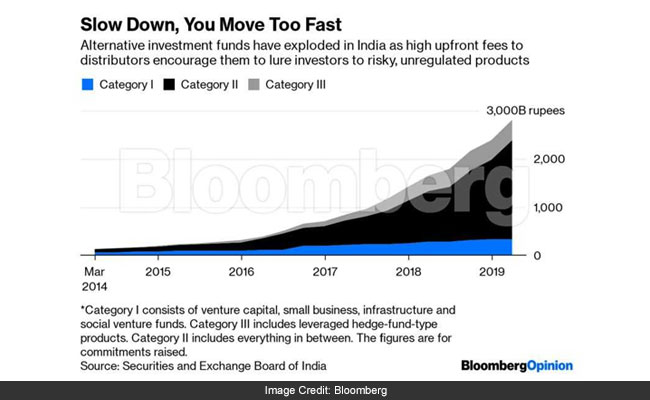
Nothing grows this fast in finance without storing up trouble for the future. In this case, accidents may occur because of a weak property market, leveraged developers and their troubled financiers, the shadow banks. Since nonbank finance companies are facing a liquidity shortage of their own, they're passing on their illiquid, poor-quality builder loans to bespoke funds by indicating 20%-plus returns to investors. Distributors aren't complaining. While the market regulator has put a leash on the expense ratio of publicly distributed mutual funds, there isn't even a strict disclosure requirement on the 6%-10% fees that can be earned upfront for selling pipe dreams privately to 1,000 people, each of whom has to be able to commit at least $143,000 to qualify.
That's a ridiculously low threshold for a buyer-beware product free to invest in unlisted securities. Whether potential IPO candidates, young startups, distressed assets, commodities or builder debt, alternative investment funds take complex, risky bets.
An economy growing at its slowest pace in five years isn't exactly a cornucopia of easy money. Truly wealthy individuals, who have the stomach for venture capital, private equity or hedge fund-type opportunities outside of public markets, have trained investment staff who can evaluate exotic funds for their family offices. Instead, these private pools are being hawked to the middle class as get-rich-quick schemes. Relationship managers at banks are pushing them even to unwitting octogenarians who just need vanilla tax-free bonds to generate a regular income. Stories of sharp practices and broken promises are beginning to swirl, and conversations with industry sources suggest there's more trouble ahead.
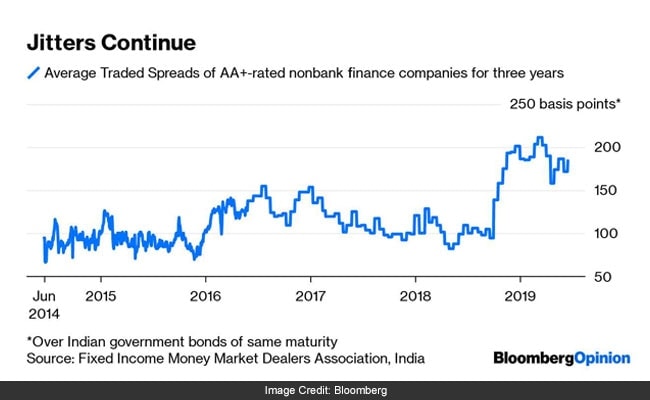
After inflicting embarrassing losses on mom-and-pop investors, India's mutual funds are cutting back their exposure to debt securities of shadow financiers. However, for the borrowers it means finding other options for as much as $19 billion in funding that must be repaid in the current quarter. The cost of their desperation nowadays is often a “side letter” – a payment they make on top of the agreed debt coupon. No wonder the fees for distributors are so juicy.
It's time the market regulator woke up because there's every risk that middle-class investors will end up being hurt. They're picking up nickels in front of a steamroller. With unsold housing inventory at an all-time high of almost 1.3 million homes across 30 cities, and developers needing twice as much operating profit as they're currently making just to service their debt, shifting the problem to unsuspecting retirees is really no solution to India's funding crunch.
(Andy Mukherjee is a Bloomberg Opinion columnist covering industrial companies and financial services. He previously was a columnist for Reuters Breakingviews. He has also worked for the Straits Times, ET NOW and Bloomberg News.)
Disclaimer: The opinions expressed within this article are the personal opinions of the author. The facts and opinions appearing in the article do not reflect the views of NDTV and NDTV does not assume any responsibility or liability for the same.

-
One El Nino, India Can Handle. Two Could Break The Granary

India's grain stocks can absorb one bad year, but a second El Nino could drain the buffer in two to three years, economists say.
-
India's Troika Of Good Luck | Joining The Dots
As Jensen Huang's exit drags Nvidia down, a cooling AI trade and resilient earnings have revived investor interest in India. A likely RBI rate hike looms.
-
Talking Points This Week: Leadership Shock At Nvidia, Earnings Strength, And The Fog Over Hormuz
The Anthropic IPO pricing and first trading day, Nvidia's upcoming earnings, and any fresh signals from Iran will set the tone for the following week.
-
Signature Play: The Classic Cocktail Is Dead. Or Is It?
Classic cocktails are disappearing from India's cocktail menus. But they're still being ordered, taught to bartenders and borrowed from. So, who's really having the last drink?
-
A New Samvat Wishlist: Inclusive Prosperity And Human Development
India has strengthened its economic foundations through infrastructure, digital access and enterprise. Its next growth chapter must deepen productivity, create better livelihoods and widen participation in prosperity.
-
Love, Sex Aur Dhokha: The Audacious Plot To Spy On Jensen Huang
A Taipei dinner, a Singapore chip buyer and a suspected Chinese asset: inside the alleged spy operation that got close to NVIDIA's Jensen Huang.
-
Ten Things I Learnt This Samvat
Patience can be a trap. Cheap stocks can stay cheap. Leverage can wipe you out. What did Samvat 2082 teach us? Niraj Shah writes on 10 lessons from the year gone by.
-
Talking Points This Week: Tech Nerves, FII Buying, And A Faraway Banking Shock
The global markets are not shining this Diwali. The exception in the large markets is, India.
-
Midterm Rally Lasted A Day. The Hard Reality Of A Divided US May Last Two Years | Opinion
Between a contested AI boom, a debt ceiling that arrives in 2027 and a president with every incentive to act alone, the next two years may prove more volatile than the first day's rally suggests.
-
Blue Wave Will Derail the AI Trade but Won't Dismantle the AI Era | Unhedged Position
The Democrats' sweep of the US Congress will see politics collide with economic forces both over the long and short term.









