Congress' Troll Politics Leads To MVA's Downfall In Maharashtra
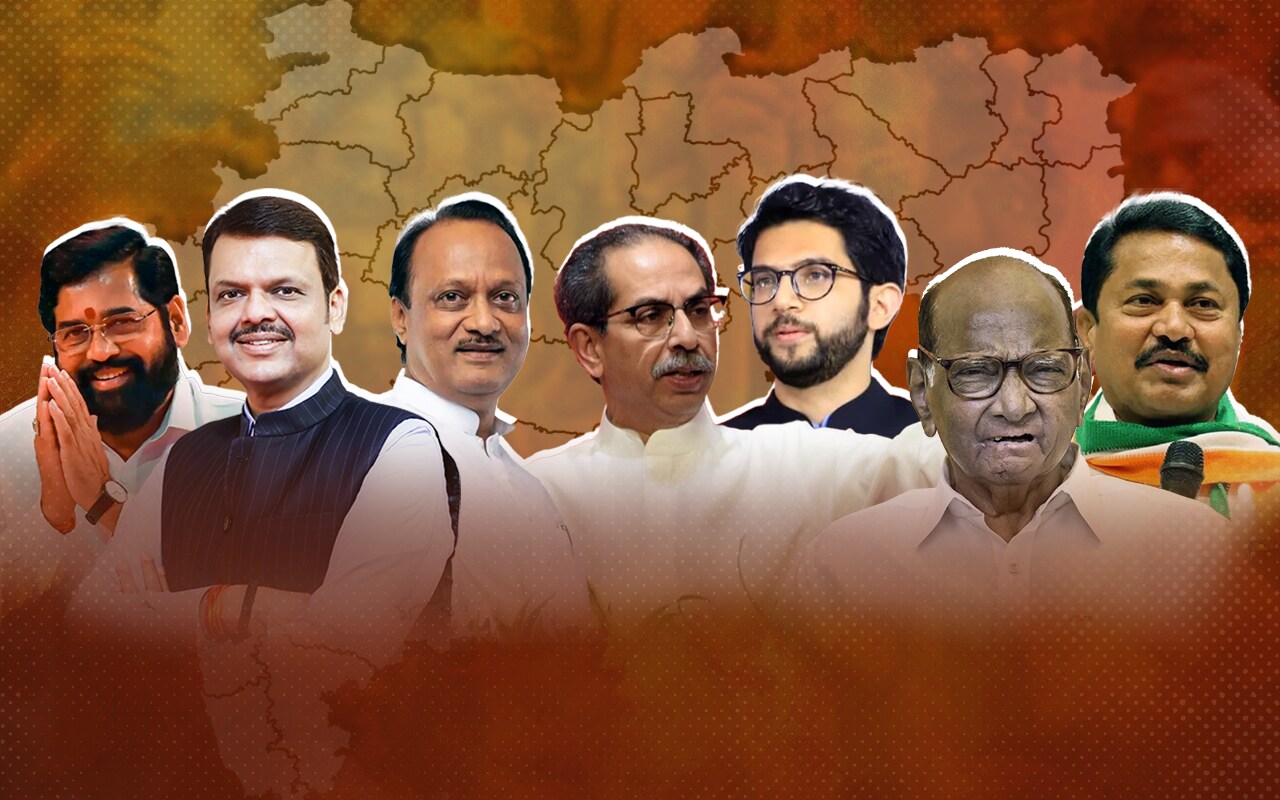
The Maharashtra mandate is a rare phenomenon and a powerful lesson, prompting political parties, analysts, and commentators to return to the drawing board. This paradigm shift will take time to fully comprehend - and what a shift it has been!
The state delivering a decisive majority to the NDA is stunningly historic. For the Bharatiya Janata Party (BJP), this marks a significant milestone, achieved through years of hard work to establish itself independently, without relying on the support of regional parties. While the ultimate goal is not yet fully realised, the BJP has taken a major step forward.
Maharashtra's voters, who have experienced coalition governments for over three decades, now seem to have opted for greater stability, while technically remaining in the years of coalition era. With the BJP securing 130+ seats, the party has positioned itself as a force less vulnerable to the pulls and pressures of running a coalition.
Much can be written about the factors that contributed to the BJP's success, but the essence is straightforward: the party has been quick to learn from its mistakes and failures, understood the pulse of the people, and executed a bold, high-stakes strategy under the Modi-Shah duo. Their unique brand of social engineering has yielded instant results, garnering both Maratha and non-Maratha votes. Achieving this level of finesse in such a short time offers a masterclass in political strategy - one that calls for admiration and study at the same time.
The BJP has also secured a larger share of OBC, SC, and ST votes across most of the six political regions. Women beneficiaries of the Ladki Behna scheme played a vital role, and the RSS lent its discipline machine more generously to bolster the already formidable and finely tuned BJP election machinery. The recent Haryana assembly election victory put a spring in their steps.
Let us shift focus to the MVA's dramatic collapse. From a position of strength, it fell apart in just five months - a stunning reversal after its strong performance in the recently concluded Lok Sabha elections.
This debacle serves as a serious lesson in how to let opportunities slip away. The MVA lost an election it could have won with minimal effort, and just swept away in a political tsunami it failed to anticipate. It's a reminder of the need to stay connected with the ground and its 'janata' (people). Humility to at least acknowledge missteps and serious introspection are urgently recommended for them
I struggle to recall any of their political messages resonating with voters anywhere in the state. Not a single one. The MVA seemed stuck in a loop of recycled tape-vague schemes, half-hearted promises, and relentless negativity. Statements like 'Samvidhan khatre mein hai (The Constitution is in danger)', accusations against opponents, and calls for caste censuses dominated their narrative. Add to that a fair bit of conspiracy theories, and you have a situation where voters just switched them off. The endless barrage of negative sentiments alienated voters who had clearly moved on, leaving the MVA clueless about the big change underway in a matter of months.
Did the MVA offer even a single story to enthuse voters? I can recall none. Their campaign lacked focus, vision, and an inspiring message - some of the common elements find in parties that are ready to learn and not gloss over slips.
The Congress needs to understand that its de facto leader Rahul Gandhi has failed to deliver thus far. His personal obsessions get the better of him most of the time, preventing him from crafting the broad political platform India expects from a national opposition party. Uddhav Thackeray fell into the same trap. Only Sharad Pawar offered a narrative that resonated with voters, but the noise generated by Gandhi and Thackeray overshadowed any meaningful messaging.
Gandhi and Thackeray, for reasons best known to them, focused their campaign on Dharavi, as if they were contesting a municipal ward election or campaigning for a single assembly constituency, rather than addressing the other 287 seats in the large and very important state of Maharashtra. They failed to recognise that voters in the state are attuned to the larger national picture and eager to reclaim Maharashtra's prime position among India's galloping states.
It's puzzling why Rahul Gandhi harbours a personal obsession with targeting a first-generation entrepreneur, especially when such posturing fails to translate into votes for his party. He must also know that 62 percent of even MVA voters want their Dharavi to become the pride of place it has the potential to become.
His anti-business stance was rejected by Maharashtra voters, who see it as part of a broader agenda-perhaps influenced by corporate rivalries or external forces jealous of India's accelerated ascent now. This perception has damaged Gandhi's credibility, as voters increasingly see his actions as not very conducive to the kind of India it is getting ready to become.
Indians have consistently demonstrated their desire for a robust democracy, which includes a strong opposition to keep the ruling party in check. The outcome of the 2024 Lok Sabha elections exhibited that democratic instinct. However, the risk to democracy doesn't come from Narendra Modi, the BJP, or the RSS - it stems from the Congress's inability to effectively play its role as a responsible opposition party. Regional parties, to some extent, are playing this role more effectively. And they are winning elections too, and for years.
The Maharashtra results have further diminished any lingering hope that the Congress can rise to the challenges. The party suffers too much from cynicism, conspiracy theories, and a total disconnect from the aspirations of growing India.
Can the Congress finally make a comeback and surprise us all? If they are really serious about India's democracy, they owe at least that much to all of us.
(Sanjay Pugalia is the CEO & Editor-in-Chief, AMG Media Network)
Disclaimer: These are the personal opinions of the authors

-
AI Bias In Investing Cannot Be Eliminated, But It Can Be Governed

Framing is a particularly important example as identical financial information presented in terms of gains rather than losses can lead an LLM to reach a different assessment.
-
Joining The Dots | Dark Skies, Steady Diya: Why Hope Holds This Diwali
With war, a weak rupee and foreign outflows weighing on sentiment, policymakers at the NDTV World Summit and market veterans at NDTV Profit Ignite: Diwali Edition offered the same advice: stay invested and filter out the noise.
-
The Curious Case of Equitas Small Finance Bank And A CEO Who Quit For Stock
PN Vasudevan believes persistent investor concerns over a perceived conflict of interest had become a governance overhang on Equitas Small Finance Bank's stock, even as the lender improved profitability and asset quality.
-
Talking Points This Week: AI Cash Burn, A Tiger Comeback And An India That Still Finds Its Own Path
India is not immune to higher oil or tighter global liquidity, yet its earnings base is broader, its domestic policy levers are still available.
-
Foreign Investors Own Half Of HDFC Bank and ICICI Bank. An LTCG Cut Could Matter Most Here
Foreign portfolio investors have US$115 billion parked in HDFC Bank, ICICI Bank. If the government cuts long-term capital gains tax, Jefferies says returning foreign money could land here first.
-
'Never Seen This Level Of Negativity': Sandeep Tandon Says The Next Rally May Be Closer Than You Think
Veteran investor Sandeep Tandon says foreign selling is easing, large-caps are due a comeback and mid-caps are crowded, while he turns positive on gold, power and pharma this Diwali.
-
Indians Stay With Family, Not In Hotels | The Reason Why
India still lacks enough clean, reliable and affordable hotels for budget-conscious travellers.
-
The Economic Imperative: Analysing The Material Driving Force Behind India-Canada Strategic Reset
This economic complementarity is further reinforced by deep institutional investment ties and talent mobility, which form the bedrock of the bilateral framework.
-
Medicine Pricing: Where Must Profit Stop?
India must confront excessive margins, hidden incentives and regulatory gaps that threaten the integrity of medicine.
-
Why Amazon And Flipkart Are Struggling To Beat Meesho In India's Smaller Cities
With 274 million users and lowest-cost logistics, Meesho is defending its value commerce crown against giants like Amazon and Flipkart.










