OPEC Chief Tells Climate Negotiators To ‘Look At The Big Picture’
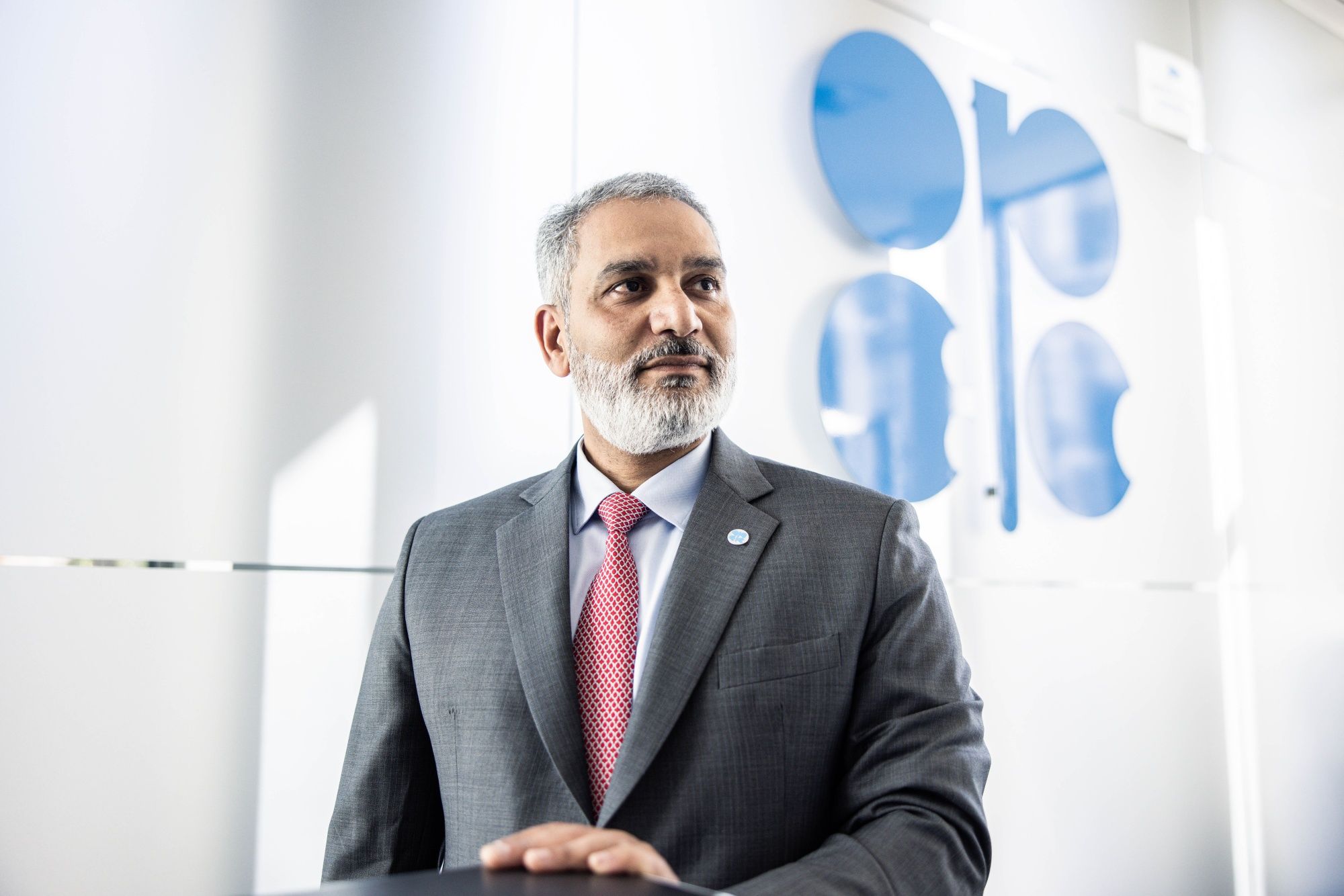
(Bloomberg) -- OPEC's top official urged countries to invest much more in oil to meet the world's future energy needs and said climate policies need to be more “balanced and fair.”
“It is imperative that all parties involved in the ongoing climate negotiations pause for a moment; look at the big picture,” Haitham Al-Ghais, secretary-general of the Organization of Petroleum Exporting Countries, said Sunday at an energy conference in Cairo. They must “work towards an energy transition that is orderly, inclusive and helps ensure energy security for all.”

His comments came amid a shift among some Western governments and companies regarding fossil fuels. Prices for oil, natural gas and coal surged after Russia's invasion of Ukraine last February, pushing energy security to the top of the agenda for many leaders.
US President Joe Biden went off-script during his State of the Union speech last week and said: “We're going to need oil for at least another decade.” In Europe, Shell Plc signaled it will stop accelerating spending on renewable energy, while BP Plc slowed its planned reduction of oil and gas output.
OPEC's Al-Ghais said the oil industry had been “plagued by several years of chronic underinvestment.” It needs $500 billion of investment annually until 2045, he said.
The United Arab Emirates' hosting of the COP28 climate summit in late 2023 will “serve as a fresh opportunity to explore inclusive, sustainable and consensus-based solutions to climate change,” said the secretary-general, who's from OPEC member Kuwait.
The UAE, also part of OPEC, has appointed Sultan Al Jaber, head of national oil and gas firm Adnoc, as president for the summit. While that's caused some controversy, Al Jaber has said that hydrocarbon producers must be at the forefront of climate talks if the world is to transition to cleaner energy while also ensuring that fuel prices remain affordable.
Al Ghais reiterated that OPEC and its partners — known as OPEC+, the 23-nation alliance is led by Saudi Arabia and Russia — are committed to keeping the oil market stable.
Saudi Arabia and other core OPEC members are unlikely to respond to Russia's announcement on Friday of a production cut by pumping more, Bloomberg reported.
While Moscow indicated late last year that it may reduce output as a retaliation against Western sanctions, crude prices still jumped on Friday. Brent extended its weekly gain to 8.1%, closing at $86.90 a barrel.
(Updates with context.)
More stories like this are available on bloomberg.com
©2023 Bloomberg L.P.

-
Indians Are Travelling, But Not Every Journey Is A Holiday | The Week In Whys

Pilgrims, patients and working women are the real travellers, and the system hasn't quite caught up with them.
-
Getting To Work Costs Women More | The Reason Why
It is not just about women paying more than men. It is about women paying much more in cities than in villages.
-
AI Bias In Investing Cannot Be Eliminated, But It Can Be Governed
Framing is a particularly important example as identical financial information presented in terms of gains rather than losses can lead an LLM to reach a different assessment.
-
Joining The Dots | Dark Skies, Steady Diya: Why Hope Holds This Diwali
With war, a weak rupee and foreign outflows weighing on sentiment, policymakers at the NDTV World Summit and market veterans at NDTV Profit Ignite: Diwali Edition offered the same advice: stay invested and filter out the noise.
-
The Curious Case of Equitas Small Finance Bank And A CEO Who Quit For Stock
PN Vasudevan believes persistent investor concerns over a perceived conflict of interest had become a governance overhang on Equitas Small Finance Bank's stock, even as the lender improved profitability and asset quality.
-
Talking Points This Week: AI Cash Burn, A Tiger Comeback And An India That Still Finds Its Own Path
India is not immune to higher oil or tighter global liquidity, yet its earnings base is broader, its domestic policy levers are still available.
-
Foreign Investors Own Half Of HDFC Bank and ICICI Bank. An LTCG Cut Could Matter Most Here
Foreign portfolio investors have US$115 billion parked in HDFC Bank, ICICI Bank. If the government cuts long-term capital gains tax, Jefferies says returning foreign money could land here first.
-
'Never Seen This Level Of Negativity': Sandeep Tandon Says The Next Rally May Be Closer Than You Think
Veteran investor Sandeep Tandon says foreign selling is easing, large-caps are due a comeback and mid-caps are crowded, while he turns positive on gold, power and pharma this Diwali.
-
Indians Stay With Family, Not In Hotels | The Reason Why
India still lacks enough clean, reliable and affordable hotels for budget-conscious travellers.
-
The Economic Imperative: Analysing The Material Driving Force Behind India-Canada Strategic Reset
This economic complementarity is further reinforced by deep institutional investment ties and talent mobility, which form the bedrock of the bilateral framework.










