ONGC Pushes Back KG Gas Production Target Date To 2019-End
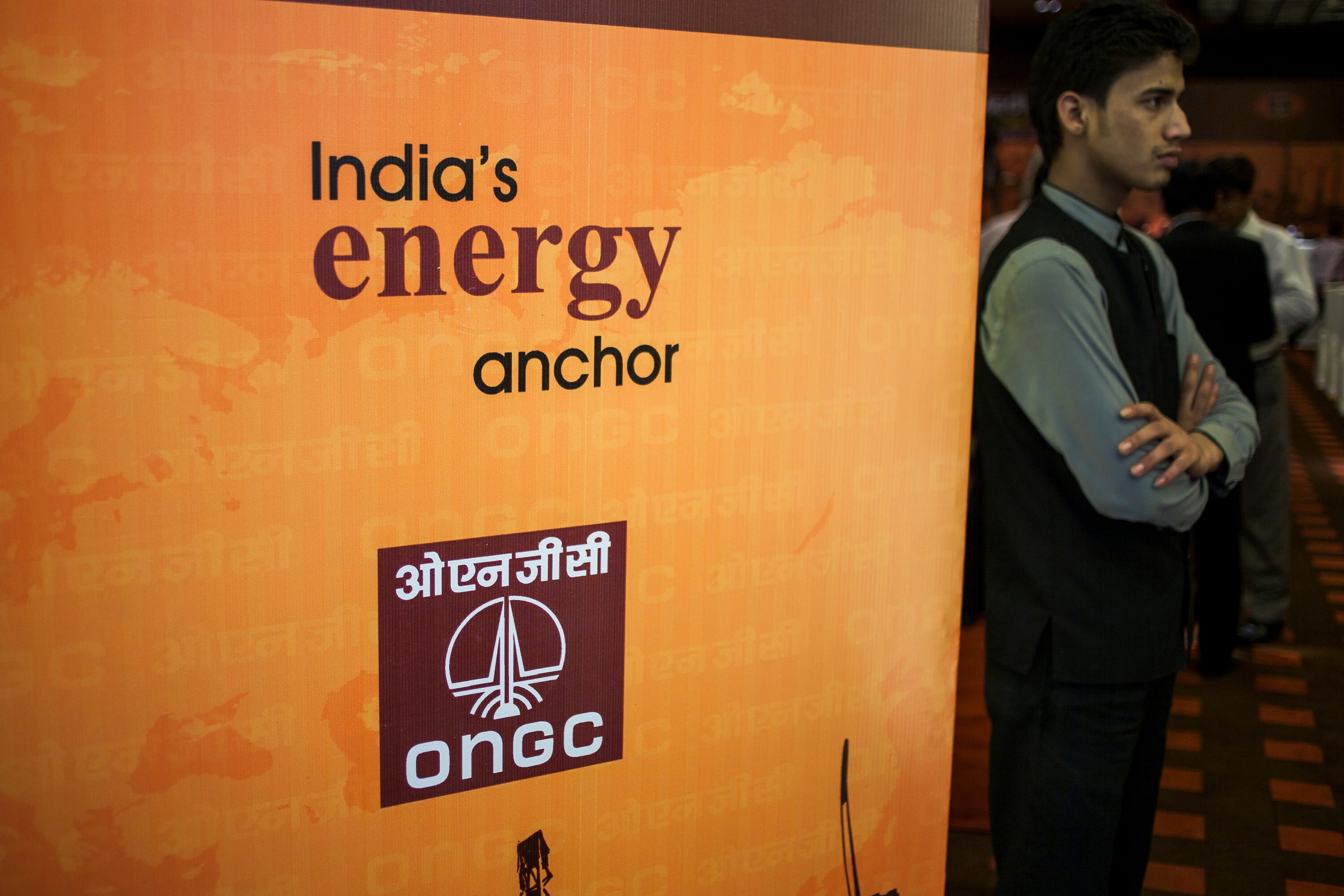
ONGC has pushed back the start of natural gas production from its biggest project in KG basin to December 2019 as it reworked the $5.07 billion development to accommodate new policies such as GST and local purchase preference rules.
When the Oil and Natural Gas Corp. Ltd. board had on March 28, 2016, approved investing $5.07 billion in bringing to production a cluster of discoveries in Bay of Bengal block KG-DWN-98/2 or KG-D5, the first gas was targeted for June 2019 and first oil was to flow by March 2020.
But now, first gas is expected by December 2019 and oil by March 2021, according to the revised dates presented to the company's board late last month.
“These are not new dates. They were out a couple of months back and we gave an update of the project to the board at its meeting on June 29,” ONGC Director (Offshore) Rajesh Kakkar said.
The revised dates were set when ONGC spudded the first of the 34 wells under the project on April 8 this year.
While the ONGC Board had in March 2016 approved a field development plan for Cluster-II discoveries in the block that sits next to Reliance Industries' flagging KG-D6 block in Krishna Godavari basin, new policies like local purchase preference rules, including the one that mandates PSUs to source domestic iron and steel for infrastructure projects were formulated last year.
The Goods and Services Tax, which made sweeping changes in indirect taxation regime, was rolled out in July 2017.
Also, a policy has been formulated to give public enterprises purchase preference if their bid is within 10 per cent of the lowest price, officials said.
ONGC is targeting a peak oil output of 77,305 barrels per day within two years of the start of production. Gas output is slated to peak to 16.56 million standard cubic metres per day by 2022.
This the second time that target deadlines for KG-D5 production have been pushed back. ONGC had in 2014 announced plans to start gas production from 2018 and oil by 2019 but a final investment decision was made contingent upon government approving a remunerative price for the deep-sea block as the prevalent rates were uneconomical.
But, it was not before March 2016 that the government announced a new pricing formula for difficult areas, giving developers of deep-sea fields like KG-D5 more than double the domestic rate.
Immediately after that ONGC board approved the investment plan for Cluster-II group of discoveries in KG-D5.
The 7,294.6 sq km deep-sea KG-D5 block has been broadly categorised into Northern Discovery Area (NDA - 3,800.6 sq km) and Southern Discovery Area (SDA - 3,494 sq km).
The NDA has 11 oil and gas discoveries, while SDA has the nation's only ultra-deepsea gas find of UD-1. These finds have been clubbed in three groups - Cluster-1, Cluster-II and Cluster-III.
Gas discovery in Cluster-I is to be tied up with finds in neighbouring G-4 block for production but this is not being taken up because of a dispute with RIL over the migration of gas from ONGC blocks.
For now, Cluster-II is being developed at a cost of $5.07 billion, officials said, adding that completion of the entire development plans is expected by August 2021.
Cluster-2A mainly comprises oil finds of A2, P1, M3, M1 and G-2-2 in NDA which can produce 77,305 bpd (3.86 million tonnes per annum) and 3.81 mmscmd of gas. Cluster 2B, which is made up of four gas finds - R1, U3, U1, and A1 in NDA - envisages a peak output of 12.75 mmscmd of gas. Peak output is likely to last 7 years.
Cluster-3 is the UD-1 gas discovery in SDA. UD-1 lies in the water depth of 2,400-3,200 metres and its development would be taken up after an appropriate technology is found.

-
The Economic Imperative: Analysing The Material Driving Force Behind India-Canada Strategic Reset

This economic complementarity is further reinforced by deep institutional investment ties and talent mobility, which form the bedrock of the bilateral framework.
-
Medicine Pricing: Where Must Profit Stop?
India must confront excessive margins, hidden incentives and regulatory gaps that threaten the integrity of medicine.
-
Why Amazon And Flipkart Are Struggling To Beat Meesho In India's Smaller Cities
With 274 million users and lowest-cost logistics, Meesho is defending its value commerce crown against giants like Amazon and Flipkart.
-
High US Salaries, No Green Card Certainty: The Financial Calculation Facing Indian H-1B Families
The suspension of PERM processing at eight technology employers does not cancel existing H-1B visas. What it does is force a question many Indian families have been avoiding: is the US salary worth tying your career and family plans to one employer?
-
Swiggy vs Eternal: Food Delivery's Two Rivals Are No Longer In The Same Race
Eternal is building a private AI assistant, dark.ai. Swiggy is still working out how to make Instamart pay, with an operating loss of Rs 895 crore in the July-September quarter while Blinkit stayed profitable.
-
Where You Live Shapes How You Get To Work | The Reason Why
Two-wheelers are the most popular way to get to work in India, accounting for nearly 43% of workplace commutes.
-
Unhedged Position: Can India See An Indonesia-Style Time Correction?
The Nifty is trading below levels it first clocked in 2024. Is there, then, as I have suggested in the headline, potential that the current time correction drags on painfully for the next three-five, even ten years?
-
Navigating Friction And Energy Realities: An Analysis Of Marco Rubio's October Visit To India
Occurring at a critical juncture marked by stalled trade negotiations and escalating geopolitical pressures over global energy supplies, the visit offers a profound window into modern US-India relations.
-
India Exports Capital. Why Not Export Trusteeship?
The big question, then, is whether India can build an institution that global borrowers, investors, banks, and lawyers can trust, even without an Indian connection.
-
France's Economy & Politics Are In Crisis | The Reason Why
Let's look at how the French economy and politics evolved under Nicolas Sarkozy, Franois Hollande and Emmanuel Macron.










