Arun Jaitley Calls Single Slab GST A 'Flawed Idea'
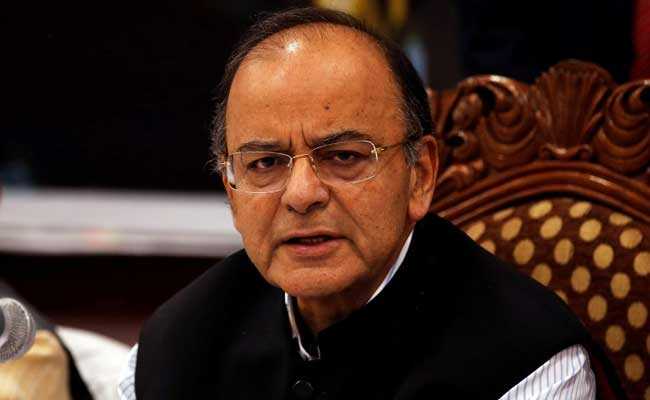
On the first anniversary of Goods and Services Tax (GST), Union minister Arun Jaitley hailed the legislation as a 'historic' and 'game changer' reform. He praised GST for additional tax revenue collection, which rose to Rs 8.2 lakh crore in the first nine months. Mr Jaitley also praised it for a 14 percent rise in the tax base of states. While acknowledging the initial teething troubles relating to technological infrastructure, Mr Jaitley said that the systems (used for filing of tax returns) are better now. "The IT system after initial teething trouble is functioning much better," said Mr Jaitley.
However, he outrightly refuted the idea of single tax slab for Goods and Services Tax. The population profile of India, and other places such as Singapore, where single GST tax slab is applicable, are very different, said Mr Jaitley on Sunday in a post on Facebook. Even Prime Minister Narendra Modi ruled out the idea of single tax reform, reported news agency Press Trust of India. "Mercedes car and milk can't be taxed at the same rate," the agency quoted him as saying. Union Finance Secretary Hasmukh Adhia, who incidentally drew praise from Mr Jaitley in the same post, said that the Goods and Services Tax revenue mop-up rose to Rs 95,610 crore in the month of June, as against Rs 94,016 crore in the previous month, according to Press Trust of India.
Currently, there are five tax slabs at which indirect tax and services are levied ranging between zero percent to 28 percent.
GST's First Year Anniversary: Five Things That Arun Jaitley Said
Single Tax Not Feasible: Mr Jaitley termed a single slab GST a "flawed idea". A single slab GST can function only in those countries where the entire population has a similar and a higher level of paying capacity. Being fascinated by the Singapore model is understandable but the population profile of a state like Singapore and India is very different. Singapore can charge 7 percent GST on food and 7 percent on luxury goods. Will that model work for India, he asked.
Ease Of Doing Business: He said that GST has enabled a seamless flow of goods and services nationwide that made 'Doing of Business' simpler. Mr Jaitley said the GST is expanding the tax base of the less developed consuming states significantly, which will provide more resources for them to devote for development purposes. One nation one tax adage came true as one single tax replaced 17 taxes and multiple cesses that are imposed by the Central and the State Governments.
The Way Forward: While shedding light on the changes that GST should incorporate in near future, he said the the way forward includes further simplifying and rationalizing the rate structure and bringing more products into the GST. He expressed confidence that once revenue stabilizes and the GST settles, the GST Council will look into these carefully and act judiciously, he added in the facebook post.
Revenue Share Of States: Arun Jaitley said that the states today are getting a 14 percent increase on the tax base of fiscal 2016 with the help of the compensation cess. Eventually, when the blocked IGST is gradually released to the Centre and the States, even without the compensation cess, most States would cross the 14 percent growth target. Even today the compensation requirement are minimal and the current level of compensation cess about Rs.7000 crores monthly is more than adequate to ensure that the States are compensated for any loss of revenue.
Revenue Collection Jumped: In the first nine months, the total amount collected is Rs 8.2 lakh crore, which would become Rs 11 lakh crore if annualised, yielding a revenue growth of 11.9 percent i.e. a tax buoyancy of 1.22, which has historically been achieved very rarely for indirect taxes and despite rates being lowered for consumers.

-
Getting To Work Costs Women More | The Reason Why

It is not just about women paying more than men. It is about women paying much more in cities than in villages.
-
AI Bias In Investing Cannot Be Eliminated, But It Can Be Governed
Framing is a particularly important example as identical financial information presented in terms of gains rather than losses can lead an LLM to reach a different assessment.
-
Joining The Dots | Dark Skies, Steady Diya: Why Hope Holds This Diwali
With war, a weak rupee and foreign outflows weighing on sentiment, policymakers at the NDTV World Summit and market veterans at NDTV Profit Ignite: Diwali Edition offered the same advice: stay invested and filter out the noise.
-
The Curious Case of Equitas Small Finance Bank And A CEO Who Quit For Stock
PN Vasudevan believes persistent investor concerns over a perceived conflict of interest had become a governance overhang on Equitas Small Finance Bank's stock, even as the lender improved profitability and asset quality.
-
Talking Points This Week: AI Cash Burn, A Tiger Comeback And An India That Still Finds Its Own Path
India is not immune to higher oil or tighter global liquidity, yet its earnings base is broader, its domestic policy levers are still available.
-
Foreign Investors Own Half Of HDFC Bank and ICICI Bank. An LTCG Cut Could Matter Most Here
Foreign portfolio investors have US$115 billion parked in HDFC Bank, ICICI Bank. If the government cuts long-term capital gains tax, Jefferies says returning foreign money could land here first.
-
'Never Seen This Level Of Negativity': Sandeep Tandon Says The Next Rally May Be Closer Than You Think
Veteran investor Sandeep Tandon says foreign selling is easing, large-caps are due a comeback and mid-caps are crowded, while he turns positive on gold, power and pharma this Diwali.
-
Indians Stay With Family, Not In Hotels | The Reason Why
India still lacks enough clean, reliable and affordable hotels for budget-conscious travellers.
-
The Economic Imperative: Analysing The Material Driving Force Behind India-Canada Strategic Reset
This economic complementarity is further reinforced by deep institutional investment ties and talent mobility, which form the bedrock of the bilateral framework.
-
Medicine Pricing: Where Must Profit Stop?
India must confront excessive margins, hidden incentives and regulatory gaps that threaten the integrity of medicine.










