ONDC Poses No Immediate Threat To Zomato Or Swiggy: Motilal Oswal
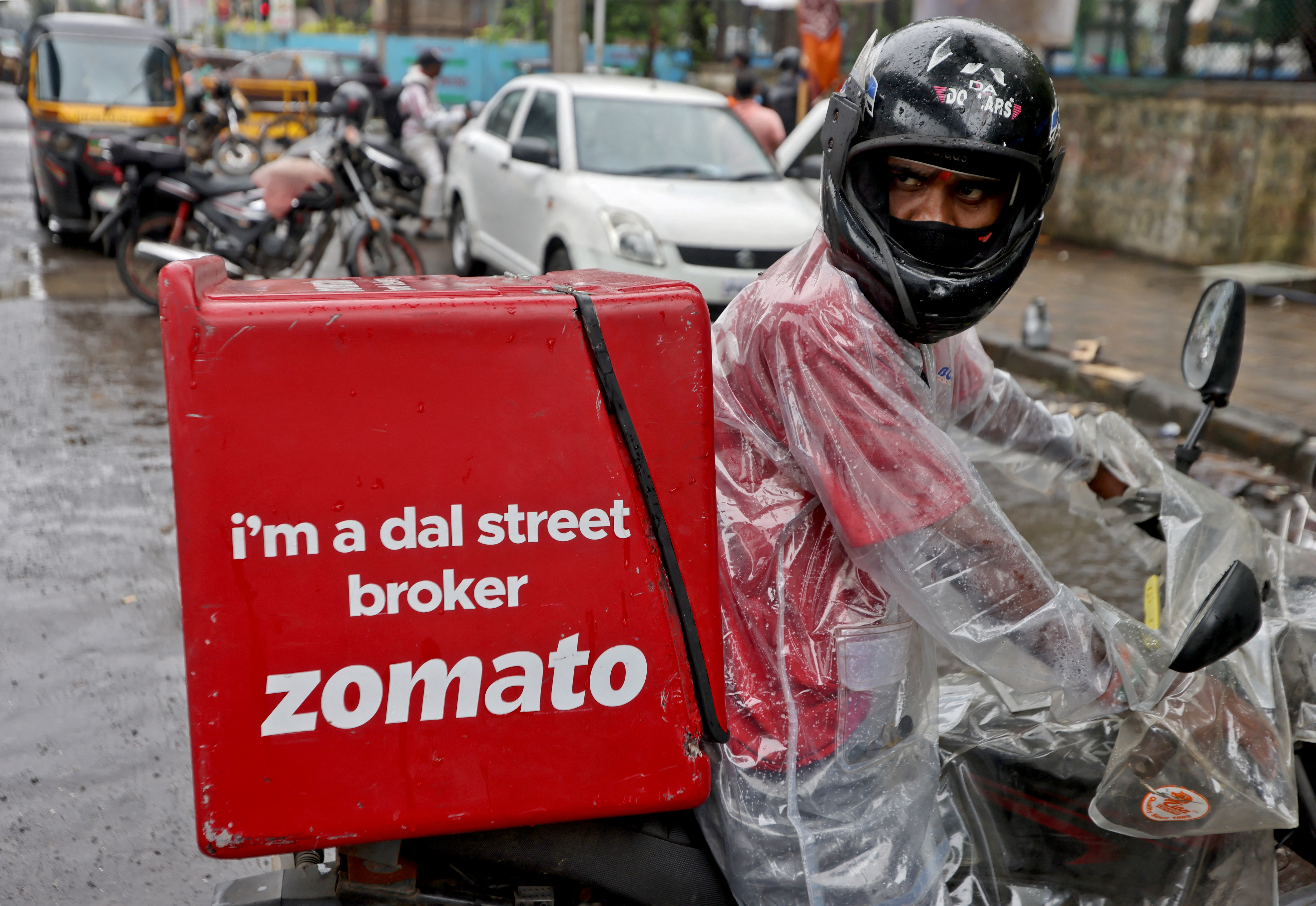
The internet is abuzz with screenshots of orders placed through a new platform —ONDC — and how this could potentially benefit restaurants due to the difference in take rates and disrupt the Zomato and Swiggy duopoly.
However, according to Motilal Oswal, the government-backed Open Network for Digital Commerce, or ONDC, poses no immediate threat to Zomato or Swiggy.
"We do not perceive direct ordering as a major concern for the industry," the brokerage said, adding that ONDC would be seen as a potential threat to Zomato only if it meaningfully scales up across categories, allowing it to achieve greater efficiency compared to the walled gardens. "At its current scale, we do not have enough evidence to alter our base case for Zomato."
ONDC, which is an open-source network, allows restaurants to sell food directly to consumers without the need for a third party. Though the food delivery tech platform has been around since September 2022, it is gaining popularity now. Recently, ONDC said that it has breached the 10,000 daily order mark, helped by early discounts and the discovery of a cheaper food delivery system. However, the current 10,000 deliveries per day, 40% of which are in Bangalore, do not present enough scale to absorb the delivery rider cost for the platform, according to Motilal Oswal.
For comparison, Zomato currently delivers 1.8 million orders per day, while Swiggy delivers roughly 1.5 million orders per day.
The risk posed by ONDC will only become significant once it scales up in multiple categories like food, e-commerce, and grocery, which would give it the scale to override the delivery scale of the existing players, the brokerage said.
Delivery on ONDC apps is only free for the first order. In the case of a discounted or free delivery, this cost has to be borne by the restaurant, possibly to increase its competitive advantage against the incumbent duopoly, and it is not sustainable, pointed out Motilal Oswal. "Also, after the first free delivery, in some cases the delivery charge is higher than Zomato or Swiggy."
Currently, there are seller partners such as Paytm, Magicpin, PhonePe, etc. that host ONDC on their apps; they are the storefront from which the consumer can place an order for a variety of options like food, groceries, home décor, cleaning essentials.
While Swiggy or Zomato charge a commission of anywhere between 18% and 26% from restaurants, the ONDC platform partners charge only 2-6% and around Rs 35 as a delivery fee should they choose to use the service of a third-party logistics provider like Shadowfax, Dunzo, or Shiprocket. Now, compared to Zomato and Swiggy, ONDC is much cheaper. That's because the unit economics are better for restaurants because of low commissions, and they can pass on the savings to consumers in terms of lower prices.
Moreover, the final price is cheaper because ONDC is currently offering discounts as part of customer acquisition.
Notably, food delivery apps like Zomato and Swiggy also burned a lot of cash initially to acquire customers through a discount-led model. They, however, have curtailed heavy discounts in search of profitability.
In Mumbai, a McDonald's Veg Maharaja Mac, for instance, costs Rs 244 on ONDC pre-discount, while it costs Rs 308 on Swiggy and Rs 296 on Zomato.
However, the difference in pricing is unlikely to be sufficient to override the wider selection of food options because of the early mover advantage and the well-oiled delivery machine of incumbents, noted Motilal Oswal.
The brokerage believes there are several issues that ONDC needs to address to become a potential disruptor in the online ordering space.
These include:
Customer grievance redressal mechanisms, a key component in the food delivery industry where timely resolution is of paramount importance, are non-existent in ONDC. The platform currently has only an email-id to log complaints.
Disaggregated platforms for sellers, buyers, and delivery are also likely to contribute to issues in returns and quality of service that remain unresolved. Zomato's walled garden, on the other hand, controls the experience.
The majority of restaurants on ONDC are currently quick commerce or fast food, and they tend to follow a platform-agnostic approach. They represent a small portion of the overall food market in India.
If ONDC fixes these issues in the future and continues to scale up over time, then the platform could become a significant risk for Zomato and Swiggy, as it would enable greater delivery efficiency, making the system sustainable. In the near term, according to Motilal Oswal, there is unlikely to be any large-scale impact on the listed peer, Zomato.
It may, however, impede the expansion of Zomato's take rates.
In e-commerce parlance, "take rate" is the commission fee charged by a marketplace for a transaction it facilitates on its platform.
"If Zomato's take rate rationalisation exercise is slowed down, it could potentially delay the company's timeline for achieving profitability, which remains a key risk at this stage," according to the brokerage.
The management of Zomato expects to turn profitable latest by Q2 FY24. However, Motilal Oswal projects the company to breakeven in FY25.

-
Indians Are Travelling, But Not Every Journey Is A Holiday | The Week In Whys

Pilgrims, patients and working women are the real travellers, and the system hasn't quite caught up with them.
-
Getting To Work Costs Women More | The Reason Why
It is not just about women paying more than men. It is about women paying much more in cities than in villages.
-
AI Bias In Investing Cannot Be Eliminated, But It Can Be Governed
Framing is a particularly important example as identical financial information presented in terms of gains rather than losses can lead an LLM to reach a different assessment.
-
Joining The Dots | Dark Skies, Steady Diya: Why Hope Holds This Diwali
With war, a weak rupee and foreign outflows weighing on sentiment, policymakers at the NDTV World Summit and market veterans at NDTV Profit Ignite: Diwali Edition offered the same advice: stay invested and filter out the noise.
-
The Curious Case of Equitas Small Finance Bank And A CEO Who Quit For Stock
PN Vasudevan believes persistent investor concerns over a perceived conflict of interest had become a governance overhang on Equitas Small Finance Bank's stock, even as the lender improved profitability and asset quality.
-
Talking Points This Week: AI Cash Burn, A Tiger Comeback And An India That Still Finds Its Own Path
India is not immune to higher oil or tighter global liquidity, yet its earnings base is broader, its domestic policy levers are still available.
-
Foreign Investors Own Half Of HDFC Bank and ICICI Bank. An LTCG Cut Could Matter Most Here
Foreign portfolio investors have US$115 billion parked in HDFC Bank, ICICI Bank. If the government cuts long-term capital gains tax, Jefferies says returning foreign money could land here first.
-
'Never Seen This Level Of Negativity': Sandeep Tandon Says The Next Rally May Be Closer Than You Think
Veteran investor Sandeep Tandon says foreign selling is easing, large-caps are due a comeback and mid-caps are crowded, while he turns positive on gold, power and pharma this Diwali.
-
Indians Stay With Family, Not In Hotels | The Reason Why
India still lacks enough clean, reliable and affordable hotels for budget-conscious travellers.
-
The Economic Imperative: Analysing The Material Driving Force Behind India-Canada Strategic Reset
This economic complementarity is further reinforced by deep institutional investment ties and talent mobility, which form the bedrock of the bilateral framework.










