Oil Prices Soar On Global Producer Deal To Cut Crude Output
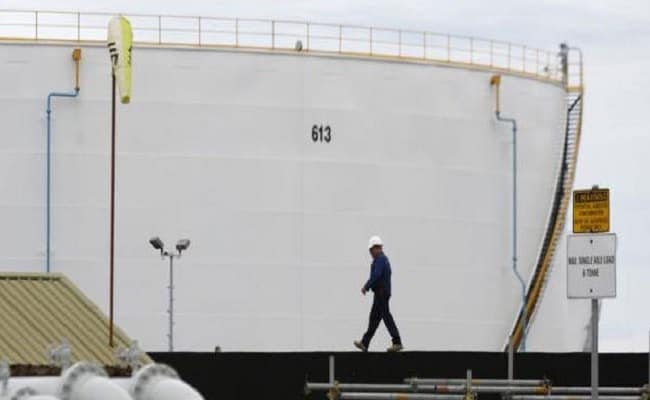
Singapore: Oil prices shot to their highest levels since mid-2015 on Monday after OPEC (Organiation of Petroleum Exporting Countries) and other producers reached their first deal since 2001 to jointly reduce output in order to rein in oversupply and prop up markets.
Brent crude, the international benchmark for oil prices, soared to $57.89 per barrel in overnight trading between Sunday and Monday, the highest level since July 2015.
US West Texas Intermediate (WTI) crude also hit a July 2015 high of $54.51 a barrel.
Brent and WTI eased to $56.58 and $53.92 respectively by 0453 GMT (10:23 p.m. in India), but were both still up over 4 per cent from their last settlements.
With the deal signed after almost a year of arguing within the Organization of the Petroleum Exporting Countries and mistrust in the willingness of non-OPEC Russia to participate, focus is switching to compliance of the agreement.
"We believe that the observation of the OPEC-11 and non-OPEC 11 production cuts is required to sustainably support... oil prices to our 1H17 WTI price forecast of $55 a barrel," Goldman Sachs said.
"This forecast reflects an effective 1.0 million barrels per day (bpd) cut vs. the 1.6 million bpd announced cut and greater compliance to the announced cuts is therefore an upside risk to our forecasts."
AB Bernstein said the agreed deal "amounts to an aggregate supply cut of 1.76 million barrels per day (bpd) from 24 countries which currently produce 52.6 million bpd, or 54 percent of world oil supply."
Bernstein said that "some of the non-OPEC supply cuts will come from natural decline, but most will come from self-imposed cuts".
Saudi Aramco has told US and European customers it will reduce oil deliveries from January.
OPEC plans to slash output by 1.2 million bpd from January 1, with top exporter Saudi Arabia cutting around 486,000 bpd in a bid to end overproduction that has dogged markets for two years.
On Saturday, producers from outside OPEC agreed to reduce output by 558,000 bpd, short of the target of 600,000 bpd but still the largest contribution by non-OPEC ever.
"Non-OPEC participation should add to bullish sentiment," Morgan Stanley said.
From outside OPEC, Russia said it would gradually cut 300,000 bpd.
"Once cuts are implemented at the start of 2017, oil markets will shift from surplus into deficit. Given the cuts in production announced by OPEC, we expect that markets will move into a 0.8 million bpd deficit in 1H17," AB Bernstein said.
Still, some analysts expect producers, drawn by higher oil prices, to increase output again.
"While better compliance than we expect would initially lead to higher prices - with full compliance worth an additional $6 per barrel to our price forecast - we expect that a greater producer response, especially in the US, would eventually bring prices back to $55," Goldman Sachs said.

-
Getting To Work Costs Women More | The Reason Why

It is not just about women paying more than men. It is about women paying much more in cities than in villages.
-
AI Bias In Investing Cannot Be Eliminated, But It Can Be Governed
Framing is a particularly important example as identical financial information presented in terms of gains rather than losses can lead an LLM to reach a different assessment.
-
Joining The Dots | Dark Skies, Steady Diya: Why Hope Holds This Diwali
With war, a weak rupee and foreign outflows weighing on sentiment, policymakers at the NDTV World Summit and market veterans at NDTV Profit Ignite: Diwali Edition offered the same advice: stay invested and filter out the noise.
-
The Curious Case of Equitas Small Finance Bank And A CEO Who Quit For Stock
PN Vasudevan believes persistent investor concerns over a perceived conflict of interest had become a governance overhang on Equitas Small Finance Bank's stock, even as the lender improved profitability and asset quality.
-
Talking Points This Week: AI Cash Burn, A Tiger Comeback And An India That Still Finds Its Own Path
India is not immune to higher oil or tighter global liquidity, yet its earnings base is broader, its domestic policy levers are still available.
-
Foreign Investors Own Half Of HDFC Bank and ICICI Bank. An LTCG Cut Could Matter Most Here
Foreign portfolio investors have US$115 billion parked in HDFC Bank, ICICI Bank. If the government cuts long-term capital gains tax, Jefferies says returning foreign money could land here first.
-
'Never Seen This Level Of Negativity': Sandeep Tandon Says The Next Rally May Be Closer Than You Think
Veteran investor Sandeep Tandon says foreign selling is easing, large-caps are due a comeback and mid-caps are crowded, while he turns positive on gold, power and pharma this Diwali.
-
Indians Stay With Family, Not In Hotels | The Reason Why
India still lacks enough clean, reliable and affordable hotels for budget-conscious travellers.
-
The Economic Imperative: Analysing The Material Driving Force Behind India-Canada Strategic Reset
This economic complementarity is further reinforced by deep institutional investment ties and talent mobility, which form the bedrock of the bilateral framework.
-
Medicine Pricing: Where Must Profit Stop?
India must confront excessive margins, hidden incentives and regulatory gaps that threaten the integrity of medicine.










