Oil Ministry Set To Give 60% Stake In ONGC Fields To Private Firms
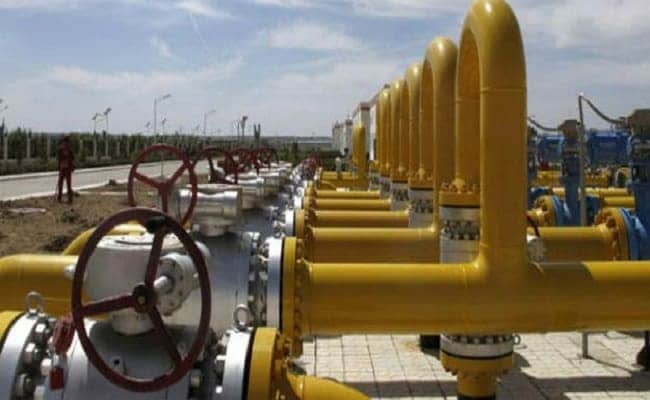
New Delhi: Nearly 25 years after ONGC's prime discovered oilfields were privatised, the oil ministry has identified 11 more producing oil and gas fields of the state-run firm for handing over to private firms to raise output. The ministry is approaching the Cabinet to allow private companies take 60 per cent stake in producing oil and gas fields of national oil companies, ONGC and OIL, with the view that they would raise production above the baseline estimate. As many as 15 fields - 11 of Oil and Natural Gas Corp (ONGC) and four of Oil India Ltd (OIL) - with cumulative inplace reserve of 791.2 million tonnes of crude oil and 333.46 billion cubic metres of gas have been identified, sources privy to the development said.
These include Kalok, Ankleshwar, Gandhar and Santhal - the big four oilfields of ONGC in Gujarat.
All of these fields are in blocks or areas that were given to the national oil companies on nomination basis and the current policy does not allow private firms taking equity stake in a nomination block.
So, a change in policy is required for which the ministry is approaching the cabinet, the sources said.
The policy currently allows giving out of participating interest (PI) or a stake to a private company only in the blocks or areas awarded in open auctions under New Exploration Licensing Policy (NELP) since 1999.
However, only exploration acreage was auctioned under global bidding in such rounds. All areas prior to that were given to ONGC and OIL on a nomination basis.
A baseline based on current oil and gas production from the 15 identified fields would be set and private companies taking 60 per cent equity stake would get only the incremental volumes, sources said.
The fields would be auctioned and any firm committing the maximum capital investment within 10 years of the contract award and the largest share out of its net revenue to the government would be awarded the field.
The 15 fields selected are out of review of 202 fields operated by the national oil companies. The fields chosen are ones that hold reserves of 20 or more million tonnes of oil equivalent (MT OE) and have crossed the half-way mark on a score (indicative of poor field performance) combining exploration index, current recovery and production decline rate in the last three years. Of the 202 fields, 141 are either less than 10 years of age or had shown some positive change in the year-on-year production rate. As many as 44 fields of ONGC and OIL have been identified for production enhancement work through Technical Services Model where technical tie-ups would get the 'tariff' that they bid as a return for increasing the output 'over the baseline production' for 10 years initially.
Sources said the ministry is unhappy with the near stagnant oil and gas production and believes giving out the discovered fields to private firms would help raise output as they can bring in technology and capital. It has been tasked by PM Narendra Modi to cut oil import dependence by 10 per cent by 2022 over 77 per cent dependence in 2014-15. The dependence has only increased and is now over 80 per cent.
The privatisation is repeat of the infamous round in 1992-93 when medium sized discovered fields like Panna/Mukta and Tapti oil and gas field in the western offshore was given to now defunct Enron Corp of the US and Reliance Industries.
As many as 28 fields were then awarded. Under this regime, ONGC was made licensee and given an
option to farm-in 40 per cent of stake. The controversial privatisation under the then oil minister Satish Sharma had resulted in a CBI inquiry.
(Except for the headline, this story has not been edited by NDTV staff and is published from a syndicated feed.)

-
Talking Points This Week: Leadership Shock At Nvidia, Earnings Strength, And The Fog Over Hormuz

The Anthropic IPO pricing and first trading day, Nvidia's upcoming earnings, and any fresh signals from Iran will set the tone for the following week.
-
Signature Play: The Classic Cocktail Is Dead. Or Is It?
Classic cocktails are disappearing from India's cocktail menus. But they're still being ordered, taught to bartenders and borrowed from. So, who's really having the last drink?
-
A New Samvat Wishlist: Inclusive Prosperity And Human Development
India has strengthened its economic foundations through infrastructure, digital access and enterprise. Its next growth chapter must deepen productivity, create better livelihoods and widen participation in prosperity.
-
Love, Sex Aur Dhokha: The Audacious Plot To Spy On Jensen Huang
A Taipei dinner, a Singapore chip buyer and a suspected Chinese asset: inside the alleged spy operation that got close to NVIDIA's Jensen Huang.
-
Ten Things I Learnt This Samvat
Patience can be a trap. Cheap stocks can stay cheap. Leverage can wipe you out. What did Samvat 2082 teach us? Niraj Shah writes on 10 lessons from the year gone by.
-
Talking Points This Week: Tech Nerves, FII Buying, And A Faraway Banking Shock
The global markets are not shining this Diwali. The exception in the large markets is, India.
-
Midterm Rally Lasted A Day. The Hard Reality Of A Divided US May Last Two Years | Opinion
Between a contested AI boom, a debt ceiling that arrives in 2027 and a president with every incentive to act alone, the next two years may prove more volatile than the first day's rally suggests.
-
Blue Wave Will Derail the AI Trade but Won't Dismantle the AI Era | Unhedged Position
The Democrats' sweep of the US Congress will see politics collide with economic forces both over the long and short term.
-
It's Time To Take The GST Council's Bet On Trust Global
Payment records can prove India's services exports, and clear, proportionate rules can bring foreign digital sellers into the tax net.
-
Opinion | India at 38: From Innovation Overperformer to Innovation Powerhouse
India now has 453 VC-backed deep science startups, 18 of them late-stage, after 117 percent growth since 2020. Laurus Labs, at USD 9.3 billion, is the most valuable deep science company in any middle-income economy outside China.









