Oil Jumps To Highest Since Mid-2015, Fed Rate Hike On Horizon
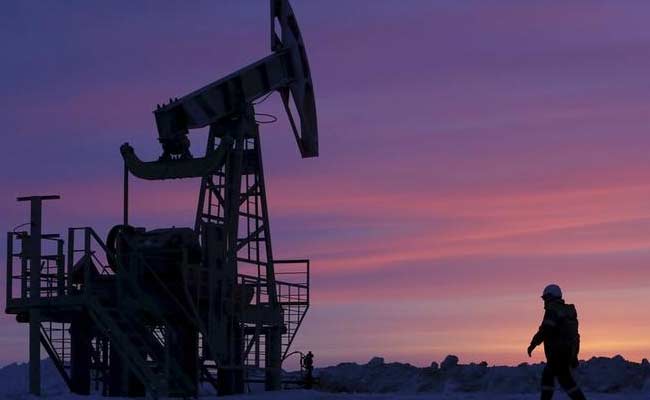
New York: Oil prices surged to an 18-month high on Monday after the world's top crude producers agreed to the first joint output cut since 2001, sparking concerns about inflation, which pushed up US Treasury yields to a more than two-year peak.
Yields also gained ahead of a two-day Federal Reserve policy meeting that starts on Tuesday, where the US central bank is expected to raise interest rates for the only the second time since the global financial crisis.
The gain in oil prices followed the weekend agreement between OPEC (Organization of Petroleum Exporting Countries) and key non-OPEC states. US crude futures rose $1.33 to settle at $52.83 a barrel, a 2.6 per cent gain, though that was sharply off the day's highs.
Brent crude futures rose $1.36 to settle at $55.69, a 2.5 per cent rise, after hitting a session peak of $57.89, the highest since July 2015.
There was particular surprise as Saudi Arabia, the world's top producer, said it may cut its output even more than it had first suggested at an Organization of the Petroleum Exporting Countries meeting just over a week ago.
Energy shares rose sharply in early US trading, helping lift the Dow Jones industrial average and S&P 500 to record intraday highs. But the S&P 500 ended lower along with the Nasdaq. Consumer discretionaries and tech were among sectors that weighed on the S&P 500.
The OPEC news and surge in oil prices were "good news for economic growth in the US as well as Russia and others. But it will be to some extent tempered by a little bit of an impact on consumer spending", said Hugh Johnson, chief investment officer of Hugh Johnson Advisors LLC in Albany, New York.
"There are so many reasons to believe inflation is going to be headed higher, and this just adds fuel to that fire," which is why bond yields are up and the US stock market is mixed, he said.
The Dow Jones industrial average was up 39.58 points, or 0.2 per cent, to 19,796.43, the S&P 500 lost 2.57 points, or 0.1 per cent, to 2,256.96 and the Nasdaq Composite dropped 31.96 points, or 0.59 per cent, to 5,412.54.
MSCI's all-country world stock index was nearly flat, while Europe's STOXX 600 ended down 0.5 per cent.
Benchmark US bond yields topped 2.5 per cent for the first time since October 2014, with analysts saying the OPEC agreement had boosted reflation expectations.
"We have the Fed decision coming up on Wednesday, and people are unsure whether they should buy the dip here," said interest rate strategist Gennadiy Goldberg of TD Securities in New York.
US 10-year notes were down 4/32, while the yield rose to 2.478 per cent from 2.464 per cent late on Friday. Earlier, the yield touched 2.528 per cent, its highest since September 29, 2014.
Fed ahead
In the currency markets, the dollar fell against most major currencies on concerns the US central bank could suggest in an upcoming policy statement that the greenback's gains had gone too far.
At the same time, the gains in oil prices boosted commodity-linked currencies.
The dollar index, which measures the greenback against a basket of six major currencies, was last down 0.6 per cent at 100.980, easing from an earlier one-and-a-half-week high of 101.780.
The Aussie was up 0.4 per cent against the dollar at $0.7488, while the New Zealand dollar was up 0.6 per cent against the greenback at $0.7181.
Gold prices turned higher after falling to their lowest in more than 10 months as the US dollar fell.
Spot gold rose 0.3 per cent at $1,161.62 an ounce after tapping its lowest since February 5 at $1,151.34 an ounce.

-
We May Need Another Tukaram Mundhe To Fight Air Pollution | The Reason Why

Developers may install basic measures such as sprinklers and green nets, resume work, and continue violating rules when this equipment stops working.
-
Extracting Value From Battery Scrap Could Be Challenging For India | The Reason Why
A discarded lithium-ion battery still contains valuable materials such as lithium, nickel and cobalt. These can be recovered and reused. When such batteries are crushed and shredded, they produce a dark powder called black mass.
-
One El Nino, India Can Handle. Two Could Break The Granary
India's grain stocks can absorb one bad year, but a second El Nino could drain the buffer in two to three years, economists say.
-
India's Troika Of Good Luck | Joining The Dots
As Jensen Huang's exit drags Nvidia down, a cooling AI trade and resilient earnings have revived investor interest in India. A likely RBI rate hike looms.
-
Talking Points This Week: Leadership Shock At Nvidia, Earnings Strength, And The Fog Over Hormuz
The Anthropic IPO pricing and first trading day, Nvidia's upcoming earnings, and any fresh signals from Iran will set the tone for the following week.
-
Signature Play: The Classic Cocktail Is Dead. Or Is It?
Classic cocktails are disappearing from India's cocktail menus. But they're still being ordered, taught to bartenders and borrowed from. So, who's really having the last drink?
-
A New Samvat Wishlist: Inclusive Prosperity And Human Development
India has strengthened its economic foundations through infrastructure, digital access and enterprise. Its next growth chapter must deepen productivity, create better livelihoods and widen participation in prosperity.
-
Love, Sex Aur Dhokha: The Audacious Plot To Spy On Jensen Huang
A Taipei dinner, a Singapore chip buyer and a suspected Chinese asset: inside the alleged spy operation that got close to NVIDIA's Jensen Huang.
-
Ten Things I Learnt This Samvat
Patience can be a trap. Cheap stocks can stay cheap. Leverage can wipe you out. What did Samvat 2082 teach us? Niraj Shah writes on 10 lessons from the year gone by.
-
Talking Points This Week: Tech Nerves, FII Buying, And A Faraway Banking Shock
The global markets are not shining this Diwali. The exception in the large markets is, India.









