Oil Holds Above $98 but Weak Demand, Strong Dollar Weigh
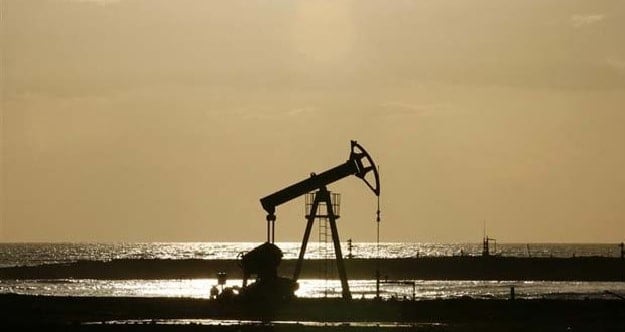
London: Brent crude oil held above $98 a barrel on Friday as the market rebounded from a two-year low but concerns over weak demand and plentiful supplies, plus a strong dollar, continued to weigh on prices.
Brent futures have sold off hard this week, and hit a two-year low on Thursday at $96.72 a barrel.
ICE Brent futures for October were up 28 cents at $98.36 a barrel by 0922 GMT (2:52 p.m. in India), but the international oil benchmark was heading for its biggest weekly loss since the week to August 1.
The October contract expires on Monday, adding to the selling pressure, as investors and traders have been rolling their positions forward into November.
US crude was 43 cents higher at $93.26 a barrel after closing up $1.16 in the previous session.
Analysts said the market had found some support after testing multi-year lows on Thursday, with some investors viewing oil as oversold.
"There was a big bounce in WTI (US) crude yesterday, which is a reflection of the fact that we've seen such a big selloff recently that the market was getting a bit over-extended," said Ole Hansen, senior commodity strategist at Saxo Bank.
"Have we seen the lows for now? It's too early to say. The shorts are now being covered but any uptick in the market will probably be met with renewed weakness unless the geopolitical issues flare up."
Crude faced heavy selling on Thursday due to comments in the International Energy Agency's (IEA) monthly report that weaker consumption in China and Europe had caused global oil demand growth to soften at a remarkable pace.
This was confirmation of a situation that has assailed physical crude markets all summer. Sluggish demand from European and Asian refiners has kept physical prices under pressure and created a glut of oil in the Atlantic Basin. As a result, traders have been stockpiling barrels.
The IEA cut its demand growth projections by 150,000 barrels per day (bpd) to 900,000 bpd for 2014 and by 100,000 bpd to 1.2 million bpd in 2015.
"In the IEA report we saw there is a big difference between the push in new supply from outside of OPEC and the fairly slow consumption growth," said Bjarne Schieldrop, chief commodity analyst at SEB Commodity Research.
As well as a build in shale oil output from the United States, Libyan production has risen to just over 800,000 bpd and is expected to hit 1 million bpd in October.
"It's very unstable, you never know how long it will last, but it is there, and we have refineries going into turnaround at the same time," Mr Schieldrop said.
Saudi Arabia, holder of the world's largest spare output capacity, cut production by 400,000 bpd in August.
Dollar strength
The commodities complex is under pressure from a strong dollar. The dollar index is on track for its ninth straight week of gains - its longest winning streak since 1997.
A stronger dollar makes dollar-priced commodities more expensive for buyers using other currencies. "It's been a horrible week for commodities all round," Mr Hansen said.
The slide in oil prices is said to have been arrested by a step up in tensions between Russia and the West. On Thursday, Russia warned the United States that air strikes in Syria against Islamist militants would be an act of aggression without a UN security mandate.
On Friday, the European Union implemented tougher sanctions against Russia because of the standoff over Ukraine, targeting some state-owned companies and individuals.
The United States will also release details later on Friday of its own new sanctions against Russia. These are expected to target Sberbank, Russia's largest bank, and further limit Russian banks' access to US capital.
Ultimately, this will be detrimental to growth and future oil demand, analysts warned. "As long as the EU and Russia continue to sanction themselves, European economic growth can only go one way and that is down," said Olivier Jakob, an oil analyst at Petromatrix in Switzerland.
Copyright @ Thomson Reuters 2014

-
Indians Are Travelling, But Not Every Journey Is A Holiday | The Week In Whys

Pilgrims, patients and working women are the real travellers, and the system hasn't quite caught up with them.
-
Getting To Work Costs Women More | The Reason Why
It is not just about women paying more than men. It is about women paying much more in cities than in villages.
-
AI Bias In Investing Cannot Be Eliminated, But It Can Be Governed
Framing is a particularly important example as identical financial information presented in terms of gains rather than losses can lead an LLM to reach a different assessment.
-
Joining The Dots | Dark Skies, Steady Diya: Why Hope Holds This Diwali
With war, a weak rupee and foreign outflows weighing on sentiment, policymakers at the NDTV World Summit and market veterans at NDTV Profit Ignite: Diwali Edition offered the same advice: stay invested and filter out the noise.
-
The Curious Case of Equitas Small Finance Bank And A CEO Who Quit For Stock
PN Vasudevan believes persistent investor concerns over a perceived conflict of interest had become a governance overhang on Equitas Small Finance Bank's stock, even as the lender improved profitability and asset quality.
-
Talking Points This Week: AI Cash Burn, A Tiger Comeback And An India That Still Finds Its Own Path
India is not immune to higher oil or tighter global liquidity, yet its earnings base is broader, its domestic policy levers are still available.
-
Foreign Investors Own Half Of HDFC Bank and ICICI Bank. An LTCG Cut Could Matter Most Here
Foreign portfolio investors have US$115 billion parked in HDFC Bank, ICICI Bank. If the government cuts long-term capital gains tax, Jefferies says returning foreign money could land here first.
-
'Never Seen This Level Of Negativity': Sandeep Tandon Says The Next Rally May Be Closer Than You Think
Veteran investor Sandeep Tandon says foreign selling is easing, large-caps are due a comeback and mid-caps are crowded, while he turns positive on gold, power and pharma this Diwali.
-
Indians Stay With Family, Not In Hotels | The Reason Why
India still lacks enough clean, reliable and affordable hotels for budget-conscious travellers.
-
The Economic Imperative: Analysing The Material Driving Force Behind India-Canada Strategic Reset
This economic complementarity is further reinforced by deep institutional investment ties and talent mobility, which form the bedrock of the bilateral framework.










