Oil Falls to Three-Month Low as Recession Fears Spook Market

(Bloomberg) -- Oil tumbled as concerns about a global economic slowdown and growing Covid-19 cases in China reduced traders' appetite for risk.
West Texas Intermediate shed more than 8% to settle under $96 a barrel for the first time since early April. Rising virus cases in China and looming US inflation data are stoking concerns about demand. Meanwhile, dwindling liquidity is also exacerbating price moves. Money managers have become more bearish on the main oil benchmarks, cutting their net-long positions last week to the lowest since 2020.
“The volatility in commodity markets increases the stakes for putting money to work,” said Rebecca Babin, senior energy trader at CIBC Private Wealth Management. “The decimation of other commodities has also reduced risk appetite for crude even in a supply-constrained market.”
Despite recession fears, several energy administrations agree that supply tightness is set to worsen. IEA's Executive Director Fatih Birol said nations “might not have seen the worst” of a global energy crunch while OPEC's first look at 2023 showed no relief from market tightness. Underscoring supply constraints, the US lowered its growth forecast for oil production through 2023 citing inflation and labor shortages.
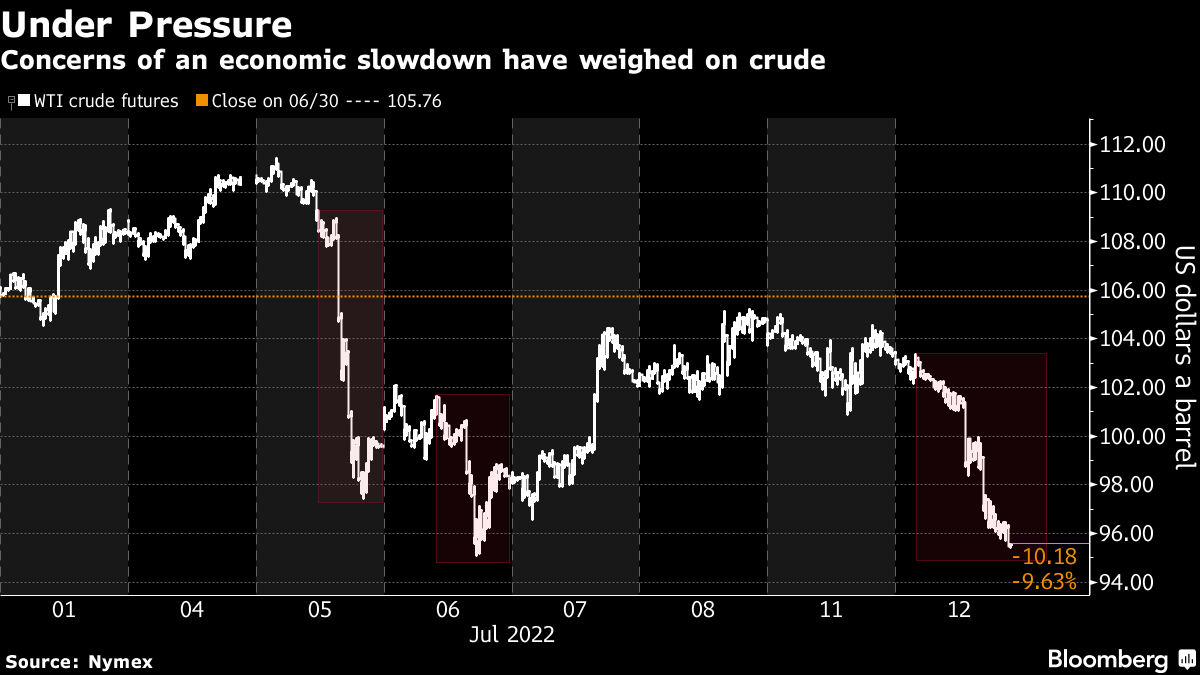
Crude has fallen since early June on escalating fears the US may be pushed into a recession as central banks hike rates to combat inflation. Yet physical markets continue to show signs of strength. Premiums for North Sea oil were bid at the highest since at least 2008. The oil futures curve also remains backwardated, where near-term contracts are more expensive than those for later delivery.
President Joe Biden is scheduled to visit Saudi Arabia this week during a tour to the Middle East as he seeks to tame high energy prices that have roiled the global economy.
The US believes OPEC has room to raise production should Biden's upcoming visit to the region yield any agreements. France's President will meet with the leader of the UAE next week to discuss oil supplies.
More stories like this are available on bloomberg.com
©2022 Bloomberg L.P.

-
'Never Seen This Level Of Negativity': Sandeep Tandon Says The Next Rally May Be Closer Than You Think

Veteran investor Sandeep Tandon says foreign selling is easing, large-caps are due a comeback and mid-caps are crowded, while he turns positive on gold, power and pharma this Diwali.
-
Indians Stay With Family, Not In Hotels | The Reason Why
India still lacks enough clean, reliable and affordable hotels for budget-conscious travellers.
-
The Economic Imperative: Analysing The Material Driving Force Behind India-Canada Strategic Reset
This economic complementarity is further reinforced by deep institutional investment ties and talent mobility, which form the bedrock of the bilateral framework.
-
Medicine Pricing: Where Must Profit Stop?
India must confront excessive margins, hidden incentives and regulatory gaps that threaten the integrity of medicine.
-
Why Amazon And Flipkart Are Struggling To Beat Meesho In India's Smaller Cities
With 274 million users and lowest-cost logistics, Meesho is defending its value commerce crown against giants like Amazon and Flipkart.
-
High US Salaries, No Green Card Certainty: The Financial Calculation Facing Indian H-1B Families
The suspension of PERM processing at eight technology employers does not cancel existing H-1B visas. What it does is force a question many Indian families have been avoiding: is the US salary worth tying your career and family plans to one employer?
-
Swiggy vs Eternal: Food Delivery's Two Rivals Are No Longer In The Same Race
Eternal is building a private AI assistant, dark.ai. Swiggy is still working out how to make Instamart pay, with an operating loss of Rs 895 crore in the July-September quarter while Blinkit stayed profitable.
-
Where You Live Shapes How You Get To Work | The Reason Why
Two-wheelers are the most popular way to get to work in India, accounting for nearly 43% of workplace commutes.
-
Unhedged Position: Can India See An Indonesia-Style Time Correction?
The Nifty is trading below levels it first clocked in 2024. Is there, then, as I have suggested in the headline, potential that the current time correction drags on painfully for the next three-five, even ten years?
-
Navigating Friction And Energy Realities: An Analysis Of Marco Rubio's October Visit To India
Occurring at a critical juncture marked by stalled trade negotiations and escalating geopolitical pressures over global energy supplies, the visit offers a profound window into modern US-India relations.










