No Cut In Petrol, Diesel Prices Despite Oil At 6-Month Low Because...
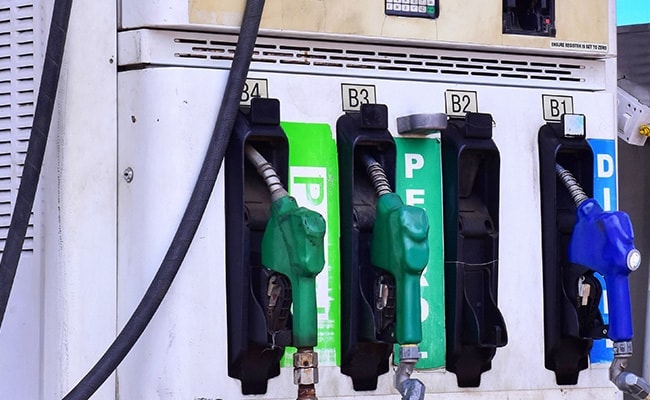
International oil prices have hit a six-month low, helping Indian fuel retailers break even on petrol, but officials said they continue to lose money on diesel - the most used fuel in the country.
The world's best-known crude benchmark, Brent, was trading at $94.91 per barrel on Thursday after concerns of a global recession led to it slipping to a six-month low of $91.51 on the previous day.
The current rates are a relief to India, which is 85 per cent dependent on imports for meeting its oil needs.
The fall in prices has meant that fuel retailers such as Indian Oil Corporation are now breaking even on petrol, but there are some losses on diesel, officials with knowledge of the matter said.
State-owned fuel retailers IOC, Bharat Petroleum Corporation Ltd (BPCL) and Hindustan Petroleum Corporation Ltd (HPCL) have not exercised their right to adjust the retail selling price of petrol and diesel in line with the international costs for four and half months now to help the government manage runaway inflation.
At one point, they were losing Rs 20-25 per litre on diesel and Rs 14-18 a litre on petrol as
international oil prices soared. These losses have been trimmed with the fall in oil prices.
"There are no under-recovery (losses) on petrol now. For diesel, it will take some time to reach that level," an official said.
But this is unlikely to translate into an immediate reduction in rates as oil companies will be allowed to recoup losses they had accumulated on selling fuel at below cost in the last five months, another official said.
Under-recovery on diesel is now down to Rs 4-5 a litre.
IOC, BPCL and HPCL are supposed to revise the retail price of petrol and diesel daily in line with cost. But they froze rates for a record 137 days beginning November 4, 2021, just as states like Uttar Pradesh went to polls.
That freeze ended on March 22 this year, and rates went up by Rs 10 per litre each just over a fortnight before a new freeze came into effect from April 7.
Petrol currently costs Rs 96.72 a litre and diesel Rs 89.62 in the national capital. This is down from Rs 105.41 a litre price on April 6 for petrol and Rs 96.67 a litre for diesel as the government cut excise duty to cool rates.
The Rs 10 a litre increase, effected between March 22 to April 6, wasn't sufficient to cover the cost and the new freeze meant the accumulation of more losses, officials said.
Oil companies did not revise rates to help the government manage inflation which had already peaked at a multi-year high. It would have further spiked if petrol and diesel prices were increased in line with cost.
Last week in Panipat, Oil Minister Hardeep Singh Puri described the state-owned fuel retailers as "good corporate citizens" for not increasing the prices.
But the freeze meant that the three retailers posted a combined net loss of Rs 18,480 crore in the June quarter.
Petrol was deregulated in June 2010 and diesel in November 2014. Since then, the government does not pay oil firms any subsidy to compensate them for losses they might incur on selling fuel at rates below cost.
So, the oil companies recoup losses when input costs fall, the first official explained.
Russia's February 24 invasion of Ukraine sent shock waves through global energy markets.
Initial price spikes turned into lingering price rises as the global community imposed sanctions on Russia's key exports. Brent was at $90.21 per barrel before the invasion and rose to a 14-year high of $140 on March 6.
In recent weeks, some of the heat has come out of oil markets on fears of a recession snipping away demand.
The basket of crude oil India imports averaged $91.45 per barrel on Wednesday, official data showed.
It averaged $102.97 in April before rising to $109.51 the following month and $116.01 in June.
Prices started to fall in July when the Indian basket averaged $105.49 a barrel. It averaged $97.19 in August.

-
One El Nino, India Can Handle. Two Could Break The Granary

India's grain stocks can absorb one bad year, but a second El Nino could drain the buffer in two to three years, economists say.
-
India's Troika Of Good Luck | Joining The Dots
As Jensen Huang's exit drags Nvidia down, a cooling AI trade and resilient earnings have revived investor interest in India. A likely RBI rate hike looms.
-
Talking Points This Week: Leadership Shock At Nvidia, Earnings Strength, And The Fog Over Hormuz
The Anthropic IPO pricing and first trading day, Nvidia's upcoming earnings, and any fresh signals from Iran will set the tone for the following week.
-
Signature Play: The Classic Cocktail Is Dead. Or Is It?
Classic cocktails are disappearing from India's cocktail menus. But they're still being ordered, taught to bartenders and borrowed from. So, who's really having the last drink?
-
A New Samvat Wishlist: Inclusive Prosperity And Human Development
India has strengthened its economic foundations through infrastructure, digital access and enterprise. Its next growth chapter must deepen productivity, create better livelihoods and widen participation in prosperity.
-
Love, Sex Aur Dhokha: The Audacious Plot To Spy On Jensen Huang
A Taipei dinner, a Singapore chip buyer and a suspected Chinese asset: inside the alleged spy operation that got close to NVIDIA's Jensen Huang.
-
Ten Things I Learnt This Samvat
Patience can be a trap. Cheap stocks can stay cheap. Leverage can wipe you out. What did Samvat 2082 teach us? Niraj Shah writes on 10 lessons from the year gone by.
-
Talking Points This Week: Tech Nerves, FII Buying, And A Faraway Banking Shock
The global markets are not shining this Diwali. The exception in the large markets is, India.
-
Midterm Rally Lasted A Day. The Hard Reality Of A Divided US May Last Two Years | Opinion
Between a contested AI boom, a debt ceiling that arrives in 2027 and a president with every incentive to act alone, the next two years may prove more volatile than the first day's rally suggests.
-
Blue Wave Will Derail the AI Trade but Won't Dismantle the AI Era | Unhedged Position
The Democrats' sweep of the US Congress will see politics collide with economic forces both over the long and short term.









