Oh Brother! Coronavirus Calls Split Family Fortunes On Wall Street
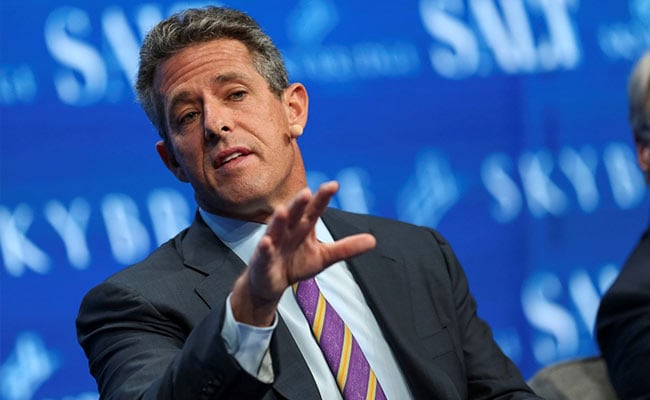
After a calamitous two week plunge in stocks as the coronavirus spread globally, Ricky Sandler called into a midday CNBC show on March 16 with a brash, bullish prediction.
"People are totally missing what is happening here. Every new headline, every new hysteria is making people more nervous and it's actually very, very positive," he said, recommending that viewers borrow against their mortgages to buy stocks.
Andrew Sandler, holed up with family, dogs and pet fish on New York's Long Island, couldn't resist a shot at his little brother on Facebook.
"I think he's wrong," Andrew posted immediately after the TV appearance.
The depth and duration of COVID-19's economic impact is a subject of debate among families the world over. But for Ricky and Andrew Sandler, their diverging views have broader implications: both run multi-billion dollar stock-focused hedge funds.
Their different outlooks -- time to buy or stay cautious -- have meant double-digit losses for Ricky's $7.6 billion Eminence Capital LP and double-digit gains for Andrew's nearly $2 billion unit of Sandler Capital Management.
It's a scenario playing out across Wall Street. The coronavirus killed off the longest-running bull market in equities, meaning most hedge funds are nursing losses, with the average stock-focused fund down about 9.5 per cent in March and 13 per cent lower for the first quarter, according to data tracker HFR.
A small number of hedge fund managers who positioned in time for the fallout have profited, few more than Andrew Sandler. The elder Sandler brother was one of the best performing hedge fund managers in the world for the first quarter, according to a ranking by HSBC.
To be sure, when markets recover, investors who held or added to their stock holdings may generate large gains, but the timing of such a payoff is uncertain.
Representatives for Andrew and Ricky declined to comment and would not make them available for interview.
Downside Risks
The Sandler brothers followed their late father, Harvey, into investment management in the 1990s. Andrew joined the family firm while Ricky set up his own fund. Until recently the brothers, now in their early 50s, worked a few blocks apart in midtown Manhattan offices.
Ricky, a cycling enthusiast who alternates between athletic apparel and power neckties, is comfortable in the spotlight. He routinely appears at gatherings of Wall Street's elite, such as the Milken Institute's annual confab in Beverly Hills and Allen & Co's Sun Valley conference, and sometimes mounts public campaigns against companies.
Self-described as risk averse, Andrew is more low-key, avoiding the hedge fund speaking circuit in favor of tending to a 17,000 gallon basement aquarium.
In contrast to his younger brother, Andrew's caution meant he missed out on the full market surge of recent years. His Sandler Plus fund gained just 2.75 per cent in 2019, according to an investor letter, compared to a gain of nearly 14 per cent by the average stock focused fund.
That all changed this year. Andrew had positioned his funds defensively, writing to investors on January 16 that "we remain concerned about valuations and downside risks the market seems to be ignoring."
Andrew was soon reducing market exposure even further, in part because of a rapidly spreading virus in China.
"The Coronavirus could serve as a catalyst for disappointing global growth as well as specifically disrupt certain supply chains and consumer businesses," the firm noted in a January 28 Lyxor/Sandler U.S. Equity Fund report.
Andrew's positioning was ideal when stocks started their rapid decline in late February: his funds had more bets on stocks declining than on them rising that month, according to a February 25 Lyxor report.
It also noted increased bets on healthcare stocks and a reduction in consumer discretionary businesses, which have been particularly hard hit as governments curtailed economic activity to prevent the spread of the virus.
Andrew's Sandler Plus funds surged approximately 9.5 per cent in March, putting its year-to-date performance at nearly 15 per cent, according to an investor update reviewed by Reuters.
'Take Heed'
On March 16, the same day that Ricky took to CNBC to talk up the markets, Andrew warned a friend that he was not surprised by 1,000 point single day declines for major stock indexes. "Going to be more. Stay liquid my man. This is fucked up," he wrote on Facebook.
Ricky came out of 2019 optimistic. As U.S. stocks surged, Eminence's main hedge fund gained 21 percent in 2019 with a bullish net portfolio exposure of 47 per cent in July, according to Institutional Investor.
Eminence's exact positioning in late February was not available, but by the time Ricky went on CNBC in mid-March, his fund had suffered losses of more than 30 per cent, according to an investor with direct knowledge of the performance.
Eminence's top holdings at yearend, according to the most recent regulatory filing, included Versace apparel parent Capri Holdings Limited, chemical maker Ashland Global Holdings Inc. and motorsports giant Liberty Media Formula One; those stocks suffered first quarter price declines of between 35 per cent and 72 per cent.
Ricky told clients on a call in late March that he was leaning into his positions and remained bullish on the portfolio, according to the investor. Eminence performance rebounded slightly by the end of the month, putting the fund down 19 per cent for the first quarter, according to the investor.
Reuters could not determine if Eminence has changed its investment strategy since the end of the first quarter; a representative for the firm declined to comment on that or recent performance.
Ricky was still bullish and predicted a 10 per cent stock market rise from current levels by the yearend in an April 7 video discussion hosted by the University of Wisconsin.
Major U.S stock indices have risen between 7 per cent and 12 per cent since the beginning of April.
It's not clear how much the Sandler brothers discuss the markets. But on March 20, a long-dormant Twitter account under the name Ricky Sandler responded to criticism of his CNBC appearance earlier in the week.
"Those who think I am an idiot take heed," he wrote. "This is the buying opportunity of a lifetime."

-
Gold Is Rs 22,000 Cheaper Than A Month Ago. Should You Buy Amid The Wedding Season?

Gold's potential slide to $3,500 could save around Rs 4,700 per 10 grams, but a soft inflation print could just as easily push prices back up. One way to split the risk is to buy in parts, some now and the rest after the Fed's Dec. 9 decision.
-
AI Agents Are Gaining Power. Who Governs Them?
Artificial intelligence agents promise to transform productivity by moving machines from assisting decisions to executing them. But as organisations delegate greater authority to these AI-agents, they must first establish who controls that authority and who remains accountable when things go wrong.
-
Why Swapping Your Old Gold Can Trigger A Rs 5 Lakh Tax Bill, And How You Can Avoid It Legally
Swapping old gold for new is taxed as a sale and a fresh purchase. Getting your own gold remade can cut most of that bill, though it has its own costs.
-
The AI Trade is Done. The Real Opportunity for Investors Starts in 2027 | Unhedged Position
As pureplay AI stocks plunge and circular, capex-led financing unwinds, 2027 is set to be a year of reckoning for AI companies. Yet the bust clears the way for a better opportunity for investors in 2027 -- shifting the spotlight from AI builders to the companies using AI.
-
Leadership As Mission: Why The Age Of AI Demands More Human Leadership
Debjani Ghosh examines how AI is changing leadership, arguing that its success must be measured by its impact on people and the accountability of those guiding its use.
-
We May Need Another Tukaram Mundhe To Fight Air Pollution | The Reason Why
Developers may install basic measures such as sprinklers and green nets, resume work, and continue violating rules when this equipment stops working.
-
Extracting Value From Battery Scrap Could Be Challenging For India | The Reason Why
A discarded lithium-ion battery still contains valuable materials such as lithium, nickel and cobalt. These can be recovered and reused. When such batteries are crushed and shredded, they produce a dark powder called black mass.
-
One El Nino, India Can Handle. Two Could Break The Granary
India's grain stocks can absorb one bad year, but a second El Nino could drain the buffer in two to three years, economists say.
-
India's Troika Of Good Luck | Joining The Dots
As Jensen Huang's exit drags Nvidia down, a cooling AI trade and resilient earnings have revived investor interest in India. A likely RBI rate hike looms.
-
Talking Points This Week: Leadership Shock At Nvidia, Earnings Strength, And The Fog Over Hormuz
The Anthropic IPO pricing and first trading day, Nvidia's upcoming earnings, and any fresh signals from Iran will set the tone for the following week.









