Nokia names networks head Rajeev Suri as CEO
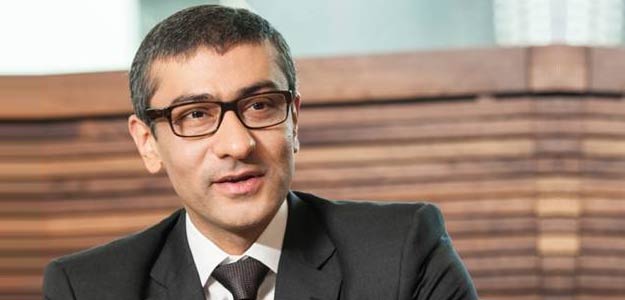
Nokia named the man who led a turnaround at its main telecoms network business as its new chief executive on Tuesday, boosting investors' confidence in the future of the company following the sale of its once dominant handset arm.
The Finnish firm, which completed the 5.6 billion euro ($7.8 billion) deal to sell its mobile handset business to Microsoft on Friday, said Rajeev Suri would become its CEO on May 1, replacing Stephen Elop who is moving to Microsoft.
It also announced forecast-beating quarterly results, driven by cost-cutting and software deals at its networks arm, formerly called NSN, and plans to return $3.1 billion to shareholders, helping to send its shares over 7 per cent higher.
"Mr. Suri has done a very commendable job in turning around NSN, in our view. Thus, we see the market being positive about his appointment," JP Morgan Cazenove analysts said.
Mr Suri, a 46-year-old Indian national, was widely expected to lead the company following the sale of the handset business.
Nokia's networks division accounted for about 90 per cent of sales from the group's continuing businesses last year. But analysts say it faces challenges, as higher research and development costs give bigger, deep-pocketed telecom equipment makers such as industry leader Ericsson and China's Huawei an advantage.
Still, Nokia beat expectations with a core operating profit margin of 9.3 per cent in the first quarter, well ahead of the 5.7 per cent average forecast by analysts polled by Reuters. The margin is also expected to remain at the higher end of a 5-10 per cent target for this year, the company added. "On first-quarter results, NSN steals the show with a solid margin beat and expanded 2014 (guidance)," Jefferies analysts Lee Simpson and Robert Lamb said in a note.
Following the sale of its handset business, analysts have speculated Nokia might seek to buy struggling rival Alcatel-Lucent, or at least its mobile products which would help to boost the Finnish firm's position in the United States.
Asked about potential acquisitions, Mr Suri told Reuters in a telephone interview that small ones were possible. "In terms of larger players, if there is something that makes sense, of course I will recommend that to the board. But ... it needs to be a wisely thought-out thing," he said. "We will be open to the opportunities but (there's) no need to rush."
Mr Suri said all three of Nokia's business areas - in addition to the networks unit, it has navigation and patents businesses - had opportunities for organic growth, without acquisitions.
The company could look to sell combined patent and technology licences, he said, adding it could potentially license its brand as well.
Keeping investors onboard
Nokia's once industry-leading mobile handset business fell behind rivals such as Apple and Samsung in moving into smartphones, and a turnaround drive by outgoing CEO Elop failed to deliver quick results.
The company's shares, which traded at over 28 euros in 2007, plunged to as low as 1.33 euros in 2012, before recovering somewhat, mainly in the wake of the Microsoft deal. At 0910 GMT, the stock was up 7.2 per cent at 5.51 euros, the biggest rise by a European blue-chip stock.
In a bid to keep investors onside while it changes focus, Nokia said it would pay an extra 1 billion euros ($1.4 billion) in dividends for last year and start a 1.25 billion euros share buyback programme.
The extra dividend of 0.26 euros per share is on top of the annual dividend of 0.11 euros for last year. The ordinary dividend will cost the company another 400 million euros, or about half of Nokia's earnings for last year.
"The dividend proposal is slightly smaller than expected, but the buy-back program is quite extensive. It reflects the management's view that the stock is valued below its sum-of-parts," said Inderes analyst Mikael Rautanen.
Nokia said it would cut debt by 2 billion euros, which would save it around 100 million euros in interest annually. Mr Suri said he expected the improved finances to lift Nokia's credit ratings back to investment grade.
Nokia said its net cash position at the end of March was 2.1 billion euros, down from 2.3 billion at the end of last year. Had the handset unit sale closed in the first quarter, the net cash position would have been 7.1 billion euros, Nokia added.
($1= 0.7223 Euros)
Copyright: Thomson Reuters 2014

-
Indians Are Travelling, But Not Every Journey Is A Holiday | The Week In Whys

Pilgrims, patients and working women are the real travellers, and the system hasn't quite caught up with them.
-
Getting To Work Costs Women More | The Reason Why
It is not just about women paying more than men. It is about women paying much more in cities than in villages.
-
AI Bias In Investing Cannot Be Eliminated, But It Can Be Governed
Framing is a particularly important example as identical financial information presented in terms of gains rather than losses can lead an LLM to reach a different assessment.
-
Joining The Dots | Dark Skies, Steady Diya: Why Hope Holds This Diwali
With war, a weak rupee and foreign outflows weighing on sentiment, policymakers at the NDTV World Summit and market veterans at NDTV Profit Ignite: Diwali Edition offered the same advice: stay invested and filter out the noise.
-
The Curious Case of Equitas Small Finance Bank And A CEO Who Quit For Stock
PN Vasudevan believes persistent investor concerns over a perceived conflict of interest had become a governance overhang on Equitas Small Finance Bank's stock, even as the lender improved profitability and asset quality.
-
Talking Points This Week: AI Cash Burn, A Tiger Comeback And An India That Still Finds Its Own Path
India is not immune to higher oil or tighter global liquidity, yet its earnings base is broader, its domestic policy levers are still available.
-
Foreign Investors Own Half Of HDFC Bank and ICICI Bank. An LTCG Cut Could Matter Most Here
Foreign portfolio investors have US$115 billion parked in HDFC Bank, ICICI Bank. If the government cuts long-term capital gains tax, Jefferies says returning foreign money could land here first.
-
'Never Seen This Level Of Negativity': Sandeep Tandon Says The Next Rally May Be Closer Than You Think
Veteran investor Sandeep Tandon says foreign selling is easing, large-caps are due a comeback and mid-caps are crowded, while he turns positive on gold, power and pharma this Diwali.
-
Indians Stay With Family, Not In Hotels | The Reason Why
India still lacks enough clean, reliable and affordable hotels for budget-conscious travellers.
-
The Economic Imperative: Analysing The Material Driving Force Behind India-Canada Strategic Reset
This economic complementarity is further reinforced by deep institutional investment ties and talent mobility, which form the bedrock of the bilateral framework.










