No Silver Bullet For Excessive Inequality: IMF Chief Christine Lagarde
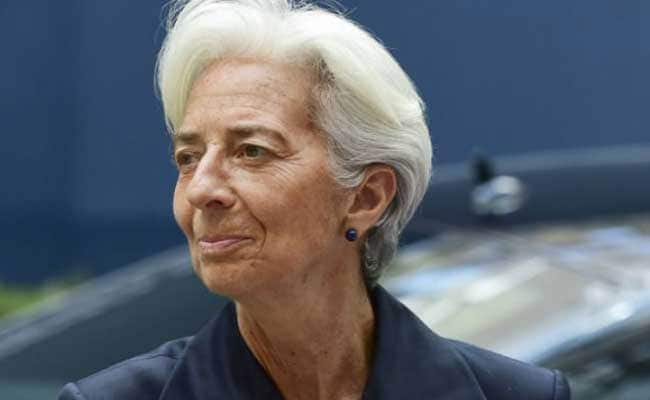
Davos: Policymakers across the world must act now to check inequalities even as there is no "silver bullet" to contain this problem, International Monetary Fund Managing Director Christine Lagarde said on Wednesday amid a raging debate here on widening wealth gap and the resultant rise in populism at the annual World Economic Forum meeting.
She also said that turning back on globalisation will be a wrong approach.
"Yes and now, the economists would say," the IMF chief said on whether the middle class is in crisis.
"There is this crisis in the advanced economies," she added.
According to her, the middle class is both growing and shrinking - growing on a global basis, but shrinking in countries like the US.
If there is excessive inequalities, it becomes difficult to achieve sustainable growth, she added.
Further, Ms Lagarde said there was a large backlash from several economists including from her own institution when she first talked about inequality in 2013 here at Davos in a plenary session.
"If the policymakers do not listen now, I don't understand what can be done... There is no silver bullet response to excessive inequality," she said, adding that turning back on globalisation will be a wrong approach.
She also emphasised that policymakers must listen to the voters.
On concerns whether globalisation will take a hit due to the policies of incoming US President Donald Trump, she said, "We have very little by way of detailed information as to what the plan is if there is such thing as a plan."
She was speaking at a session at WEF Annual Meeting here on how to fix the middle class crisis.
At the same session, eminent economist and Harvard Professor Larry Summers said the wealthy feel they need to look after themselves while poor feel that they are not being heard.
He said globalisation itself has changed considerably today, adding that one needs to be very cautious with ad hoc policy making.
The panel also discussed whether poor employment prospects and low-income growth in many developed economies have laid the groundwork for the rise of populism. It also focused on whether policymakers ignored these trends or did too little to address them.
Besides, the panelists talked about what can be done to restore growth in the middle class and confidence in the future.
Speaking on the issue of middle class crisis, Ray Dalio, Bridgewater Associates, said populism is the number one issue in politics today.
Ms Lagarde said there is also a need to address the middle class anxiety on new technology disruptions as well as other new things and policy makers would need to think about that.
Panelists also said one needs to understand that all people voting for populist measures are not necessarily bad guys and probably they are concerned about their children's future.
At the same panel, Brazil's Finance Minister Henrique Meirelles said globalisation is getting a lot of people out of poverty, so net effect is very positive.

-
We May Need Another Tukaram Mundhe To Fight Air Pollution | The Reason Why

Developers may install basic measures such as sprinklers and green nets, resume work, and continue violating rules when this equipment stops working.
-
Extracting Value From Battery Scrap Could Be Challenging For India | The Reason Why
A discarded lithium-ion battery still contains valuable materials such as lithium, nickel and cobalt. These can be recovered and reused. When such batteries are crushed and shredded, they produce a dark powder called black mass.
-
One El Nino, India Can Handle. Two Could Break The Granary
India's grain stocks can absorb one bad year, but a second El Nino could drain the buffer in two to three years, economists say.
-
India's Troika Of Good Luck | Joining The Dots
As Jensen Huang's exit drags Nvidia down, a cooling AI trade and resilient earnings have revived investor interest in India. A likely RBI rate hike looms.
-
Talking Points This Week: Leadership Shock At Nvidia, Earnings Strength, And The Fog Over Hormuz
The Anthropic IPO pricing and first trading day, Nvidia's upcoming earnings, and any fresh signals from Iran will set the tone for the following week.
-
Signature Play: The Classic Cocktail Is Dead. Or Is It?
Classic cocktails are disappearing from India's cocktail menus. But they're still being ordered, taught to bartenders and borrowed from. So, who's really having the last drink?
-
A New Samvat Wishlist: Inclusive Prosperity And Human Development
India has strengthened its economic foundations through infrastructure, digital access and enterprise. Its next growth chapter must deepen productivity, create better livelihoods and widen participation in prosperity.
-
Love, Sex Aur Dhokha: The Audacious Plot To Spy On Jensen Huang
A Taipei dinner, a Singapore chip buyer and a suspected Chinese asset: inside the alleged spy operation that got close to NVIDIA's Jensen Huang.
-
Ten Things I Learnt This Samvat
Patience can be a trap. Cheap stocks can stay cheap. Leverage can wipe you out. What did Samvat 2082 teach us? Niraj Shah writes on 10 lessons from the year gone by.
-
Talking Points This Week: Tech Nerves, FII Buying, And A Faraway Banking Shock
The global markets are not shining this Diwali. The exception in the large markets is, India.









