No Information on Black Money List From Switzerland, Says Finance Minister
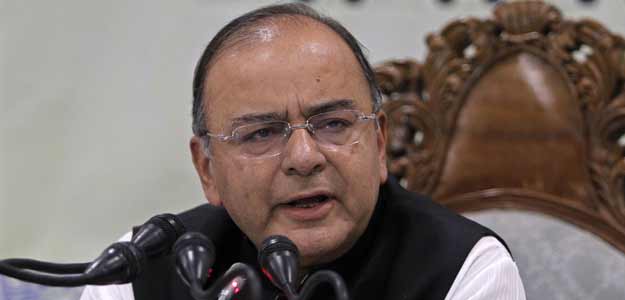
The government has not received any communication from Switzerland about "black money" suspected to be stashed in Swiss banks, said Finance Minister Arun Jaitley.
His comments followed media reports that Switzerland is ready to share with India a list of names of Indian account holders who they suspect of not paying taxes. The minister said he is writing to the Swiss authorities today to "expedite the process of sharing the information".
Over the weekend, the Press Trust of India quoted an unidentified Swiss government official as saying a list had been readied and that, "These individuals and entities are suspected to have held un-taxed money in Swiss banks through structures like trusts, domiciliary companies and other legal entities based out of countries other than India."
The report said the official had not revealed the identity of the alleged bank account holders, or the amount of undeclared money placed by them in Swiss banks.
"Switzerland understands and shares India's wish to fight tax evasion and is committed to complying with the relating international standards," the Swiss Embassy said in a statement today.
After being voted to power, the new Narendra Modi government set up a Special Investigating Team or SIT with 11 members to help identify Indians who have placed undeclared and in taxed income in Switzerland. The team is headed by Justice MB Shah, a former Supreme Court judge.
The Supreme Court had in 2011 ordered that a committee that includes two retired judges be appointed to blueprint an agenda for how to bring back money from secret bank accounts abroad. The previous government of Dr Mamnohan Singh had resisted this, alleging that a court-monitored investigation was unnecessary because agencies like the CBI and Enforcement Directorate were handling the inquiry. That stand irked the Supreme Court, which censured the government at a series of hearings.

-
Extracting Value From Battery Scrap Could Be Challenging For India | The Reason Why

A discarded lithium-ion battery still contains valuable materials such as lithium, nickel and cobalt. These can be recovered and reused. When such batteries are crushed and shredded, they produce a dark powder called black mass.
-
One El Nino, India Can Handle. Two Could Break The Granary
India's grain stocks can absorb one bad year, but a second El Nino could drain the buffer in two to three years, economists say.
-
India's Troika Of Good Luck | Joining The Dots
As Jensen Huang's exit drags Nvidia down, a cooling AI trade and resilient earnings have revived investor interest in India. A likely RBI rate hike looms.
-
Talking Points This Week: Leadership Shock At Nvidia, Earnings Strength, And The Fog Over Hormuz
The Anthropic IPO pricing and first trading day, Nvidia's upcoming earnings, and any fresh signals from Iran will set the tone for the following week.
-
Signature Play: The Classic Cocktail Is Dead. Or Is It?
Classic cocktails are disappearing from India's cocktail menus. But they're still being ordered, taught to bartenders and borrowed from. So, who's really having the last drink?
-
A New Samvat Wishlist: Inclusive Prosperity And Human Development
India has strengthened its economic foundations through infrastructure, digital access and enterprise. Its next growth chapter must deepen productivity, create better livelihoods and widen participation in prosperity.
-
Love, Sex Aur Dhokha: The Audacious Plot To Spy On Jensen Huang
A Taipei dinner, a Singapore chip buyer and a suspected Chinese asset: inside the alleged spy operation that got close to NVIDIA's Jensen Huang.
-
Ten Things I Learnt This Samvat
Patience can be a trap. Cheap stocks can stay cheap. Leverage can wipe you out. What did Samvat 2082 teach us? Niraj Shah writes on 10 lessons from the year gone by.
-
Talking Points This Week: Tech Nerves, FII Buying, And A Faraway Banking Shock
The global markets are not shining this Diwali. The exception in the large markets is, India.
-
Midterm Rally Lasted A Day. The Hard Reality Of A Divided US May Last Two Years | Opinion
Between a contested AI boom, a debt ceiling that arrives in 2027 and a president with every incentive to act alone, the next two years may prove more volatile than the first day's rally suggests.









