Why A Jump In Retail Auto Sales Is Nothing To Cheer About
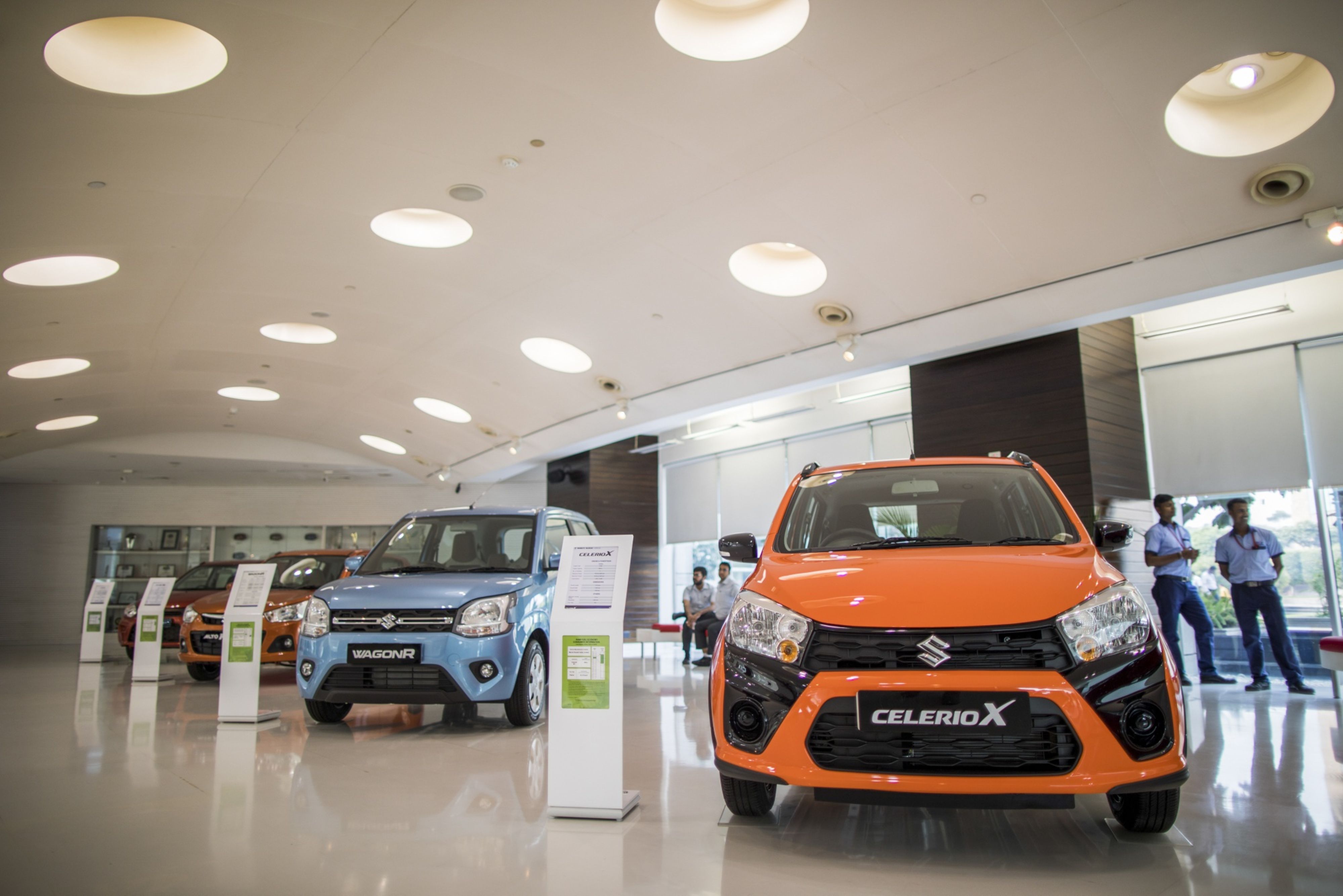
Retail auto sales jumped to their highest in three months in October but still offered little to celebrate for makers of cars and two-wheelers grappling with a prolonged slowdown.
That's because deep discounts lured buyers during the festival season—usually a period of high demand when companies offer no freebies. Also, a chunk of sales in September were recorded in October because of a change in the method to track vehicle registrations, a measure of sales at dealerships.
Vehicle registrations rose 18 percent month-on-month and 4.8 percent over the last year to 17.68 lakh units in October, the highest since July, according to data from 1,171 regional transport offices in 31 states and union territories collated by BloombergQuint from the website of the Ministry of Road, Transport and Highways.
Retail auto sales data have been calibrated to reflect issuance of registration certificate denoting completion of the registration process instead of just sales at the dealers' end. That means sales at dealerships could now take a few more days before they are recorded as registrations.
The changes were introduced by the regional transport offices in September, hence sales of over 4 lakh units during the last week of the month—for which registration certificates couldn't be issued—weren't recorded as registrations. Instead, that was reflected in October—another possible reason for a bump up in registration data during the month. The revised registration data for September stands at 14.97 lakh units instead of 19.89 lakh units reported earlier. Auto sales in the last few days of October will be reflected in November.
Though an early onset of the festival season, huge discounts and aggressive promotions lifted sales in October, they were lower than last Diwali (November), when sales had peaked for automakers.
A BloombergQuint's survey of nine dealerships across the country revealed that demand mainly picked up from the second half of Navratri, or nine days leading to Dussehra, considered auspicious for buying. That also eased the inventory, while stocks of select models ran out in a few regions.
Two-wheeler sales rose 5.8 percent year-on-year and 16.2 percent on a monthly basis.
Sales of passenger vehicles rose 47.2 percent sequentially and 15.5 percent year-on-year. The monthly sales are the highest since January 2019.
Tractors sales fell for the fourth straight month. Sales declined 9 percent month-on-month and 16.9 percent on a yearly basis.
Commercial vehicle makers continued to offer huge discounts in October and witnessed de-stocking of inventory. Sales rose 2.9 percent over the last month to 68,290 units. Year-on-year, sales declined 24.4 percent.
Three-wheeler sales rose to the highest in two years in October. Sales rose 4.8 percent on a monthly basis and 6 percent over the last year.

-
The Curious Case of Equitas Small Finance Bank And A CEO Who Quit For Stock

PN Vasudevan believes persistent investor concerns over a perceived conflict of interest had become a governance overhang on Equitas Small Finance Bank's stock, even as the lender improved profitability and asset quality.
-
Talking Points This Week: AI Cash Burn, A Tiger Comeback And An India That Still Finds Its Own Path
India is not immune to higher oil or tighter global liquidity, yet its earnings base is broader, its domestic policy levers are still available.
-
Foreign Investors Own Half Of HDFC Bank and ICICI Bank. An LTCG Cut Could Matter Most Here
Foreign portfolio investors have US$115 billion parked in HDFC Bank, ICICI Bank. If the government cuts long-term capital gains tax, Jefferies says returning foreign money could land here first.
-
'Never Seen This Level Of Negativity': Sandeep Tandon Says The Next Rally May Be Closer Than You Think
Veteran investor Sandeep Tandon says foreign selling is easing, large-caps are due a comeback and mid-caps are crowded, while he turns positive on gold, power and pharma this Diwali.
-
Indians Stay With Family, Not In Hotels | The Reason Why
India still lacks enough clean, reliable and affordable hotels for budget-conscious travellers.
-
The Economic Imperative: Analysing The Material Driving Force Behind India-Canada Strategic Reset
This economic complementarity is further reinforced by deep institutional investment ties and talent mobility, which form the bedrock of the bilateral framework.
-
Medicine Pricing: Where Must Profit Stop?
India must confront excessive margins, hidden incentives and regulatory gaps that threaten the integrity of medicine.
-
Why Amazon And Flipkart Are Struggling To Beat Meesho In India's Smaller Cities
With 274 million users and lowest-cost logistics, Meesho is defending its value commerce crown against giants like Amazon and Flipkart.
-
High US Salaries, No Green Card Certainty: The Financial Calculation Facing Indian H-1B Families
The suspension of PERM processing at eight technology employers does not cancel existing H-1B visas. What it does is force a question many Indian families have been avoiding: is the US salary worth tying your career and family plans to one employer?
-
Swiggy vs Eternal: Food Delivery's Two Rivals Are No Longer In The Same Race
Eternal is building a private AI assistant, dark.ai. Swiggy is still working out how to make Instamart pay, with an operating loss of Rs 895 crore in the July-September quarter while Blinkit stayed profitable.










