NITI Aayog To Prepare Next List Of Companies For Disinvestment In Few Weeks
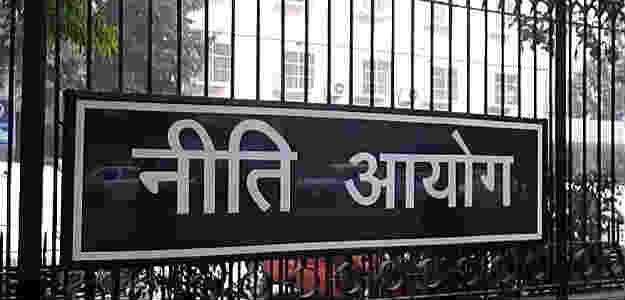
Niti Aayog will prepare the next list of central public sector companies for disinvestment in the next few weeks, its Vice Chairman Rajiv Kumar said on Thursday and expressed hope that the proposed asset reconstruction and management companies to address banks' bad loan distress will do a good job like the UTI. Days after Finance Minister Nirmala Sitharaman announced the Union Budget for 2021-22 laying out various measures (including disinvestment proposals) to bolster the pandemic-hit economy, Kumar also emphasised that the Modi government has shown consistent commitment for the welfare of farmers and for the improvement of the agriculture sector.
"Now the process has begun... We will complete preparation of the next list in the next few weeks, we have got the marching order," Kumar said about the list of public sector companies for the next round of stake sales. To fast track the disinvestment process, Sitharaman, in her Budget speech on Monday, said Niti Aayog would work out on the next list of central public sector companies that would be taken up for strategic disinvestment.
The government think tank has already given five different sets of recommendations on disinvestment.
On the government's proposal to set up an asset reconstruction company and an asset management company to clean up non-performing assets in the banking sector, Kumar said that was necessary to get the banks to start lending again as they were mired in so-called twin balance sheet problem.
"Otherwise, it would have taken very long to clean up the bank balance sheet, or taken a huge amount of capital for getting it done," he told PTI, adding that the alternative was to try and take these non-performing loans out of banks'' balance sheets. "Hopefully, (proposed) asset reconstruction company and asset management company will do the same good job that the UTI (Unit Trust of India) did at one point of time.
"And help us to restart the process of greater credit flows from the banking sector to the real sector of the economy," he told PTI in an interview. UTI was established in 1963 by an Act of Parliament and was regulated by the Reserve Bank of India. In February 2003, following the repeal of the Unit Trust of India Act 1963, UTI was bifurcated into two separate entities. One is the Specified Undertaking of the Unit Trust of India (SUUTI) and the second is the UTI Mutual Fund, sponsored by SBI, PNB, BOB, and LIC.
Referring to criticism that there was nothing for the middle class in terms of more tax breaks, Kumar said the "middle class'' (people''s) unending appetite of getting handouts from the government has to be rationalised".
"I recognise the huge contributions that taxpayers made for running the economy. But nonetheless, in difficult times, all of us have to have some patience and agree to work together for mobilising the necessary resources required to improve the infrastructure and improve the investment climate in the economy," he opined.
Replying to a question about protests by the farmers against the Centre's new farms laws, Kumar noted that these reforms "have been on the agenda in the election manifestos of all parties". Noting that given the government is committed to the improvement of the agriculture sector's performance and to improving the farmer's welfare in every respect, Kumar said he does not think there is any reason to distrust the government at all.

-
Why Swapping Your Old Gold Can Trigger A Rs 5 Lakh Tax Bill, And How You Can Avoid It Legally

Swapping old gold for new is taxed as a sale and a fresh purchase. Getting your own gold remade can cut most of that bill, though it has its own costs.
-
The AI Trade is Done. The Real Opportunity for Investors Starts in 2027 | Unhedged Position
As pureplay AI stocks plunge and circular, capex-led financing unwinds, 2027 is set to be a year of reckoning for AI companies. Yet the bust clears the way for a better opportunity for investors in 2027 -- shifting the spotlight from AI builders to the companies using AI.
-
Leadership As Mission: Why The Age Of AI Demands More Human Leadership
Debjani Ghosh examines how AI is changing leadership, arguing that its success must be measured by its impact on people and the accountability of those guiding its use.
-
We May Need Another Tukaram Mundhe To Fight Air Pollution | The Reason Why
Developers may install basic measures such as sprinklers and green nets, resume work, and continue violating rules when this equipment stops working.
-
Extracting Value From Battery Scrap Could Be Challenging For India | The Reason Why
A discarded lithium-ion battery still contains valuable materials such as lithium, nickel and cobalt. These can be recovered and reused. When such batteries are crushed and shredded, they produce a dark powder called black mass.
-
One El Nino, India Can Handle. Two Could Break The Granary
India's grain stocks can absorb one bad year, but a second El Nino could drain the buffer in two to three years, economists say.
-
India's Troika Of Good Luck | Joining The Dots
As Jensen Huang's exit drags Nvidia down, a cooling AI trade and resilient earnings have revived investor interest in India. A likely RBI rate hike looms.
-
Talking Points This Week: Leadership Shock At Nvidia, Earnings Strength, And The Fog Over Hormuz
The Anthropic IPO pricing and first trading day, Nvidia's upcoming earnings, and any fresh signals from Iran will set the tone for the following week.
-
Signature Play: The Classic Cocktail Is Dead. Or Is It?
Classic cocktails are disappearing from India's cocktail menus. But they're still being ordered, taught to bartenders and borrowed from. So, who's really having the last drink?
-
A New Samvat Wishlist: Inclusive Prosperity And Human Development
India has strengthened its economic foundations through infrastructure, digital access and enterprise. Its next growth chapter must deepen productivity, create better livelihoods and widen participation in prosperity.









