Niti Aayog Pushes To Limit Monopoly Of Foreign Firms On Seed Market
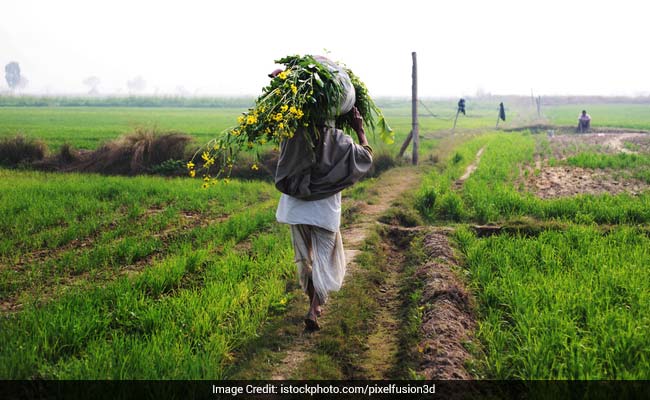
New Delhi: India could prevent foreign firms monopolising the market for genetically modified (GM) seeds by allowing the sale of only locally developed varieties, a government think-tank has said, in a boost for transgenic mustard produced by a Delhi group.
The Policy Commission said in recommendations this week to the government, and seen by Reuters, that adopting new technology is one of the most important drivers of farm productivity.
Cotton is the only GM crop currently allowed to be sold in the world's second most populous country where arable land is shrinking. U.S. company Monsanto Co. dominates the cotton seed market in India, and often faces resistance from local companies over its dominant position.
"There is some concern that GM seeds can be monopolised by multinationals, which may then exploit farmers," the commission said in its report to the government. "But this concern is readily addressed by limiting GM seeds to those varieties discovered by our own institution and companies."
A panel of government and independent experts gave its technical clearance in August last year for GM mustard, which is in the same plant family as rapeseed, and developed by a group of Delhi scientists following multiple reviews of crop trial data generated over almost a decade.
The national government has been sitting on the fence since August largely because of stiff opposition from social and environmental activists who see GM food as harmful for humans and animals alike.
India's biggest rapeseed-producing state, Rajasthan, has decided not to allow the commercial use of GM mustard even if New Delhi approves the lab-altered variety, its farm minister Prabhulal Saini told Reuters.
The government has said it will take a call on GM mustard after taking all views on board, though experts say allowing its cultivation is critical to Prime Minister Narendra Modi's goal of attaining self-sufficiency in vegetable oils.
India spends around $10 billion annually on vegetable oil imports. GM mustard - with yields up to 30 percent higher than normal varieties - could give Modi a chance to slash this bill.
(Except for the headline, this story has not been edited by NDTV staff and is published from a syndicated feed.)

-
AI Bias In Investing Cannot Be Eliminated, But It Can Be Governed

Framing is a particularly important example as identical financial information presented in terms of gains rather than losses can lead an LLM to reach a different assessment.
-
Joining The Dots | Dark Skies, Steady Diya: Why Hope Holds This Diwali
With war, a weak rupee and foreign outflows weighing on sentiment, policymakers at the NDTV World Summit and market veterans at NDTV Profit Ignite: Diwali Edition offered the same advice: stay invested and filter out the noise.
-
The Curious Case of Equitas Small Finance Bank And A CEO Who Quit For Stock
PN Vasudevan believes persistent investor concerns over a perceived conflict of interest had become a governance overhang on Equitas Small Finance Bank's stock, even as the lender improved profitability and asset quality.
-
Talking Points This Week: AI Cash Burn, A Tiger Comeback And An India That Still Finds Its Own Path
India is not immune to higher oil or tighter global liquidity, yet its earnings base is broader, its domestic policy levers are still available.
-
Foreign Investors Own Half Of HDFC Bank and ICICI Bank. An LTCG Cut Could Matter Most Here
Foreign portfolio investors have US$115 billion parked in HDFC Bank, ICICI Bank. If the government cuts long-term capital gains tax, Jefferies says returning foreign money could land here first.
-
'Never Seen This Level Of Negativity': Sandeep Tandon Says The Next Rally May Be Closer Than You Think
Veteran investor Sandeep Tandon says foreign selling is easing, large-caps are due a comeback and mid-caps are crowded, while he turns positive on gold, power and pharma this Diwali.
-
Indians Stay With Family, Not In Hotels | The Reason Why
India still lacks enough clean, reliable and affordable hotels for budget-conscious travellers.
-
The Economic Imperative: Analysing The Material Driving Force Behind India-Canada Strategic Reset
This economic complementarity is further reinforced by deep institutional investment ties and talent mobility, which form the bedrock of the bilateral framework.
-
Medicine Pricing: Where Must Profit Stop?
India must confront excessive margins, hidden incentives and regulatory gaps that threaten the integrity of medicine.
-
Why Amazon And Flipkart Are Struggling To Beat Meesho In India's Smaller Cities
With 274 million users and lowest-cost logistics, Meesho is defending its value commerce crown against giants like Amazon and Flipkart.










