Night Lights Tell The Story Of Dimming Economic Activity Across India
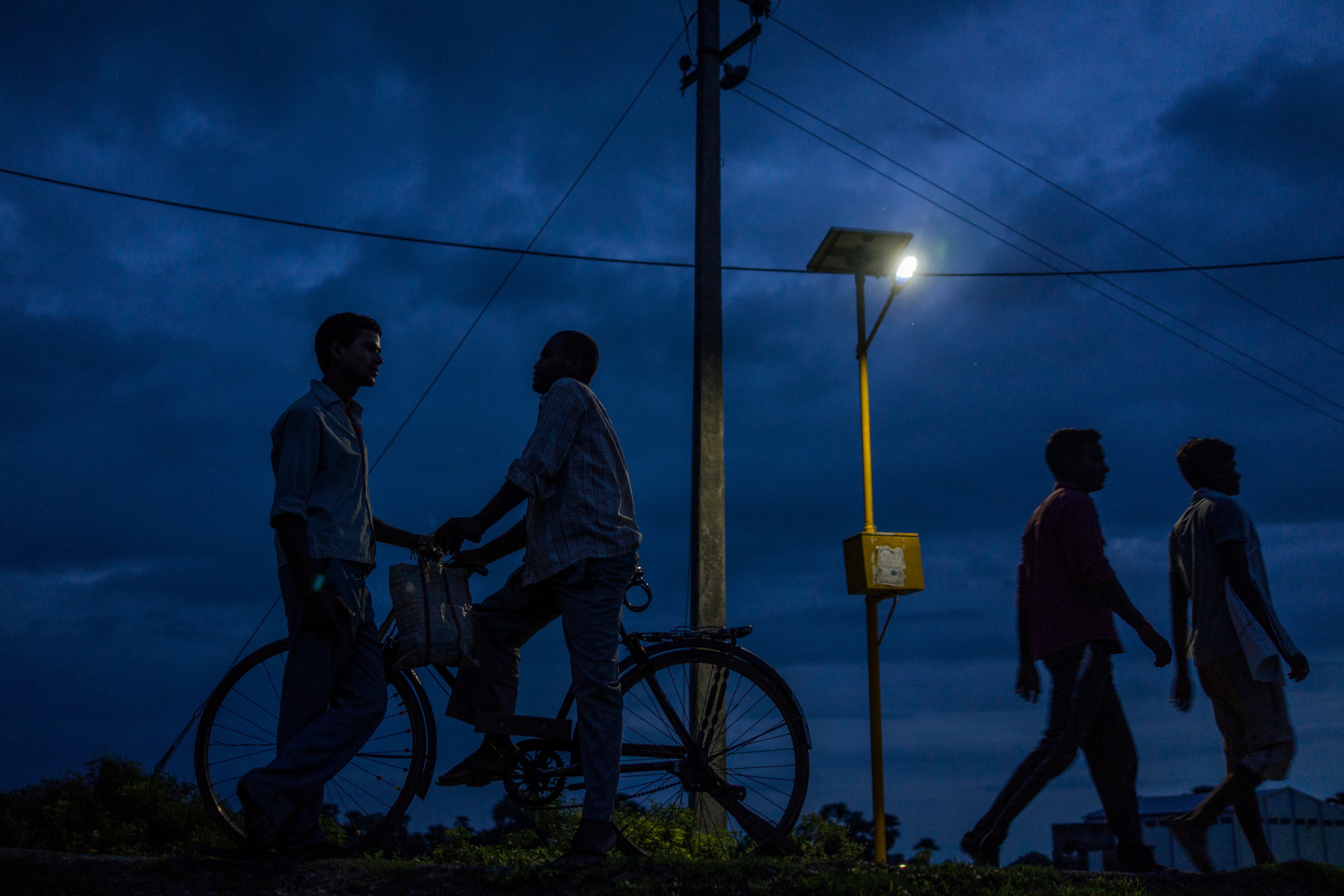
For 21 days, between March 24 and April 14, India has been locked down. Most factories are shut, store shutters are down, roads are empty.
But even before the lockdown, fears of a spreading Covid-19 virus had added pressure across India's already weak economy. Growth in the Indian economy had fallen to 4.7 percent in the October-December period and was seen staying weak in the January-March quarter. And then came the lockdown.
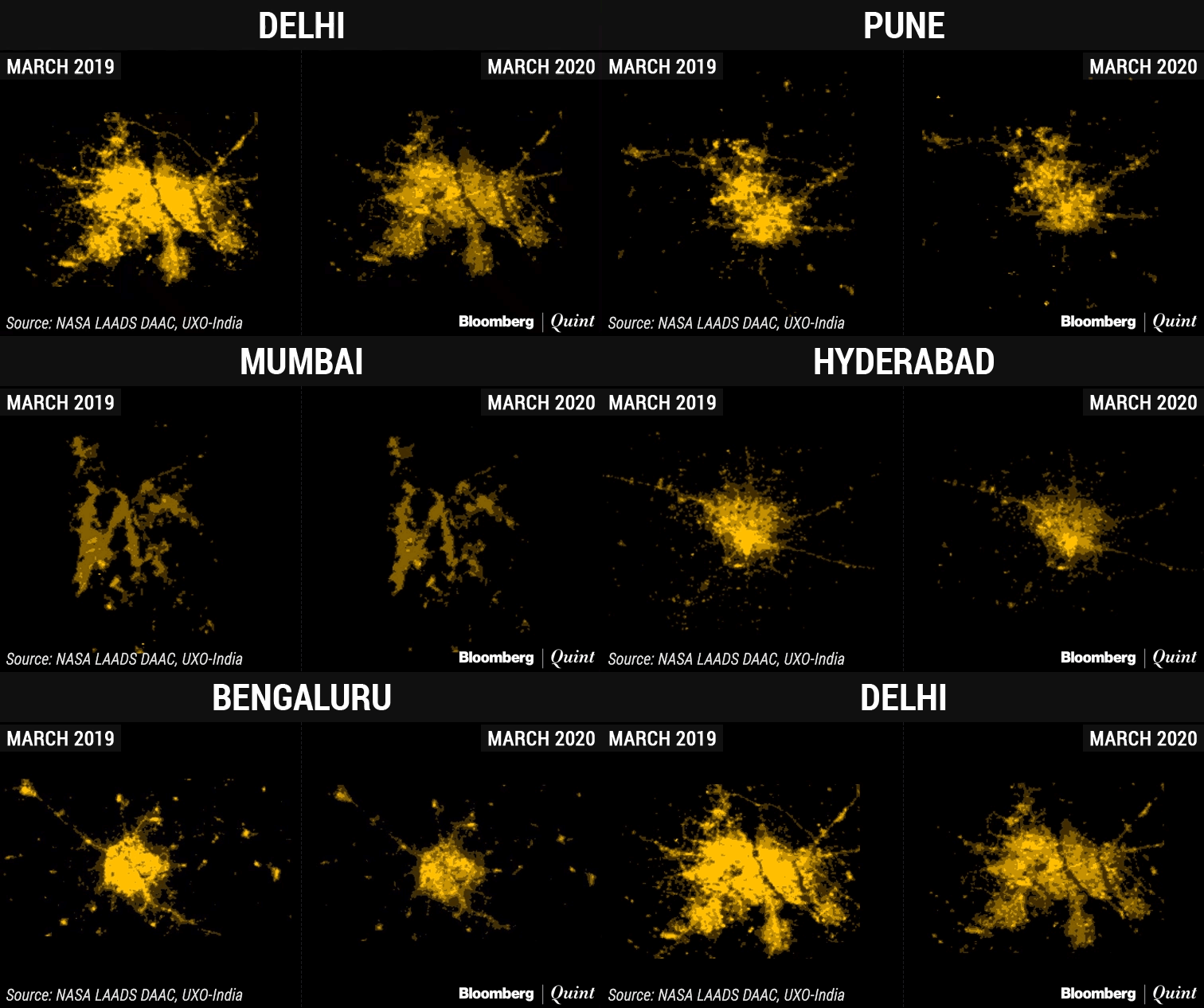
Night lights emanating from the earth, captured by satellites in space, capture economic activity — formal and informal — through luminosity. Over time, this data has come to be recognised as a strong indicator of economic activity. Even the Reserve Bank of India tracks it.
This data, available till March 26, is now telling us that economic activity slowed sharply last month. This despite the fact that it covers only two days of the nationwide lockdown. The data is measured over the course of a month to strip out excessive noise. The unit of measurement is nanowatt/cm²/steradian, shortened to read as nW/cm²/sr.
- In Delhi, night light radiance fell to 44.7 nW/cm²/sr for March 1- 26, a fall of 37.2 percent compared to March 1-31 last year. This was the steepest fall among the major metropolitan cities.
- In Bengaluru, night light radiance fell 32 percent to 22.42 nW/cm²/sr.
- In Mumbai, night light radiance fell to 29 nW/cm²/sr in the same duration, a drop of 26.8 percent compared to last year.
The data is collected by a unit of NASA and processed by the Urban Expansion Observatory. Data for the full month, when available, may show an even steeper fall.
Priam Pillai, scientist and associate Professor at Pillai College of Engineering helps explain the data.
The night lights data is not just the effect of the complete shutdown, things were declining much before that, Pillai said. Many cities started closing schools and colleges starting from March 10-12 even before the complete shutdown, he said.
Any such reduction in night lights is usually attributed to fewer vehicles plying on the roads and fewer factories working. Hence, it is considered an indicator of economic activity, he explained. That is not to say that one can draw a 1: 1 relation between GDP and night lights, Pillai added.
The Reserve Bank of India, in a paper released in June 2019, said that “night lights are a reasonably robust indicator of economic activity in India as it tracks both trend growth and seasonal variations in GDP reasonably well”. The RBI study found the relationship of night lights with quarterly GDP growth is statistically significant even after controlling for seasonality.
Night light intensity depends on various exogenous and endogenous factors such as the level of electricity generation, the sectoral composition of output, and the existing level of development, the paper added. One reason is it important to track in a country like India is because it captures informal sector activity, which indicators like GDP may not.
But the data doesn't always give a clean read.
Factors like a change in cloud cover and pollution can also impact night lights, Pillai said. Giving an instance, Pillai said that some districts in China, even amidst the lockdown, saw night light intensity rise because pollution had fallen sharply.

-
Signature Play: The Classic Cocktail Is Dead. Or Is It?

Classic cocktails are disappearing from India's cocktail menus. But they're still being ordered, taught to bartenders and borrowed from. So, who's really having the last drink?
-
A New Samvat Wishlist: Inclusive Prosperity And Human Development
India has strengthened its economic foundations through infrastructure, digital access and enterprise. Its next growth chapter must deepen productivity, create better livelihoods and widen participation in prosperity.
-
Love, Sex Aur Dhokha: The Audacious Plot To Spy On Jensen Huang
A Taipei dinner, a Singapore chip buyer and a suspected Chinese asset: inside the alleged spy operation that got close to NVIDIA's Jensen Huang.
-
Ten Things I Learnt This Samvat
Patience can be a trap. Cheap stocks can stay cheap. Leverage can wipe you out. What did Samvat 2082 teach us? Niraj Shah writes on 10 lessons from the year gone by.
-
Talking Points This Week: Tech Nerves, FII Buying, And A Faraway Banking Shock
The global markets are not shining this Diwali. The exception in the large markets is, India.
-
Midterm Rally Lasted A Day. The Hard Reality Of A Divided US May Last Two Years | Opinion
Between a contested AI boom, a debt ceiling that arrives in 2027 and a president with every incentive to act alone, the next two years may prove more volatile than the first day's rally suggests.
-
Blue Wave Will Derail the AI Trade but Won't Dismantle the AI Era | Unhedged Position
The Democrats' sweep of the US Congress will see politics collide with economic forces both over the long and short term.
-
It's Time To Take The GST Council's Bet On Trust Global
Payment records can prove India's services exports, and clear, proportionate rules can bring foreign digital sellers into the tax net.
-
Opinion | India at 38: From Innovation Overperformer to Innovation Powerhouse
India now has 453 VC-backed deep science startups, 18 of them late-stage, after 117 percent growth since 2020. Laurus Labs, at USD 9.3 billion, is the most valuable deep science company in any middle-income economy outside China.









