New York Times Sues Microsoft and OpenAI for Copyright Infringement
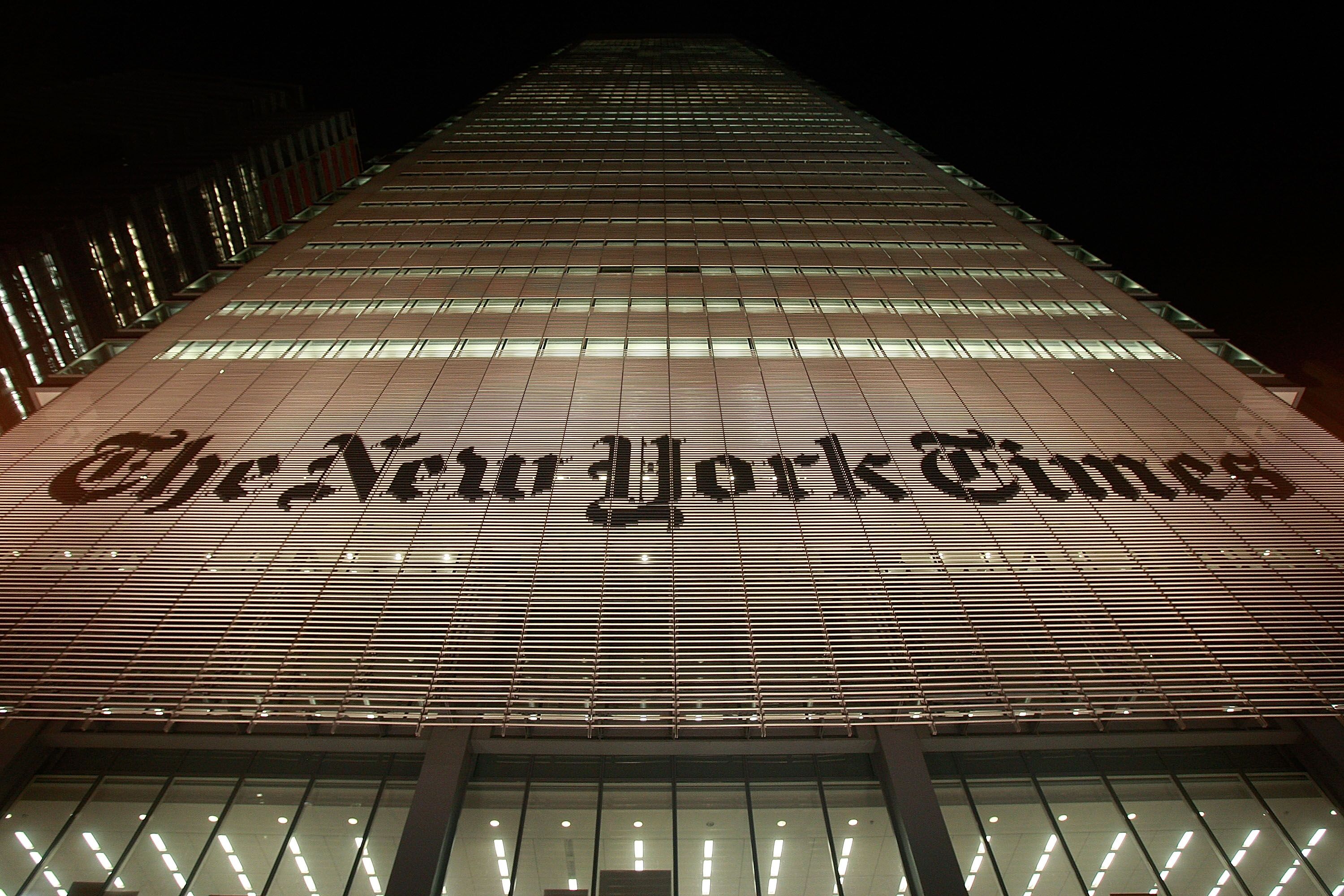
(Bloomberg) -- The New York Times Co. sued Microsoft Corp. and OpenAI Inc. for using its content to help develop artificial intelligence services, in a sign of the increasingly fraught relationship between the media and a technology that could upend the news industry.
The technology firms relied on millions of copyrighted articles to train chatbots like OpenAI's ChatGPT and other AI features, allegedly causing billions of dollars in statutory and actual damages, according to a lawsuit filed in New York on Wednesday. The Times didn't specify its monetary demands.
OpenAI has faced criticism for scraping text widely from the web to train its popular chatbot since it debuted a year ago. While it has been sued by prominent authors, this is the first challenge to its practices by a major media organization. The startup has sought licensing deals with publishers, much like Alphabet Inc.'s Google and Meta Platforms Inc.'s Facebook have done in recent years. The Times' lawsuit said the publisher reached out to Microsoft and OpenAI in April and couldn't reach an amicable solution.
“We respect the rights of content creators and owners and are committed to working with them to ensure they benefit from AI technology and new revenue models,” an OpenAI spokesperson said in a statement. “Our ongoing conversations with the New York Times have been productive and moving forward constructively, so we are surprised and disappointed with this development.” Microsoft declined to comment.
In July, OpenAI signed an agreement with the Associated Press to access some of the news agency's archives. OpenAI cut a three-year deal in December with Axel Springer SE to use the German media company's work for an undisclosed sum.
“We're hopeful that we will find a mutually beneficial way to work together, as we are doing with many other publishers,” OpenAI's spokesperson said Wednesday.
OpenAI has been the target of multiple lawsuits from content producers complaining that their work has been improperly used for AI training. The company faces class actions from cultural figures including comedian Sarah Silverman, author George R.R. Martin, and Pulitzer-winning author Michael Chabon.
The cases are still in their early stages and could take years to fully resolve. A judge in San Francisco earlier this month hinted at trimming Silverman's copyright lawsuit against OpenAI. The judge had already narrowed a similar Silverman suit against Meta.
New Financing
OpenAI is currently in talks with investors for new financing at a $100 billion valuation that would make it the second-most valuable US startup, Bloomberg News reported last week.
Microsoft is OpenAI's largest backer and has deployed the startup's AI tools in several of its products. In the lawsuit, the New York Times alleged Microsoft copied the newspaper's articles verbatim for its Bing search engine and used OpenAI's tech to boost its value by a trillion dollars.
Microsoft's share price has risen 55% since ChatGPT debuted in November 2022, increasing its market capitalization to $2.8 trillion. Shares were little changed Wednesday, closing at $374.07 in New York.
“If Microsoft and OpenAI want to use our work for commercial purposes, the law requires that they first obtain our permission,” a New York Times spokesperson said in an emailed statement. “They have not done so.”
The case is The New York Times Co. v. Microsoft Corp., OpenAI Inc., S.D.N.Y, No. 1:23-cv-11195, 12/27/23.
--With assistance from Isaiah Poritz and Brody Ford.
(Updates with comment from OpenAI in fourth paragraph.)
More stories like this are available on bloomberg.com
©2023 Bloomberg L.P.

-
Talking Points This Week: Leadership Shock At Nvidia, Earnings Strength, And The Fog Over Hormuz

The Anthropic IPO pricing and first trading day, Nvidia's upcoming earnings, and any fresh signals from Iran will set the tone for the following week.
-
Signature Play: The Classic Cocktail Is Dead. Or Is It?
Classic cocktails are disappearing from India's cocktail menus. But they're still being ordered, taught to bartenders and borrowed from. So, who's really having the last drink?
-
A New Samvat Wishlist: Inclusive Prosperity And Human Development
India has strengthened its economic foundations through infrastructure, digital access and enterprise. Its next growth chapter must deepen productivity, create better livelihoods and widen participation in prosperity.
-
Love, Sex Aur Dhokha: The Audacious Plot To Spy On Jensen Huang
A Taipei dinner, a Singapore chip buyer and a suspected Chinese asset: inside the alleged spy operation that got close to NVIDIA's Jensen Huang.
-
Ten Things I Learnt This Samvat
Patience can be a trap. Cheap stocks can stay cheap. Leverage can wipe you out. What did Samvat 2082 teach us? Niraj Shah writes on 10 lessons from the year gone by.
-
Talking Points This Week: Tech Nerves, FII Buying, And A Faraway Banking Shock
The global markets are not shining this Diwali. The exception in the large markets is, India.
-
Midterm Rally Lasted A Day. The Hard Reality Of A Divided US May Last Two Years | Opinion
Between a contested AI boom, a debt ceiling that arrives in 2027 and a president with every incentive to act alone, the next two years may prove more volatile than the first day's rally suggests.
-
Blue Wave Will Derail the AI Trade but Won't Dismantle the AI Era | Unhedged Position
The Democrats' sweep of the US Congress will see politics collide with economic forces both over the long and short term.
-
It's Time To Take The GST Council's Bet On Trust Global
Payment records can prove India's services exports, and clear, proportionate rules can bring foreign digital sellers into the tax net.
-
Opinion | India at 38: From Innovation Overperformer to Innovation Powerhouse
India now has 453 VC-backed deep science startups, 18 of them late-stage, after 117 percent growth since 2020. Laurus Labs, at USD 9.3 billion, is the most valuable deep science company in any middle-income economy outside China.









