"Climate Goals Difficult To Achieve Without Compromising Economic Targets": Report
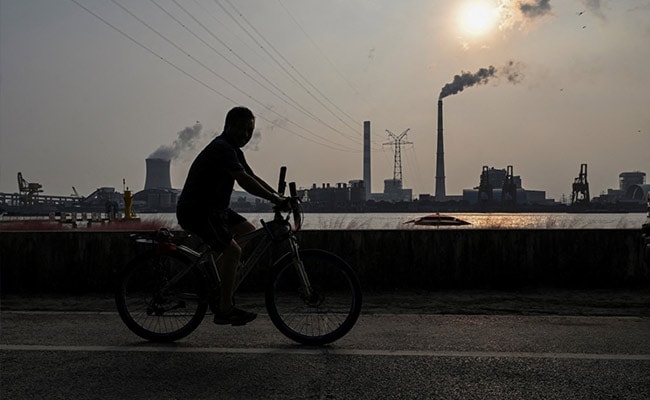
India's new climate goals will be difficult to achieve without significantly compromising the country's stated economic targets and its ambition to become a $5 trillion economy by 2024-25, according to global forecasting firm Oxford Economics. It further said India's pledge to achieve ''net zero'' emissions by 2070 is admirable, but the path announced by Prime Minister Narendra Modi at COP26 toward achieving that goal is ambitious.
"We think the new climate goals will be difficult to achieve without significantly compromising India's stated economic targets and its ambition to become a $5 trillion economy by 2024/25. Indeed, it may not even be possible," Oxford Economics said.
In 2019, Modi envisioned to make India a $5 trillion economy and global powerhouse by 2024-25. Last month, the Prime Minister announced a bold pledge that India will achieve net zero carbon emissions by 2070 and asserted that it is the only country that is delivering in "letter and spirit" the commitments on tackling climate change under the Paris Agreement.
According to Oxford Economics, financing the transition will also be a big challenge. "Studies peg the investment bill at around $200 billion per year in 2020s and 2030s for India to become net zero by 2070. The spending requirements increase progressively as the low cost technologies are exhausted," it said.
Net-zero emissions mean that the world is not adding new emissions to the atmosphere. With funding from developed economies likely to disappoint, Oxford Economics noted that India will be relying on private investment to fill the gap between its domestic resources and the requirements
"The bleak track record of foreign investment in infrastructure projects doesn't augur well in this regard," it said. The global forecasting firm suggested that given these issues, "we think India's net-zero timeline will need to be revisited. We maintain our baseline view of India's carbon emissions beginning to peak in the late 2040s." Oxford Economics also noted that India's de-carbonisation plan suffers from low emphasis on carbon removal strategies.

-
One El Nino, India Can Handle. Two Could Break The Granary

India's grain stocks can absorb one bad year, but a second El Nino could drain the buffer in two to three years, economists say.
-
India's Troika Of Good Luck | Joining The Dots
As Jensen Huang's exit drags Nvidia down, a cooling AI trade and resilient earnings have revived investor interest in India. A likely RBI rate hike looms.
-
Talking Points This Week: Leadership Shock At Nvidia, Earnings Strength, And The Fog Over Hormuz
The Anthropic IPO pricing and first trading day, Nvidia's upcoming earnings, and any fresh signals from Iran will set the tone for the following week.
-
Signature Play: The Classic Cocktail Is Dead. Or Is It?
Classic cocktails are disappearing from India's cocktail menus. But they're still being ordered, taught to bartenders and borrowed from. So, who's really having the last drink?
-
A New Samvat Wishlist: Inclusive Prosperity And Human Development
India has strengthened its economic foundations through infrastructure, digital access and enterprise. Its next growth chapter must deepen productivity, create better livelihoods and widen participation in prosperity.
-
Love, Sex Aur Dhokha: The Audacious Plot To Spy On Jensen Huang
A Taipei dinner, a Singapore chip buyer and a suspected Chinese asset: inside the alleged spy operation that got close to NVIDIA's Jensen Huang.
-
Ten Things I Learnt This Samvat
Patience can be a trap. Cheap stocks can stay cheap. Leverage can wipe you out. What did Samvat 2082 teach us? Niraj Shah writes on 10 lessons from the year gone by.
-
Talking Points This Week: Tech Nerves, FII Buying, And A Faraway Banking Shock
The global markets are not shining this Diwali. The exception in the large markets is, India.
-
Midterm Rally Lasted A Day. The Hard Reality Of A Divided US May Last Two Years | Opinion
Between a contested AI boom, a debt ceiling that arrives in 2027 and a president with every incentive to act alone, the next two years may prove more volatile than the first day's rally suggests.
-
Blue Wave Will Derail the AI Trade but Won't Dismantle the AI Era | Unhedged Position
The Democrats' sweep of the US Congress will see politics collide with economic forces both over the long and short term.









