All You Need To Know About Lightyear 0, World’s First Production Ready Solar Car
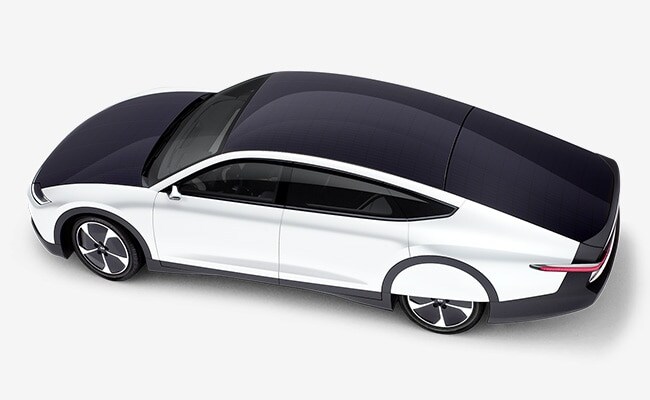
Solar electric vehicle startup Lightyear, recently, unveiled its first production-ready solar-powered electric vehicle in an online premiere.
The production-ready solar car, christened Lightyear 0, is the result of the company's six years of innovation.
The Netherlands-based startup, which specialises in scalable grid-independent solar electric vehicles, will accept pre-orders for the Lightyear 0 towards the end of this year.
“Did you see it? The moment we shared Lightyear 0 with the world! We're still all charged up after a truly incredible premiere. Thank you all for making it so special,” tweeted Lightyear on June 10.
Did you see it? The moment we shared Lightyear 0 with the world!
June 9, 2022
We're still all charged up after a truly incredible premiere. Thank you all for making it so special.
Ready to discover the world's first solar car? Read more about our global premiere → https://t.co/IdefiJPYmZ pic.twitter.com/euOfXL8SuXThe sedan prototype of Lightyear 0 was first revealed in 2019. The company unveiled the final design and the car's unique specification and enhanced capabilities in the online premiere on June 9.
Lightyear aims to have the world drive one light-year on solar power by 2035. Lex Hoefsloot, Co-founder and CEO said, “Electric cars are a step in the right direction, but they have a scaling problem. By 2030, we can expect 84 million electric vehicles (EVs) on roads in Europe alone.”
The vehicle has 388 miles (around 624km) of range of which 44 miles (70km) can be derived from its solar panel technology.
Lightyear 0 will come equipped with the patented five square meters of double-curved solar arrays.
The vehicles will be powered with a 60kWh battery pack and four electric motors that supply 174 horsepower.
According to Lightyear, the vehicle can sprint to a speed of 62 miles (nearly 100m) per hour in just 10 seconds. It has a top speed of 100 miles (160km) per hour.
Lightyear 0 will have an optimised solar roof which will enable the vehicle to run for months even without charging.
The company claims that based on the average commute of around 35 kilometres per day, in cloudy conditions you can drive for up to two months before you need to charge the car and in sunnier countries, that could be up to seven months.
The interior of the car has been designed using only vegan materials like microfiber upholstery, plant-based leather, fabrics made from recycled bottles, rattan palm wood trim, and insulated particle foam.
The vehicle will come equipped with a 10.1-inch center touchscreen backed by Android Automotive, Google's native operating system.
Lightyear 0 will also have features like over-the-air software updates, and Android Auto and Apple CarPlay.
According to Lightyear, only 946 units of the car will be made. The solar EV will be available at about $263,262 (Rs 2 crore).

-
The Curious Case of Equitas Small Finance Bank And A CEO Who Quit For Stock

PN Vasudevan believes persistent investor concerns over a perceived conflict of interest had become a governance overhang on Equitas Small Finance Bank's stock, even as the lender improved profitability and asset quality.
-
Talking Points This Week: AI Cash Burn, A Tiger Comeback And An India That Still Finds Its Own Path
India is not immune to higher oil or tighter global liquidity, yet its earnings base is broader, its domestic policy levers are still available.
-
Foreign Investors Own Half Of HDFC Bank and ICICI Bank. An LTCG Cut Could Matter Most Here
Foreign portfolio investors have US$115 billion parked in HDFC Bank, ICICI Bank. If the government cuts long-term capital gains tax, Jefferies says returning foreign money could land here first.
-
'Never Seen This Level Of Negativity': Sandeep Tandon Says The Next Rally May Be Closer Than You Think
Veteran investor Sandeep Tandon says foreign selling is easing, large-caps are due a comeback and mid-caps are crowded, while he turns positive on gold, power and pharma this Diwali.
-
Indians Stay With Family, Not In Hotels | The Reason Why
India still lacks enough clean, reliable and affordable hotels for budget-conscious travellers.
-
The Economic Imperative: Analysing The Material Driving Force Behind India-Canada Strategic Reset
This economic complementarity is further reinforced by deep institutional investment ties and talent mobility, which form the bedrock of the bilateral framework.
-
Medicine Pricing: Where Must Profit Stop?
India must confront excessive margins, hidden incentives and regulatory gaps that threaten the integrity of medicine.
-
Why Amazon And Flipkart Are Struggling To Beat Meesho In India's Smaller Cities
With 274 million users and lowest-cost logistics, Meesho is defending its value commerce crown against giants like Amazon and Flipkart.
-
High US Salaries, No Green Card Certainty: The Financial Calculation Facing Indian H-1B Families
The suspension of PERM processing at eight technology employers does not cancel existing H-1B visas. What it does is force a question many Indian families have been avoiding: is the US salary worth tying your career and family plans to one employer?
-
Swiggy vs Eternal: Food Delivery's Two Rivals Are No Longer In The Same Race
Eternal is building a private AI assistant, dark.ai. Swiggy is still working out how to make Instamart pay, with an operating loss of Rs 895 crore in the July-September quarter while Blinkit stayed profitable.










