Negative Returns In Tata Steel Europe A Risk To Group: Cyrus Mistry
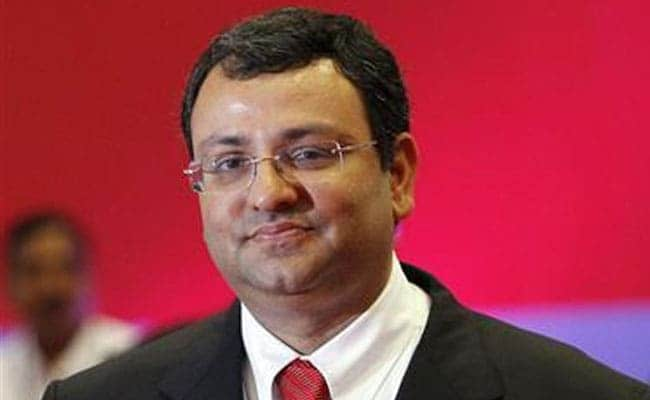
Mumbai: Up against Tata Sons' move to remove him as director of Tata Steel, ousted chairman Cyrus Mistry on Tuesday defended his leadership of the company, especially the handling of European operations, saying that the huge capital employed in it was earning negative returns and posed a risk to the entire
He also lashed out at "insinuations that Tata Steel board only looked at UK investments through a short term financial lens" saying it was "furthest from the truth".
In a representation to the board of directors of Tata Steel ahead of an extraordinary general meeting (EGM), which is to consider a special resolution moved by Tata Sons to remove him as director on December 21, Mr Mistry said the sole premise of the step was his "removal from the Chairmanship of Tata Sons, which was illegal to begin with".
"There have been insinuations that the Board of Tata Steel only looked at the UK investments through a short term financial lens. This is furthest from the truth...," he wrote.
Mr Mistry cited "continued investments in these assets, as well as the significant amount of management bandwidth devoted to optimise operations" in order to refute the allegations.
While asking the board to circulate his representation to its shareholders so that they can take "an informed decision", he drew attention to the European operations saying the total amount of capital employed there, which is "earning negative returns posed a risk to the overall group".
"Total capital employed in Tata Steel Europe grew from Rs 67,000 cr in FY12 to Rs 93,500 cr in FY15," he said.
Defending decisions to divest in the UK operations, Mr Mistry said: "While pursuing a long term solution to the current issue, it is important to balance the needs of nearly one million shareholders of the company, who have supported the company for decades and many of whom rely on Tata Steel to supplement their income."
"Our aim has always been to have a robust and resilient global operations. To ensure this outcome, we believe it is important to tackle some of the structural challenges with the UK assets, namely the potential high pension deficits, high energy costs and high taxes," he added.
On November 25, in sharp escalation of boardroom tussle at India's largest conglomerate, Mr Mistry was ousted as chairman of Tata Steel.
The 10-member board of Tata Steel by "majority consent" removed Mr Mistry as chairman and named O P Bhatt, an independent director and former SBI chief, as interim head.
Tata Steel was the third group firm to remove Mr Mistry as chairman. First Tata Consultancy Services (TCS) removed him as chairman but that ouster was not through a vote but by virtue of Tata Sons holding a commanding 73.26 per cent stake in the India's largest software services firm.
Then on November 15, seven out of 10 board members of Tata Global Beverages voted him out.

-
Signature Play: The Classic Cocktail Is Dead. Or Is It?

Classic cocktails are disappearing from India's cocktail menus. But they're still being ordered, taught to bartenders and borrowed from. So, who's really having the last drink?
-
A New Samvat Wishlist: Inclusive Prosperity And Human Development
India has strengthened its economic foundations through infrastructure, digital access and enterprise. Its next growth chapter must deepen productivity, create better livelihoods and widen participation in prosperity.
-
Love, Sex Aur Dhokha: The Audacious Plot To Spy On Jensen Huang
A Taipei dinner, a Singapore chip buyer and a suspected Chinese asset: inside the alleged spy operation that got close to NVIDIA's Jensen Huang.
-
Ten Things I Learnt This Samvat
Patience can be a trap. Cheap stocks can stay cheap. Leverage can wipe you out. What did Samvat 2082 teach us? Niraj Shah writes on 10 lessons from the year gone by.
-
Talking Points This Week: Tech Nerves, FII Buying, And A Faraway Banking Shock
The global markets are not shining this Diwali. The exception in the large markets is, India.
-
Midterm Rally Lasted A Day. The Hard Reality Of A Divided US May Last Two Years | Opinion
Between a contested AI boom, a debt ceiling that arrives in 2027 and a president with every incentive to act alone, the next two years may prove more volatile than the first day's rally suggests.
-
Blue Wave Will Derail the AI Trade but Won't Dismantle the AI Era | Unhedged Position
The Democrats' sweep of the US Congress will see politics collide with economic forces both over the long and short term.
-
It's Time To Take The GST Council's Bet On Trust Global
Payment records can prove India's services exports, and clear, proportionate rules can bring foreign digital sellers into the tax net.
-
Opinion | India at 38: From Innovation Overperformer to Innovation Powerhouse
India now has 453 VC-backed deep science startups, 18 of them late-stage, after 117 percent growth since 2020. Laurus Labs, at USD 9.3 billion, is the most valuable deep science company in any middle-income economy outside China.









