NCLAT Upholds Competition Regulator’s Order Declining Probe Against Ola, Uber
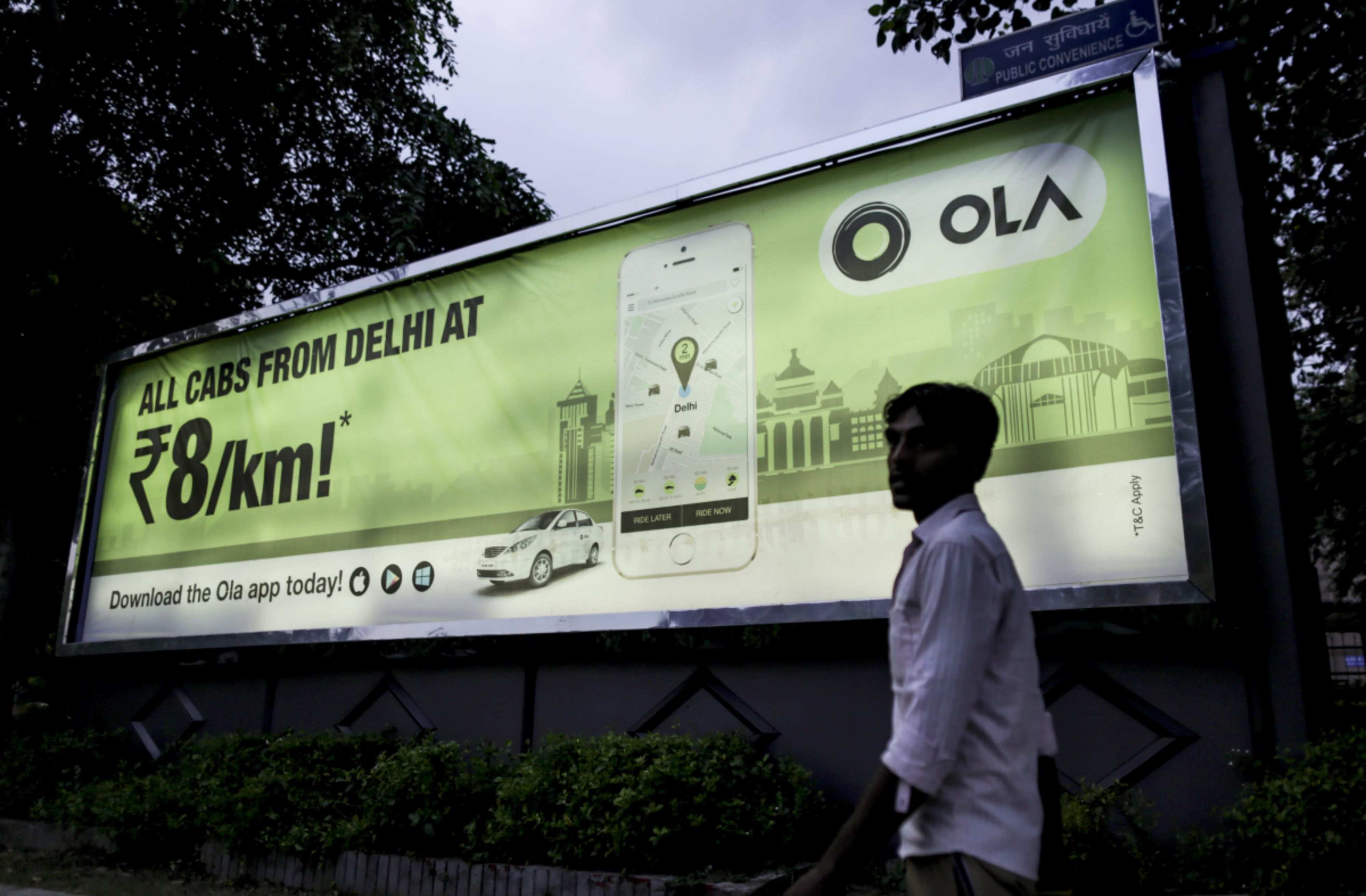
The NCLAT has rejected an appeal challenging the competition regulator's order that declined to order a probe into alleged collusion by ride-hailing firms Ola and Uber.
The Competition Commission of India had rejected a complaint, filed by lawyer Samir Agrawal, alleging that the two cab aggregators used their algorithm to fix prices. That, he alleged, took away the liberty of individual drivers to compete with each other.
The National Company Law Appellate Tribunal, in its May 29 order, said that even on merits “there is no substance in the allegations” and the opinion of the competition regulator regarding “non-existence of a prima facie case” can't be faulted.
The competition commission had observed that a user books a ride at any given time, which is accepted by an anonymous driver available in the area, who has no opportunity to coordinate with other drivers. That, it said, ruled out collusion.
The CCI declined an investigation. Agrawal appealed in the NCLAT arguing that the regulator erroneously implied that price-fixing through an app is immune from scrutiny. He also cited an investigation against Uber ordered in the U.S. on similar allegations.
Ola argued there is no fixing of price or collusion with the drivers as these were determined by algorithms after factoring in conditions such as distance, time of the day, weather, and traffic. Cab services such as Ola merely act as an intermediary between drivers and consumers and there is no agreement between drivers to fix prices, the company said.
Uber argued that its price structure is similar to metred taxis or auto-rickshaws and the drivers are also free to charge an amount less than what is recommended. The purpose of the app-provided price is to protect the customer from being charged arbitrarily high prices, the company argued, adding that their model complies with all relevant rules framed by the government.
The NCLAT said the complainant had been unable to show that he suffered any loss through Ola and Uber and, therefore, had no locus standi to file a complaint. “Even if we assume that the complainant had the locus to file a complaint, we do not find anything in the business model of the two companies which supports the allegations levelled against them,” the appellate tribunal said.
‘'We find no legal infirmity in the impugned order. There being no merit in this appeal; it is accordingly dismissed.”

-
Signature Play: The Classic Cocktail Is Dead. Or Is It?

Classic cocktails are disappearing from India's cocktail menus. But they're still being ordered, taught to bartenders and borrowed from. So, who's really having the last drink?
-
A New Samvat Wishlist: Inclusive Prosperity And Human Development
India has strengthened its economic foundations through infrastructure, digital access and enterprise. Its next growth chapter must deepen productivity, create better livelihoods and widen participation in prosperity.
-
Love, Sex Aur Dhokha: The Audacious Plot To Spy On Jensen Huang
A Taipei dinner, a Singapore chip buyer and a suspected Chinese asset: inside the alleged spy operation that got close to NVIDIA's Jensen Huang.
-
Ten Things I Learnt This Samvat
Patience can be a trap. Cheap stocks can stay cheap. Leverage can wipe you out. What did Samvat 2082 teach us? Niraj Shah writes on 10 lessons from the year gone by.
-
Talking Points This Week: Tech Nerves, FII Buying, And A Faraway Banking Shock
The global markets are not shining this Diwali. The exception in the large markets is, India.
-
Midterm Rally Lasted A Day. The Hard Reality Of A Divided US May Last Two Years | Opinion
Between a contested AI boom, a debt ceiling that arrives in 2027 and a president with every incentive to act alone, the next two years may prove more volatile than the first day's rally suggests.
-
Blue Wave Will Derail the AI Trade but Won't Dismantle the AI Era | Unhedged Position
The Democrats' sweep of the US Congress will see politics collide with economic forces both over the long and short term.
-
It's Time To Take The GST Council's Bet On Trust Global
Payment records can prove India's services exports, and clear, proportionate rules can bring foreign digital sellers into the tax net.
-
Opinion | India at 38: From Innovation Overperformer to Innovation Powerhouse
India now has 453 VC-backed deep science startups, 18 of them late-stage, after 117 percent growth since 2020. Laurus Labs, at USD 9.3 billion, is the most valuable deep science company in any middle-income economy outside China.









