NBFCs Moved Back Towards Bank Borrowings In September, Shows RBI Data
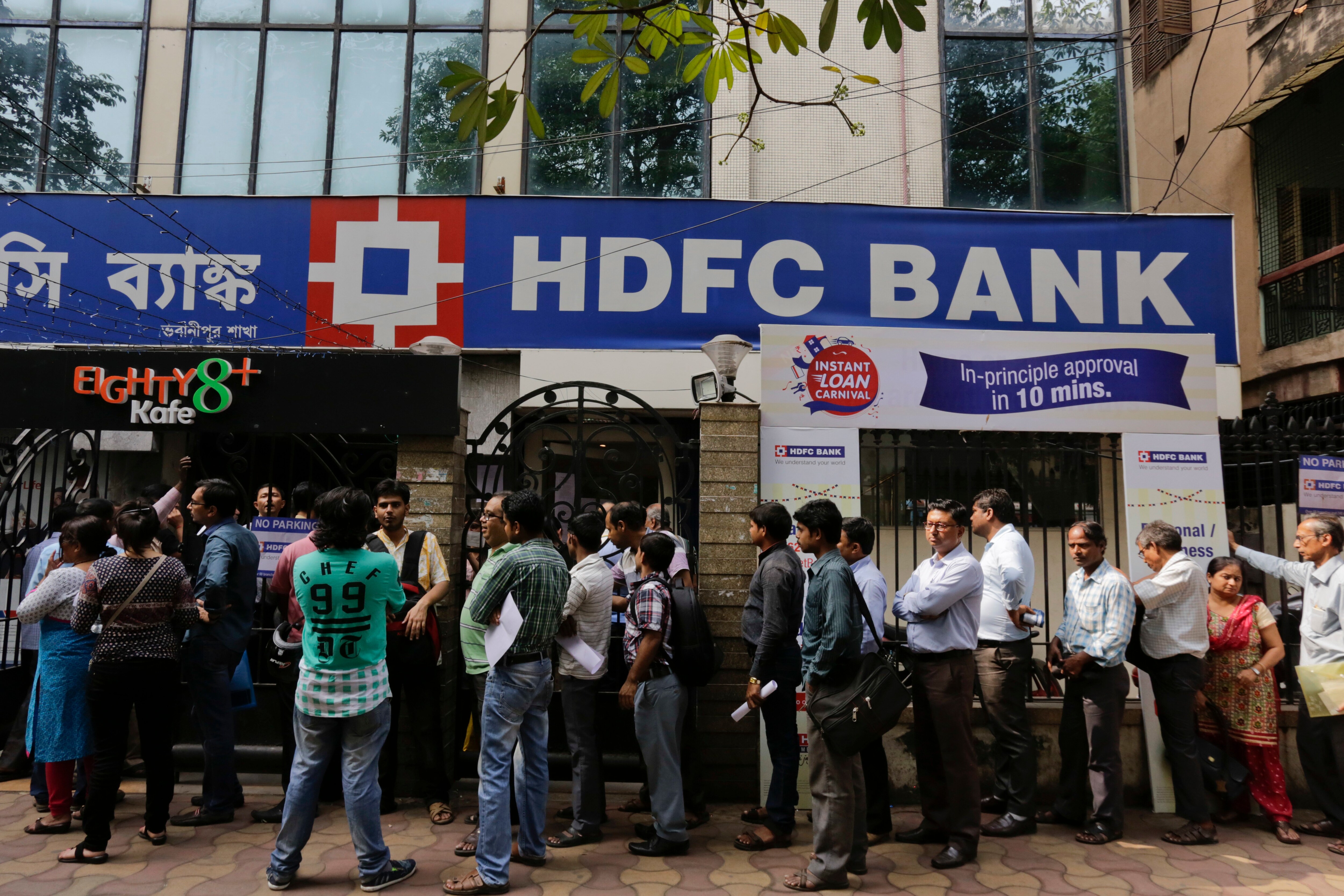
As the debt markets turned volatile, non-bank lenders made a beeline back to banks to meet their funding needs, suggests data released by the Reserve Bank of India. Non banking financial companies have been borrowing heavily using market instruments, but with rates rising and risk aversion seeping in, good ol' bank lines of credit came in handy.
The RBI's sectoral credit data for the month of September shows that incremental credit by banks to NBFCs rose by Rs 56,500 crore, the sharpest month-on-month growth this fiscal year.
Bank credit to the NBFC sector stood at Rs 5.46 lakh crore for September 2018. Among all sectors that banks lent to, NBFCs continued to remain the fastest growing segment.
Liquid mutual funds, significant investors in debt securities issued by NBFCs, saw heavy redemptions after the IL&FS crisis, prompting NBFCs to fall back on bank credit for their funding requirements, explained Rajiv Anand, executive director at Axis Bank.
Most NBFCs have lines of credit with banks, which they can draw upon in situations of tight liquidity. To be sure, these lines of credit may not be enough to tide over an extended period of tight liquidity conditions in the debt markets.
Soumya Kanti Ghosh, chief economic adviser at State Bank of India also noted that NBFCs with good ratings appear to have used existing lines of credit from banks. This, in turn, will help ease concerns about asset-mismatches although it may hurt lending margins, Ghosh said.
On a year-on-year basis, bank credit growth to NBFCs remained strong at 41.5 percent in September compared to 43.9 percent in August.
Broad Based Credit Growth
The RBI data shows that overall credit disbursement by scheduled commercial banks grew by 11.3 percent year-on-year in September 2018.
Credit given to the agricultural sector grew at 5.8 percent.
Credit to industry saw a growth of 2.3 percent, led by a 2.9 percent disbursement in credit to large industries. Medium sized firms saw a 3.3 percent increase in bank credit but micro and small enterprises saw a marginal decline of 1.4 percent year-on-year.
Though personal loans grew by 15.1 percent, loan growth in the consumer durables segment witnessed a sharp contraction of 81.9 percent in September 2018. Consumer durables, however, are only a small share of total personal advances.
Housing loans rose by a healthy 15 percent over last year.

-
The Economic Imperative: Analysing The Material Driving Force Behind India-Canada Strategic Reset

This economic complementarity is further reinforced by deep institutional investment ties and talent mobility, which form the bedrock of the bilateral framework.
-
Medicine Pricing: Where Must Profit Stop?
India must confront excessive margins, hidden incentives and regulatory gaps that threaten the integrity of medicine.
-
Why Amazon And Flipkart Are Struggling To Beat Meesho In India's Smaller Cities
With 274 million users and lowest-cost logistics, Meesho is defending its value commerce crown against giants like Amazon and Flipkart.
-
High US Salaries, No Green Card Certainty: The Financial Calculation Facing Indian H-1B Families
The suspension of PERM processing at eight technology employers does not cancel existing H-1B visas. What it does is force a question many Indian families have been avoiding: is the US salary worth tying your career and family plans to one employer?
-
Swiggy vs Eternal: Food Delivery's Two Rivals Are No Longer In The Same Race
Eternal is building a private AI assistant, dark.ai. Swiggy is still working out how to make Instamart pay, with an operating loss of Rs 895 crore in the July-September quarter while Blinkit stayed profitable.
-
Where You Live Shapes How You Get To Work | The Reason Why
Two-wheelers are the most popular way to get to work in India, accounting for nearly 43% of workplace commutes.
-
Unhedged Position: Can India See An Indonesia-Style Time Correction?
The Nifty is trading below levels it first clocked in 2024. Is there, then, as I have suggested in the headline, potential that the current time correction drags on painfully for the next three-five, even ten years?
-
Navigating Friction And Energy Realities: An Analysis Of Marco Rubio's October Visit To India
Occurring at a critical juncture marked by stalled trade negotiations and escalating geopolitical pressures over global energy supplies, the visit offers a profound window into modern US-India relations.
-
India Exports Capital. Why Not Export Trusteeship?
The big question, then, is whether India can build an institution that global borrowers, investors, banks, and lawyers can trust, even without an Indian connection.
-
France's Economy & Politics Are In Crisis | The Reason Why
Let's look at how the French economy and politics evolved under Nicolas Sarkozy, Franois Hollande and Emmanuel Macron.










