NATO Allies Urge Caution Over $100 Billion Aid Plan For Kyiv
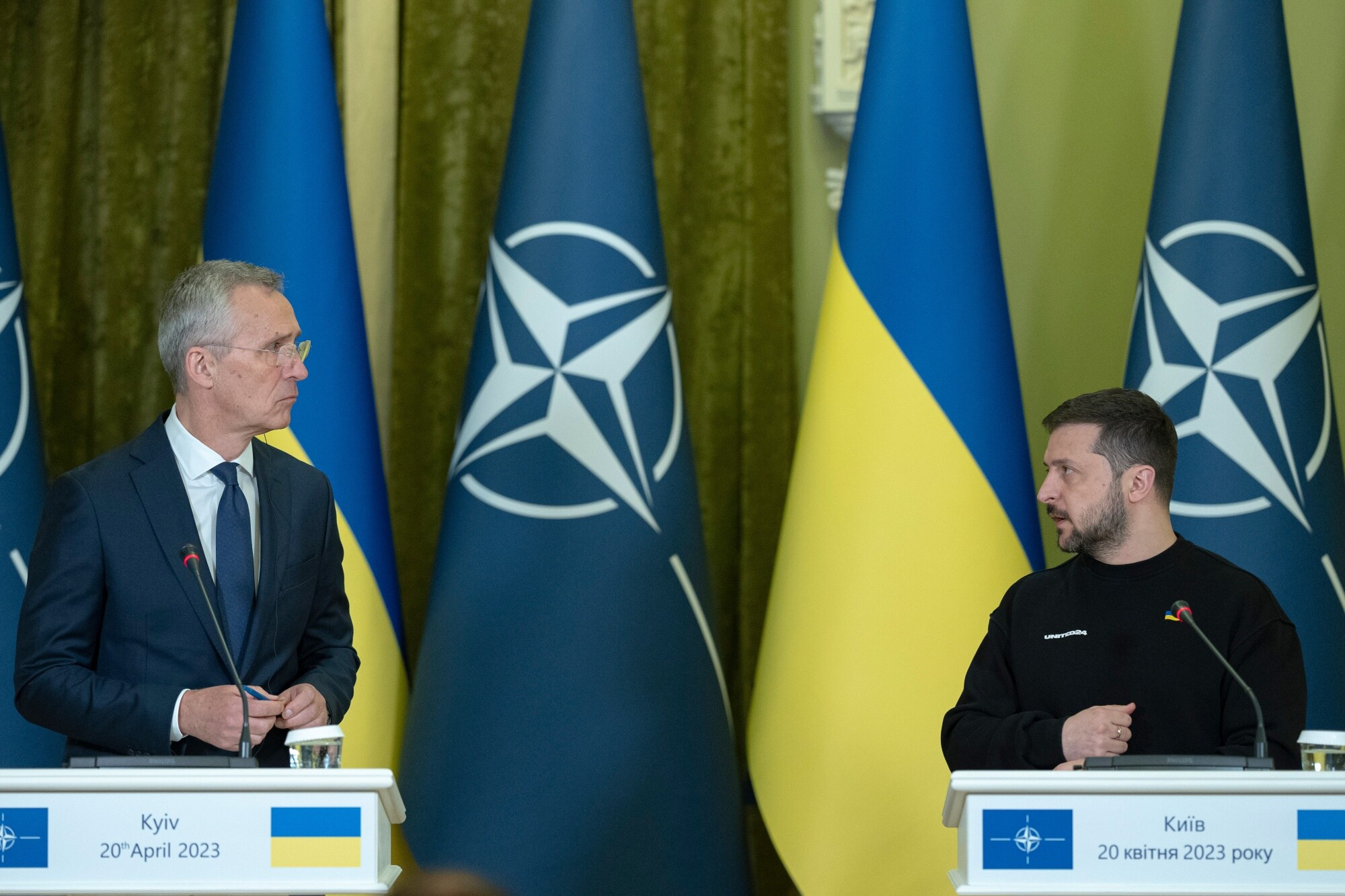
(Bloomberg) -- NATO allies are reining in expectations about the viability of a proposed $100 billion fund to support Ukraine as the alliance grapples with how to provide sufficient aid to Kyiv.
At a gathering of the alliance's foreign ministers in Brussels, some countries raised doubts about the prospects of finding fresh funding for NATO Secretary General Jens Stoltenberg's plan to pool allied contributions over five years. Several ministers suggested it would be better to pledge a smaller amount that allies can more clearly back, according to a senior diplomat present for the discussions.
Many ministers stressed the NATO initiative shouldn't compete with bilateral and EU aid and warned that the alliance shouldn't make promises to Ukraine that it can't keep, according to officials present for the discussions who spoke on the condition of anonymity. Another senior diplomat said the $100 billion sum is so large, it would likely have to account for bilateral donations member states give Ukraine, meaning any additional fresh funding would likely be marginal.
“We have to avoid duplicity, double accountabilities, counting twice the money or buying the same things,” Spanish Foreign Minister Jose Manuel Albares told a small group of reporters Wednesday evening. Still at the end, “we all want to make sure Ukraine has what it needs in terms of volume and in terms of time,” he said.
The concerns highlight the tough discussions allies will have to undertake to hammer out a deal in time for a leaders' summit in Washington in July. With a formal invitation for Ukraine to join not on the table this year, NATO is instead seeking to propose a package of measures for Kyiv that would serve as a “bridge” to membership and would create predictability around allies' support over the years to come, while sending a message to Russia about their determination.
The discussions come amid deepening worries about the situation on the ground in Ukraine due to severe ammunition shortages for Kyiv's forces. Warming weather is heightening concerns that Russia will have better prospects at punching through the front line when it renews attacks this spring and summer.

Ukrainian Foreign Minister Dmytro Kuleba told reporters he had delivered to NATO members “a very sobering message” about the toll of Russian air attacks, calling on the allies to boost Ukraine's air defenses including with the US-made Patriot, “the only system that effectively intercepts ballistic missiles.”
Following a closed-door discussion, Kuleba told reporters that the “allies will undertake an exercise of allocating, of finding, identifying these additional air defense systems in order to bring them to Ukraine.”
In addition to the fund, NATO is looking to assume greater responsibility in coordinating weapons deliveries to Ukraine, which so far has been helmed by the US-led Ukraine Defense Contact Group. While such a move would shield the structure from political change in the US, particularly if Donald Trump returns to the White House, it also marks a shift in NATO's role in the war.
The alliance so far has sought to distance itself from allies' weapons aid in order to avoid any escalation to the war. But allies are not concerned about any danger such a move might pose, according to the senior diplomat, who stressed NATO is instead trying to shift from ad-hoc initiatives for support for Ukraine to a more predictable and sustainable system.
“Economic support to Ukraine is not charity, it's an investment in our own security,” Stoltenberg told reporters after the first day of meetings, which continue Thursday. “Today we didn't take any final decisions exactly on what format we will establish but we agreed to initiate planning.”
While the mechanics of the accounting for any fund still need to be worked out, it would likely be based on countries' gross domestic product — a method many officials said could address a burden sharing problem in terms of aid for Ukraine. France, in particular, trails allies like Germany and Baltic and Nordic nations in their donations to Ukraine. France was among the allies that expressed skepticism for the plan in the meeting, according to another senior envoy.
“It doesn't achieve anything to make money available on paper,” German Foreign Minister Annalena Baerbock said Thursday in an interview with Deutschlandfunk radio. “What's important is that deliveries of weapons and ammunition are actually made that will enable Ukraine to defend itself.”
--With assistance from Iain Rogers, Katharina Rosskopf and Courtney McBride.
(Updates with Kuleba remarks in seventh, eight paragraphs and new chart)
More stories like this are available on bloomberg.com
©2024 Bloomberg L.P.

-
Talking Points This Week: Leadership Shock At Nvidia, Earnings Strength, And The Fog Over Hormuz

The Anthropic IPO pricing and first trading day, Nvidia's upcoming earnings, and any fresh signals from Iran will set the tone for the following week.
-
Signature Play: The Classic Cocktail Is Dead. Or Is It?
Classic cocktails are disappearing from India's cocktail menus. But they're still being ordered, taught to bartenders and borrowed from. So, who's really having the last drink?
-
A New Samvat Wishlist: Inclusive Prosperity And Human Development
India has strengthened its economic foundations through infrastructure, digital access and enterprise. Its next growth chapter must deepen productivity, create better livelihoods and widen participation in prosperity.
-
Love, Sex Aur Dhokha: The Audacious Plot To Spy On Jensen Huang
A Taipei dinner, a Singapore chip buyer and a suspected Chinese asset: inside the alleged spy operation that got close to NVIDIA's Jensen Huang.
-
Ten Things I Learnt This Samvat
Patience can be a trap. Cheap stocks can stay cheap. Leverage can wipe you out. What did Samvat 2082 teach us? Niraj Shah writes on 10 lessons from the year gone by.
-
Talking Points This Week: Tech Nerves, FII Buying, And A Faraway Banking Shock
The global markets are not shining this Diwali. The exception in the large markets is, India.
-
Midterm Rally Lasted A Day. The Hard Reality Of A Divided US May Last Two Years | Opinion
Between a contested AI boom, a debt ceiling that arrives in 2027 and a president with every incentive to act alone, the next two years may prove more volatile than the first day's rally suggests.
-
Blue Wave Will Derail the AI Trade but Won't Dismantle the AI Era | Unhedged Position
The Democrats' sweep of the US Congress will see politics collide with economic forces both over the long and short term.
-
It's Time To Take The GST Council's Bet On Trust Global
Payment records can prove India's services exports, and clear, proportionate rules can bring foreign digital sellers into the tax net.
-
Opinion | India at 38: From Innovation Overperformer to Innovation Powerhouse
India now has 453 VC-backed deep science startups, 18 of them late-stage, after 117 percent growth since 2020. Laurus Labs, at USD 9.3 billion, is the most valuable deep science company in any middle-income economy outside China.









