Nationwide Strike Hits Banking Operations, Transport Services
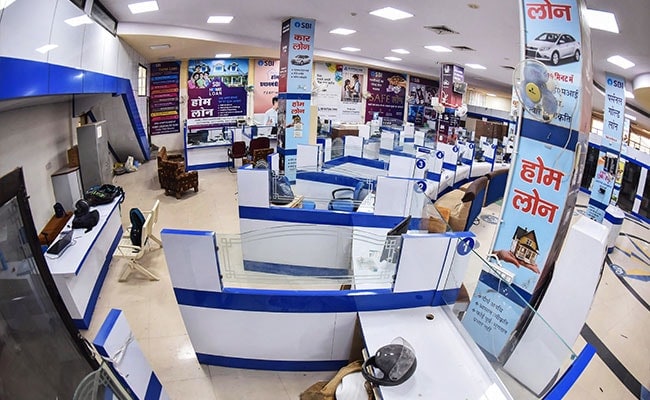
Public dealings at some bank branches were hit and public transport services were thrown out of gear in states like West Bengal, Kerala and Tamil Nadu as thousands of workers on Monday began a two-day nationwide strike to protest against policies of the government.
However, essential services like healthcare, electricity and fuel supplies remained unaffected.
Public offices as well as educational institutions were not impacted by the strike called by nearly a dozen trade unions.
Some bank branches, particularly in cities with a strong trade union movement, did very limited over-the-counter public dealings such as cash deposits and withdrawals.
The joint forum of central trade unions, which has called for the two-day strike that started on Monday, said that bandh-like situation prevailed in at least eight states due to the nationwide strike against various policies of the government.
"There is a bandh-like situation in Tamil Nadu, Kerala, Puducherry, Andhra Pradesh, Telangana, Odisha, Assam, Haryana and Jharkhand," the forum said in a statement.
According to the forum, agitations were held in many industrial areas across states like Goa, Karnataka, Maharashtra, Chhattisgarh, Punjab, Bihar, Rajasthan, West Bengal, Meghalaya and Arunachal Pradesh.
In Maharashtra, volume data from clearing houses and cash replenishment at Automated Teller Machines (ATMs) was not immediately available, though the striking employees claimed that they had a deep impact.
Workers staged protests at several places and unions claimed the agitation has had an impact in coal mining belts in Jharkhand, Chhattisgarh and Madhya Pradesh.
The joint forum of central trade unions is protesting against the government policies affecting workers, farmers, and people.
Their demands include the scrapping of the labour codes, no privatisation in any form, scrapping of the National Monetisation Pipeline (NMP), increased allocation of wages under MNREGA (Mahatma Gandhi Rural Employment Guarantee Act) and regularisation of contract workers.
In West Bengal, normal life was hit with protesters blocking roads and stopping movement of trains at some stations.
State road transport buses as well as auto-rickshaws and private buses were off the road in Kerala but essential services, including supply of milk, hospital and ambulance services were not affected.
Public transport services were hit in Haryana as employees of state roadways joined the strike.
Thousands of workers of state-owned SAIL, RINL and NMDC also joined the strike, affecting production at steel plants and mines.
Banking services were partially impacted on Monday as a section of bank employees did not report for duty.
However, there was hardly any impact on the functioning of new generation private sector banks. There might have been a delay in cheque clearances and government treasury operation might have also be affected by the strike.
The impact of the strike is prominent in eastern India as many branches of public sector banks there are closed, All India Bank Employees' Association (AIBEA) General Secretary C H Venkatachalam said.
In the other regions, branches are open as officers are present but services are being impacted due to many employees participating in the strike, he said.
Bank unions are protesting against the government's move to privatise two public sector banks as announced in Budget 2021-22.
They are also demanding an increase in interest rate on deposits and reduction in service charges.
The central trade unions that are part of this joint forum are INTUC, AITUC, HMS, CITU, AIUTUC, TUCC, SEWA, AICCTU, LPF and UTUC.
"The two-day nationwide strike by the joint forum of central trade unions has begun this morning and has got good response," Amarjeet Kaur, General Secretary of All India Trade Union Congress (AITUC), told PTI.
She said the entire coal belt (mining area) has been affected in Jharkhand, Chhattisgarh and Madhya Pradesh.
According to her, there was a good response for the strike call in industrial areas of Assam, Haryana, Delhi, West Bengal, Telangana, Kerala, Tamil Nadu, Karnataka, Bihar, Punjab, Rajasthan, Goa, Andhra Pradesh and Odisha.
Kaur claimed that banks and insurance sectors have been affected all over India while steel and oil sectors were also seeing partial impact due to the strike.
About 20 crore workers are expected to join the strike. The strike notices have been given by the unions in various sectors, including coal, steel, oil, telecom, postal, income tax, copper, banks, and insurance.
Bal Malkit Singh, Chairman of Core Committee of All India Motor Transport Congress (AIMTC) said that as per the report received till now, the transportation of goods has not been affected by the strike.
AIMTC, the apex body for the truckers, has not given a strike call.
"Our trucks are running smoothly all over the country," he said.
"All supplies are normal. During the day, we have not received any feedback from any of the members across the country that there is any disruptions in the supply chain.... We are not part of the agitation," he said.
However, the Confederation of All India Traders (CAIT) said the strike called by a joint forum of trade unions has been a "total flop" in the informal sector.
In a statement, it also claimed there was no impact visible even in various industrial areas where small industries are having manufacturing activities.

-
We May Need Another Tukaram Mundhe To Fight Air Pollution | The Reason Why

Developers may install basic measures such as sprinklers and green nets, resume work, and continue violating rules when this equipment stops working.
-
Extracting Value From Battery Scrap Could Be Challenging For India | The Reason Why
A discarded lithium-ion battery still contains valuable materials such as lithium, nickel and cobalt. These can be recovered and reused. When such batteries are crushed and shredded, they produce a dark powder called black mass.
-
One El Nino, India Can Handle. Two Could Break The Granary
India's grain stocks can absorb one bad year, but a second El Nino could drain the buffer in two to three years, economists say.
-
India's Troika Of Good Luck | Joining The Dots
As Jensen Huang's exit drags Nvidia down, a cooling AI trade and resilient earnings have revived investor interest in India. A likely RBI rate hike looms.
-
Talking Points This Week: Leadership Shock At Nvidia, Earnings Strength, And The Fog Over Hormuz
The Anthropic IPO pricing and first trading day, Nvidia's upcoming earnings, and any fresh signals from Iran will set the tone for the following week.
-
Signature Play: The Classic Cocktail Is Dead. Or Is It?
Classic cocktails are disappearing from India's cocktail menus. But they're still being ordered, taught to bartenders and borrowed from. So, who's really having the last drink?
-
A New Samvat Wishlist: Inclusive Prosperity And Human Development
India has strengthened its economic foundations through infrastructure, digital access and enterprise. Its next growth chapter must deepen productivity, create better livelihoods and widen participation in prosperity.
-
Love, Sex Aur Dhokha: The Audacious Plot To Spy On Jensen Huang
A Taipei dinner, a Singapore chip buyer and a suspected Chinese asset: inside the alleged spy operation that got close to NVIDIA's Jensen Huang.
-
Ten Things I Learnt This Samvat
Patience can be a trap. Cheap stocks can stay cheap. Leverage can wipe you out. What did Samvat 2082 teach us? Niraj Shah writes on 10 lessons from the year gone by.
-
Talking Points This Week: Tech Nerves, FII Buying, And A Faraway Banking Shock
The global markets are not shining this Diwali. The exception in the large markets is, India.









