Nasdaq hits 11-year high
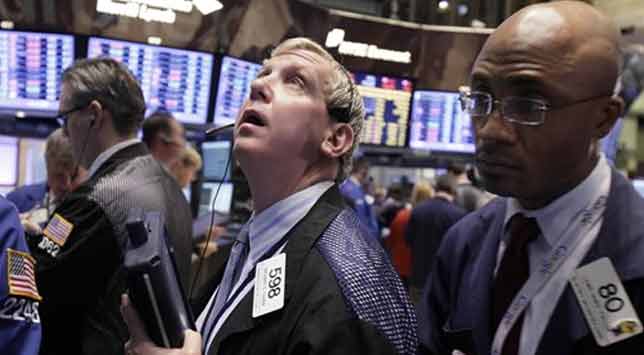
A drop in the unemployment rate to its lowest level in three years propelled the Dow Jones industrial average Friday to its highest close since May 2008, before the financial meltdown later that year. The Nasdaq composite index hit an 11-year high.
The Dow jumped 156.82 points to 12,862.23, its highest mark since May 19, 2008, about four months before Lehman Brothers investment bank collapsed. In May 2008, credit markets were tightening up, subprime mortgages were going sour and Bear Stears had already collapsed.
Before the market opened, the Labor Department said the economy added 243,000 jobs in January. It was the strongest job growth in nine months. The increase in hiring pushed the unemployment rate down to 8.3 per cent, the lowest since February 2009.
The surprising data gave financial markets a morning jolt that lasted throughout the trading day. The Nasdaq index closed 45.98 points higher at 2,905.66, its highest since December 2000, during the steep decline that followed the dot-com stock bubble.
The price of ultra-safe Treasury notes dropped, sending yields higher, and the price of oil rose for the first time in a week.
"In this economy, only one variable matters right now, and that variable is employment," said Lawrence Creatura, an equity portfolio manager at Federated Investors. "This report was great news. It was beyond all expectations, literally. The number was higher than even the highest forecast."
The Standard & Poor's 500 index added 19.36 points, or 1.3 per cent, to 1,344.90, its highest close since last July. The S&P 500 surged 2.2 per cent for the week, its fifth straight week of gains. That's the longest weekly winning stretch since January of 2011.
James Paulsen, chief investment strategist at Wells Capital Management, said the jobs report seems to be evidence that the U.S. economy isn't as vulnerable to a shock from Europe as many had feared. If that's true, then investors should be willing to pay more for stocks.
More evidence that the economy is gaining strength followed the jobs report. A trade group said the service industry expanded at the fastest pace since last February. The government also said factory orders rose 1.1 per cent in December, supported by a rebound in orders for heavy machinery.
Bank of America led the 30 stocks in the Dow, rising 5.2 per cent. Only two stocks were lower: Merck and Procter & Gamble.
Treasury prices fell, lifting the yield on the 10-year note Treasury to 1.93 per cent. When bond prices fall, yields rise. The benchmark 10-year rate had traded below 1.79 per cent earlier this week as traders bought U.S. Treasurys on renewed concern over Europe's ongoing debt crisis.
The U.S. jobs figures helped markets in Europe rally on Friday despite further evidence that the 17-country eurozone is heading for recession. Germany's DAX closed 1.7 per cent higher, and France's CAC-40 gained 1.5 per cent.
Worries over Europe's debt troubles still have the potential to send markets reeling in the months ahead, Creatura said. He expects the S&P 500 to continue surging but still hit patches of turbulence from Europe in the coming months.
"It's not over yet," he said. "Even though it appears our aircraft is taking off, you should still keep your seatbelt fastened."
Among companies whose stocks made large moves:
— Genworth Financial soared 14 per cent, the best gain in the S&P 500. The insurance company reported late Thursday that it swung to a profit in the most recent quarter, helped by gains in sales of life insurance.
— Weyerhaeuser gained 5.7 per cent after reporting better quarterly earnings than analysts' forecasts. The timber and real estate company's earnings still sank 62 per cent.
— Video game maker Take-Two Interactive Software Inc. rose 3 per cent. The company reported a 65 per cent drop in quarterly profits after the market closed Thursday, but Wall Street's analysts expected much worse.

-
Getting To Work Costs Women More | The Reason Why

It is not just about women paying more than men. It is about women paying much more in cities than in villages.
-
AI Bias In Investing Cannot Be Eliminated, But It Can Be Governed
Framing is a particularly important example as identical financial information presented in terms of gains rather than losses can lead an LLM to reach a different assessment.
-
Joining The Dots | Dark Skies, Steady Diya: Why Hope Holds This Diwali
With war, a weak rupee and foreign outflows weighing on sentiment, policymakers at the NDTV World Summit and market veterans at NDTV Profit Ignite: Diwali Edition offered the same advice: stay invested and filter out the noise.
-
The Curious Case of Equitas Small Finance Bank And A CEO Who Quit For Stock
PN Vasudevan believes persistent investor concerns over a perceived conflict of interest had become a governance overhang on Equitas Small Finance Bank's stock, even as the lender improved profitability and asset quality.
-
Talking Points This Week: AI Cash Burn, A Tiger Comeback And An India That Still Finds Its Own Path
India is not immune to higher oil or tighter global liquidity, yet its earnings base is broader, its domestic policy levers are still available.
-
Foreign Investors Own Half Of HDFC Bank and ICICI Bank. An LTCG Cut Could Matter Most Here
Foreign portfolio investors have US$115 billion parked in HDFC Bank, ICICI Bank. If the government cuts long-term capital gains tax, Jefferies says returning foreign money could land here first.
-
'Never Seen This Level Of Negativity': Sandeep Tandon Says The Next Rally May Be Closer Than You Think
Veteran investor Sandeep Tandon says foreign selling is easing, large-caps are due a comeback and mid-caps are crowded, while he turns positive on gold, power and pharma this Diwali.
-
Indians Stay With Family, Not In Hotels | The Reason Why
India still lacks enough clean, reliable and affordable hotels for budget-conscious travellers.
-
The Economic Imperative: Analysing The Material Driving Force Behind India-Canada Strategic Reset
This economic complementarity is further reinforced by deep institutional investment ties and talent mobility, which form the bedrock of the bilateral framework.
-
Medicine Pricing: Where Must Profit Stop?
India must confront excessive margins, hidden incentives and regulatory gaps that threaten the integrity of medicine.










