Naresh Goyal, Ticketing Agent Who Became Airline Mogul, Resigns
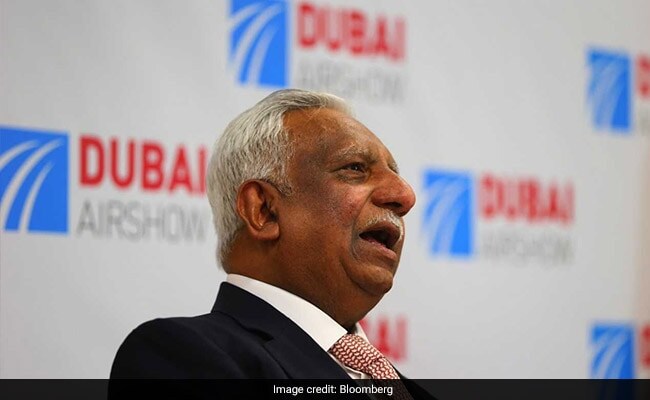
Naresh Goyal, a former ticketing agent who went on to build one of India's biggest airlines, has stepped down as chairman of cash-strapped Jet Airways India Ltd. after caving in to pressure from creditors.
Jet's board approved resignation of Mr Goyal, 69, and his wife Anita, the second biggest full-service airline in India said in a filing today. Banks, which will get 11.4 crore new shares in the company, will provide the carrier with an immediate funding of as much as Rs 1,500 crore in debt.
The resignation marks the end of an era as Mr Goyal, once ranked as one of India's 100 richest people, who is widely seen as a pioneer in India's fast-growing aviation industry. The move comes after his flagship company, partly owned by Abu Dhabi's Etihad Airways PJSC, fell victim to the emergence of budget carriers offering base fares as low as 2 cents.
His departure removes a potential obstacle for creditors, who are seeking to overhaul the company and salvage a carrier that's grounded about two-thirds of its fleet. Jet is currently 24 percent owned by Etihad, but the shareholding pattern will change after issuance of shares. Lenders will now own more than 50 percent of the carrier.
"The Jet Airways debt saga has entered a decisive phase," said Rajesh Narain Gupta, Managing Partner of law firm SNG & Partners. "Banks have no other option but to pick up the major stake and find a new promoter for the debt-laden airline. However, it remains to be seen how successful banks become in managing an airline, going beyond their core competence."
Lenders led by government-owned State Bank of India, have proposed an intricate bailout package, under which banks have a majority of the company for 1 rupee -- less than one U.S. cent -- while giving the ailing airline time to arrange fresh equity. Jet shareholders approved the plan last month, allowing banks to nominate their representatives to the board, but there's no progress in getting new investors.
The banking consortium will appoint merchant bankers to sell the stake in Jet, Rajnish Kumar, SBI's chairman, told BloombergQuint in an interview. Everyone including Mr Goyal and Etihad will be allowed to bid, he said.
Little is known about Mr Goyal's childhood but he began his career in aviation as a ticketing agent for Lebanese International Airlines, according to his company's website. In 1991, he started Jet Airways after India opened up its economy, and the airline started flying two years later. Over the years, he would expand Jet, then part owned by Gulf Air and Kuwait Air, into the country's second-largest airline behind flag carrier Air India.
Then budget airlines such as InterGlobe Aviation Ltd.'s IndiGo and SpiceJet Ltd. began emerging more than a decade ago, roiling the industry with discounted prices for no-frill services. Compounding Jet Airways' woes were a depreciating Indian rupee and surging oil prices. The harsher competitive environment forced Air India to seek multiple taxpayer-funded bailouts and the likes of Kingfisher Airlines Ltd., headed by fugitive tycoon Vijay Mallya, went out of business.
As a result, Jet Airways posted losses in nine of the past 11 years and struggled to pay its debt. Cumulative losses bloated to about $1.6 billion as of the end of March 2018.
Government officials have said they were trying to revive Jet Airways by changing its management but the carrier's future will be a commercial decision taken by the lenders. The government, as well as lessors, have already asked rivals like budget carrier SpiceJet Ltd. to take over some of the grounded Jet Airways planes, as Prime Minister Narendra Modi seeks to save jobs ahead of a general election starting next month.
Banks and Etihad wanted Mr Goyal to step down before a bailout, people familiar with the matter have said. Lenders have also sought a reduction in Mr Goyal's stake to less than 10 percent as a condition before they infuse fresh capital, a person familiar with the matter said last week. With lenders taking a stake, Mr Goyal's stake will halve to 25.5 percent.

-
The Curious Case of Equitas Small Finance Bank And A CEO Who Quit For Stock

PN Vasudevan believes persistent investor concerns over a perceived conflict of interest had become a governance overhang on Equitas Small Finance Bank's stock, even as the lender improved profitability and asset quality.
-
Talking Points This Week: AI Cash Burn, A Tiger Comeback And An India That Still Finds Its Own Path
India is not immune to higher oil or tighter global liquidity, yet its earnings base is broader, its domestic policy levers are still available.
-
Foreign Investors Own Half Of HDFC Bank and ICICI Bank. An LTCG Cut Could Matter Most Here
Foreign portfolio investors have US$115 billion parked in HDFC Bank, ICICI Bank. If the government cuts long-term capital gains tax, Jefferies says returning foreign money could land here first.
-
'Never Seen This Level Of Negativity': Sandeep Tandon Says The Next Rally May Be Closer Than You Think
Veteran investor Sandeep Tandon says foreign selling is easing, large-caps are due a comeback and mid-caps are crowded, while he turns positive on gold, power and pharma this Diwali.
-
Indians Stay With Family, Not In Hotels | The Reason Why
India still lacks enough clean, reliable and affordable hotels for budget-conscious travellers.
-
The Economic Imperative: Analysing The Material Driving Force Behind India-Canada Strategic Reset
This economic complementarity is further reinforced by deep institutional investment ties and talent mobility, which form the bedrock of the bilateral framework.
-
Medicine Pricing: Where Must Profit Stop?
India must confront excessive margins, hidden incentives and regulatory gaps that threaten the integrity of medicine.
-
Why Amazon And Flipkart Are Struggling To Beat Meesho In India's Smaller Cities
With 274 million users and lowest-cost logistics, Meesho is defending its value commerce crown against giants like Amazon and Flipkart.
-
High US Salaries, No Green Card Certainty: The Financial Calculation Facing Indian H-1B Families
The suspension of PERM processing at eight technology employers does not cancel existing H-1B visas. What it does is force a question many Indian families have been avoiding: is the US salary worth tying your career and family plans to one employer?
-
Swiggy vs Eternal: Food Delivery's Two Rivals Are No Longer In The Same Race
Eternal is building a private AI assistant, dark.ai. Swiggy is still working out how to make Instamart pay, with an operating loss of Rs 895 crore in the July-September quarter while Blinkit stayed profitable.










