Naresh Goyal Should Have Long Seen The Writing On The Wall
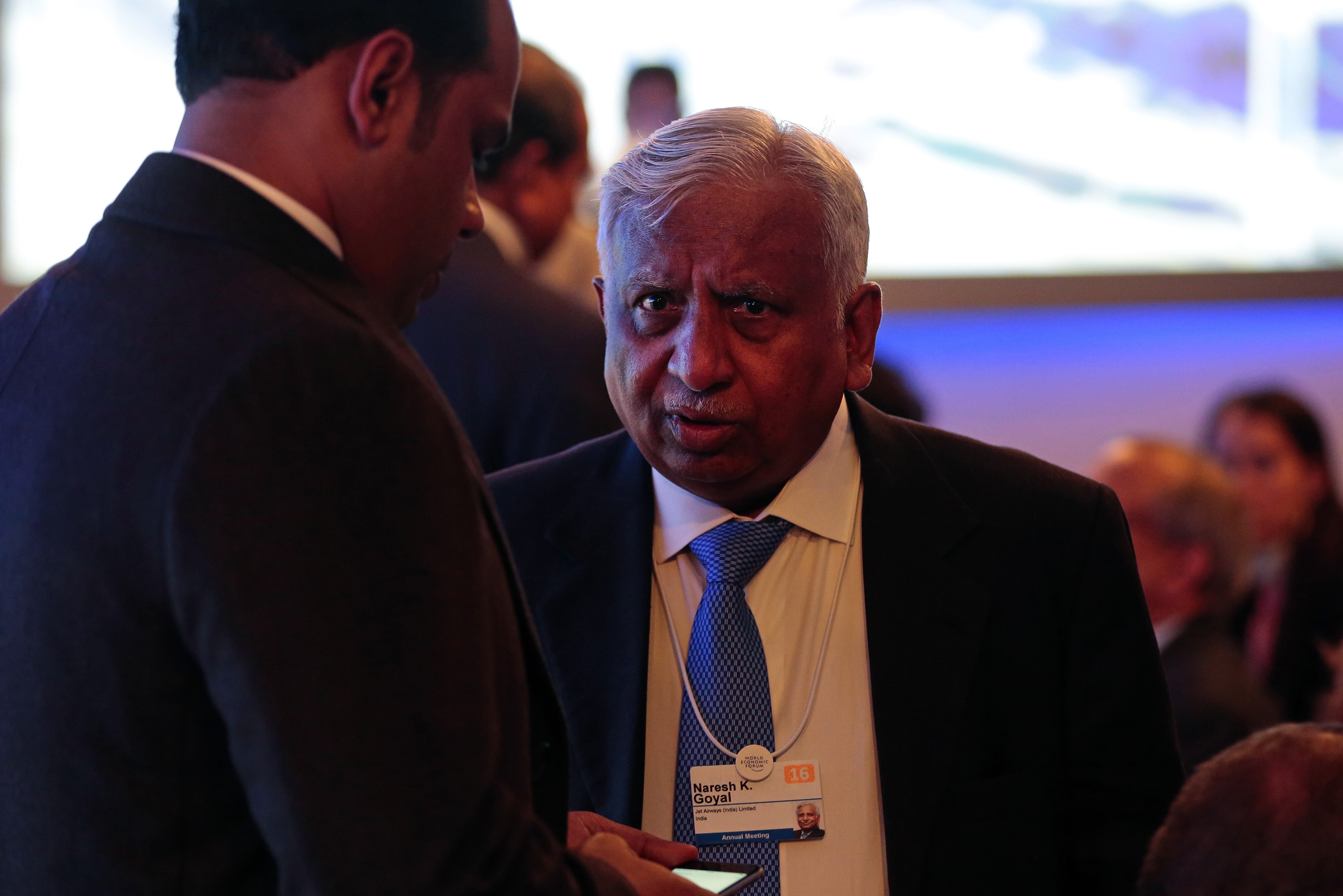
An airline cannot run on a business model which is in conflict with market dynamics. To run a full services carrier, but not get compensated by way of a premium on the fare, for recovering the cost of additional amenities you are extending, is not viable. If the difference in the fare between IndiGo and Jet Airways is going to be a paltry Rs 100-200, how was Jet, as a full service airline, expecting to break even? This question should have been asked by Naresh Goyal to himself many years ago. As for the banks, they put in Rs 8,000 crore in Jet Airways and did not even ask for a board seat. A lot can be learned in retrospect, but with a listed private sector company, a lot more information should have been placed in the public domain.
Any situation doesn't deteriorate in a year. This happens over a period of time. When you have a price-sensitive market, where fares are being kept low to stimulate the market with low-cost airlines, full-service carriers like Jet Airways cannot recover the cost of producing a seat. When this situation persists over a period of time, the airline naturally accumulates losses. Then it gets into the vicious cycle of reducing the quality of the product, not paying the lessors from whom aircraft have been leased, default on bank loans, and other such attempts to stem the bleeding. In a way, Jet Airways has followed the established trajectory on what has happened with many other airlines globally.
A Product Of Crony Capitalism
The second issue is how Jet Airways was run. The way Naresh Goyal has conducted his affairs, the writing was on the wall. He wasn't reading it, or if he was reading it, he was not asserting himself, to cut costs and take care of the situation.
If you recall, it was in March last year that salaries were delayed for the first time. March 2018! One year is a significant period, and Goyal did nothing. Why he behaves in this manner, would be obvious to a person in the aviation industry.
He is a product, in a large way, of the crony capitalism in the country. When he entered the industry, his only competition was with the government-owned Indian Airlines. So, he had a relatively smooth entry, unlike other carriers like IndiGo and SpiceJet who came in later, when there were already established private players in the market.
Once you don't have a baptism by fire, you take it easy. Goyal had another characteristic. He knew how our systems functioned, how to manipulate the political and bureaucratic machinery, how to get policies framed which favour you. Naresh Goyal has been a beneficiary of all those things. He had the requisite power to influence bureaucrats and political people to take decisions the way he wanted.
The 5/20 rule is not the only instance where he got the government to get things done his way so that he didn't have competition on international routes.
- For example, when he came out with an IPO at a huge premium in 2005, a couple of days before the IPO was to go public, he got the government's approval to fly overseas. Do you call that coincidence?
- Or when he got Eithad to buy 24 percent equity, the government gave a bonanza of 50,000 seats per week in the bilateral agreement on the eve of the announcement.
There is very clear evidence that Goyal manipulated the system.
Then he went up against a new kind of competition, the stiff kind, that Indigo gave. If Goyal had had a baptism by fire, he would have had fire in his belly to fight. But he wasn't one of those guys. He allowed Indigo to dethrone Jet as the number one player. He did not even fight for it.
His way of fighting was behind the scenes, not in the market place.
Goyal is presumably sitting in London, not at the scene of the action. He has only writen letters, giving his employees assurances. I would have expected any leader to be at the scene of the action and go down fighting, rather than pass on the mantle to the lenders and say, “now you take care of my airline.”
Also Read: Naresh Goyal's Incredible Luck With Aviation Policy
Bankers Damned If They Do, Damned If They Don't
A part of the media has already started blaming the banks for not having infused Rs 1,500 crore as emergency funding. The fact is that the Feb. 12, 2018 circular has got nullified, so banks do not hold equity as was earlier decided. If they put in money, they will be held accountable, on the process followed for infusing that money. The one thing that can't be overlooked is that even if the Rs 1,500 crore is infused, in a hypothetical situation, what happens three months from now when this funding gets exhausted?
One argument is, put the Rs 1,500 crore so that employees can get paid, some of the aircraft start flying. However, banks don't have the core competence to run the airline, they are on the right path in fast-tracking the search for an investor to take over the airline. That is where the hope lies, in an investor putting in the money and bringing in a professional approach. I am not privy to the five expressions of interest that lenders received. However, it is unlikely that there are more than two EoIs which are worthy of consideration. I doubt that the scenario right now is that all five are solid. Only if the onboarding of a serious investor is fast-tracked, is there any hope for the airline. Otherwise, there is, frankly, none.
Banks' concerns of Jet Airways going the Kingfisher way are valid. An airline can't have the salary structure of 25 years ago when Indian Airlines / Air India were the only competitors. It inherited a lot of government culture because this airline didn't go through any true competition test in the marketplace. On the other hand, IndiGo and SpiceJet entered in a competitive environment and are battle ready. That said, I would hope against hope to see jet Airways on its feet again.
Jitender Bhargava is a former Executive Director of Air India and the author of ‘The Descent of Air India'.
The views expressed here are those of the author and do not necessarily represent the views of BloombergQuint or its editorial team.

-
Gold Is Rs 22,000 Cheaper Than A Month Ago. Should You Buy Amid The Wedding Season?

Gold's potential slide to $3,500 could save around Rs 4,700 per 10 grams, but a soft inflation print could just as easily push prices back up. One way to split the risk is to buy in parts, some now and the rest after the Fed's Dec. 9 decision.
-
AI Agents Are Gaining Power. Who Governs Them?
Artificial intelligence agents promise to transform productivity by moving machines from assisting decisions to executing them. But as organisations delegate greater authority to these AI-agents, they must first establish who controls that authority and who remains accountable when things go wrong.
-
Why Swapping Your Old Gold Can Trigger A Rs 5 Lakh Tax Bill, And How You Can Avoid It Legally
Swapping old gold for new is taxed as a sale and a fresh purchase. Getting your own gold remade can cut most of that bill, though it has its own costs.
-
The AI Trade is Done. The Real Opportunity for Investors Starts in 2027 | Unhedged Position
As pureplay AI stocks plunge and circular, capex-led financing unwinds, 2027 is set to be a year of reckoning for AI companies. Yet the bust clears the way for a better opportunity for investors in 2027 -- shifting the spotlight from AI builders to the companies using AI.
-
Leadership As Mission: Why The Age Of AI Demands More Human Leadership
Debjani Ghosh examines how AI is changing leadership, arguing that its success must be measured by its impact on people and the accountability of those guiding its use.
-
We May Need Another Tukaram Mundhe To Fight Air Pollution | The Reason Why
Developers may install basic measures such as sprinklers and green nets, resume work, and continue violating rules when this equipment stops working.
-
Extracting Value From Battery Scrap Could Be Challenging For India | The Reason Why
A discarded lithium-ion battery still contains valuable materials such as lithium, nickel and cobalt. These can be recovered and reused. When such batteries are crushed and shredded, they produce a dark powder called black mass.
-
One El Nino, India Can Handle. Two Could Break The Granary
India's grain stocks can absorb one bad year, but a second El Nino could drain the buffer in two to three years, economists say.
-
India's Troika Of Good Luck | Joining The Dots
As Jensen Huang's exit drags Nvidia down, a cooling AI trade and resilient earnings have revived investor interest in India. A likely RBI rate hike looms.
-
Talking Points This Week: Leadership Shock At Nvidia, Earnings Strength, And The Fog Over Hormuz
The Anthropic IPO pricing and first trading day, Nvidia's upcoming earnings, and any fresh signals from Iran will set the tone for the following week.









