Malaysia Should Consider Pegging Ringgit To U.S. Dollar, Mahathir Says
(Bloomberg) -- Former Malaysian premier Mahathir Mohamad said the country should consider pegging its sinking currency to the dollar, repeating the policy he introduced during the Asian financial crisis in the late 1990s.
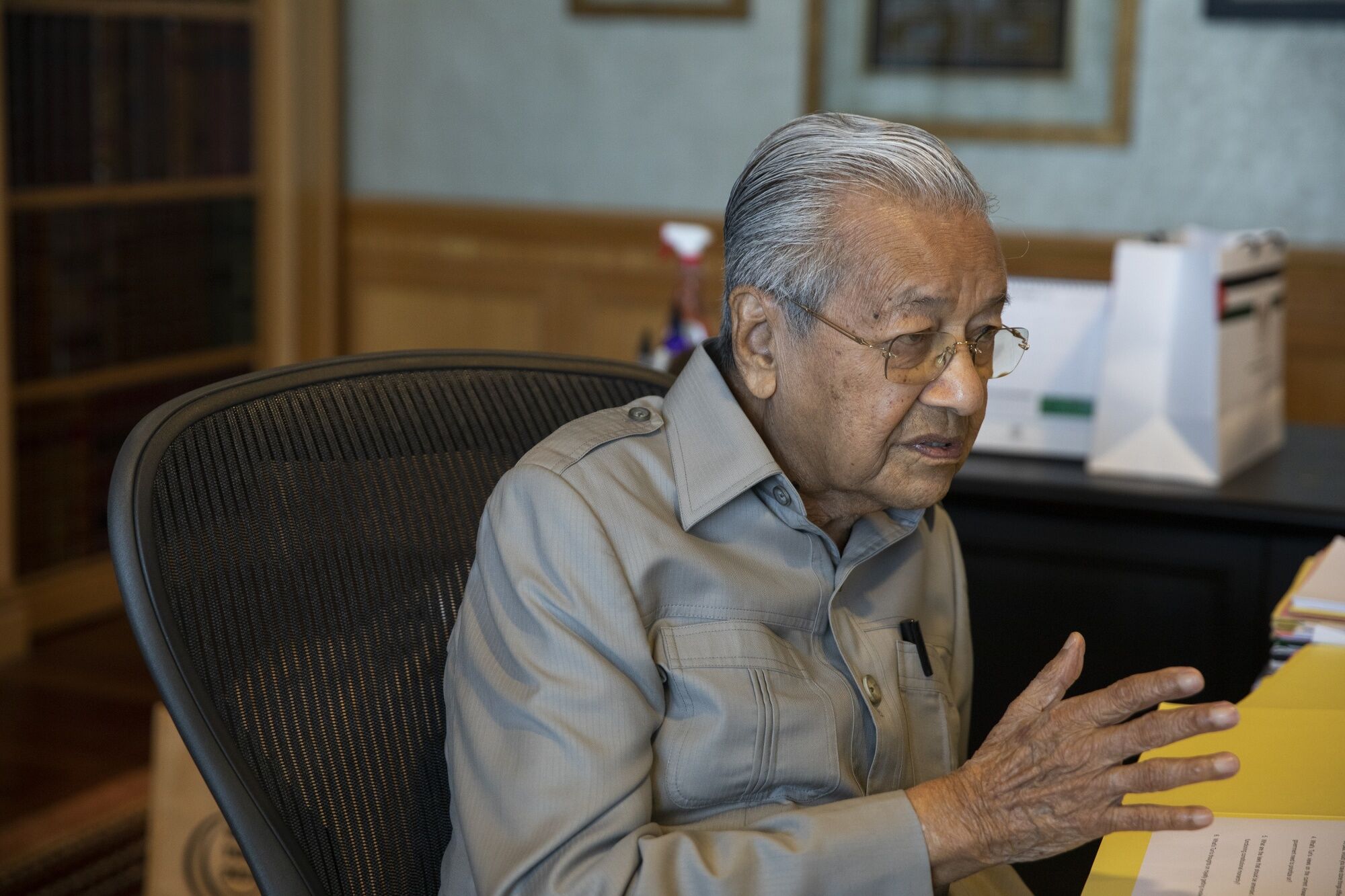
“It's something to be considered,” Mahathir said in an interview on Wednesday in his office in the administrative capital of Putrajaya.

The ringgit is the worst performer in emerging Asia this year, sliding almost 8% versus the greenback. It slumped to almost 4.8 per dollar last month, the weakest level since January 1998, the height of the multi-year crisis that roiled Asian financial markets.

The currency may slide a further 5% to a record-low 5 per dollar, Mahathir, now 98, said in the interview. “Just imagine what that would mean to your cost of living,” he said, adding that pegging the currency would help to alleviate price pressures.
Malaysian assets have suffered this year as surging US interest rates have siphoned funds back to the world's biggest economy. Bank Negara Malaysia has held its key rate at 3% since July, putting the gauge at a record discount to the upper bound of the Federal Reserve's benchmark. At the same time, sputtering growth in China, Malaysia's biggest trading partner, has weighed on its exports.
Malaysian policymakers remain committed to ensure the ringgit adjusts in an orderly manner, Bank Negara Malaysia Governor Abdul Rasheed Ghaffour said last week. “We have been in the markets, and we will, when needed, continue to be in the market,” he said.
The central bank didn't respond to a request for comment about a potential ringgit peg on Wednesday.
‘Stability Anchor'
Malaysia's currency tumbled during the Asian crisis, piling pressure on the country's foreign-exchange reserves.
Mahathir, who first became prime minister in 1981, rejected a bailout by the International Monetary Fund. He instead introduced capital controls in September 1998 and then pegged the ringgit at 3.8 per dollar, a policy that stayed in place until 2005.
The IMF, which at the time called the ringgit peg a “retrograde step,” later acknowledged it was a “stability anchor” that helped the economy recover.
“Foreign investors were very happy,” Mahathir said in the interview.
Mahathir became prime minister for a second time in 2018 after leading a reformist coalition to victory at the general election that ended the six-decade rule of the party he once headed. But squabbling within the coalition, including over when he would step aside, helped bring the government down after only 21 months.
‘It's Wrong'
Mahathir said he had floated the idea of re-pegging the ringgit to the central bank when he returned as premier.
“They said: ‘No, it cannot be done because it is wrong internationally, fixing the exchange rate is wrong,'” Mahathir said.
The elder statesman has a long history of disdain for currency traders and once called billionaire investor George Soros a “moron” for his bold bets against the ringgit in the run-up to the Asian crisis.
“We should outlaw currency trading,” he said in the interview. “You are making profit out of creating poverty for people.”
--With assistance from Anisah Shukry.
More stories like this are available on bloomberg.com
©2023 Bloomberg L.P.

-
Talking Points This Week: Leadership Shock At Nvidia, Earnings Strength, And The Fog Over Hormuz

The Anthropic IPO pricing and first trading day, Nvidia's upcoming earnings, and any fresh signals from Iran will set the tone for the following week.
-
Signature Play: The Classic Cocktail Is Dead. Or Is It?
Classic cocktails are disappearing from India's cocktail menus. But they're still being ordered, taught to bartenders and borrowed from. So, who's really having the last drink?
-
A New Samvat Wishlist: Inclusive Prosperity And Human Development
India has strengthened its economic foundations through infrastructure, digital access and enterprise. Its next growth chapter must deepen productivity, create better livelihoods and widen participation in prosperity.
-
Love, Sex Aur Dhokha: The Audacious Plot To Spy On Jensen Huang
A Taipei dinner, a Singapore chip buyer and a suspected Chinese asset: inside the alleged spy operation that got close to NVIDIA's Jensen Huang.
-
Ten Things I Learnt This Samvat
Patience can be a trap. Cheap stocks can stay cheap. Leverage can wipe you out. What did Samvat 2082 teach us? Niraj Shah writes on 10 lessons from the year gone by.
-
Talking Points This Week: Tech Nerves, FII Buying, And A Faraway Banking Shock
The global markets are not shining this Diwali. The exception in the large markets is, India.
-
Midterm Rally Lasted A Day. The Hard Reality Of A Divided US May Last Two Years | Opinion
Between a contested AI boom, a debt ceiling that arrives in 2027 and a president with every incentive to act alone, the next two years may prove more volatile than the first day's rally suggests.
-
Blue Wave Will Derail the AI Trade but Won't Dismantle the AI Era | Unhedged Position
The Democrats' sweep of the US Congress will see politics collide with economic forces both over the long and short term.
-
It's Time To Take The GST Council's Bet On Trust Global
Payment records can prove India's services exports, and clear, proportionate rules can bring foreign digital sellers into the tax net.
-
Opinion | India at 38: From Innovation Overperformer to Innovation Powerhouse
India now has 453 VC-backed deep science startups, 18 of them late-stage, after 117 percent growth since 2020. Laurus Labs, at USD 9.3 billion, is the most valuable deep science company in any middle-income economy outside China.









