Mumbai's Iconic Taj Hotel's Parent To Challenge Retrospective Demand By Port Trust
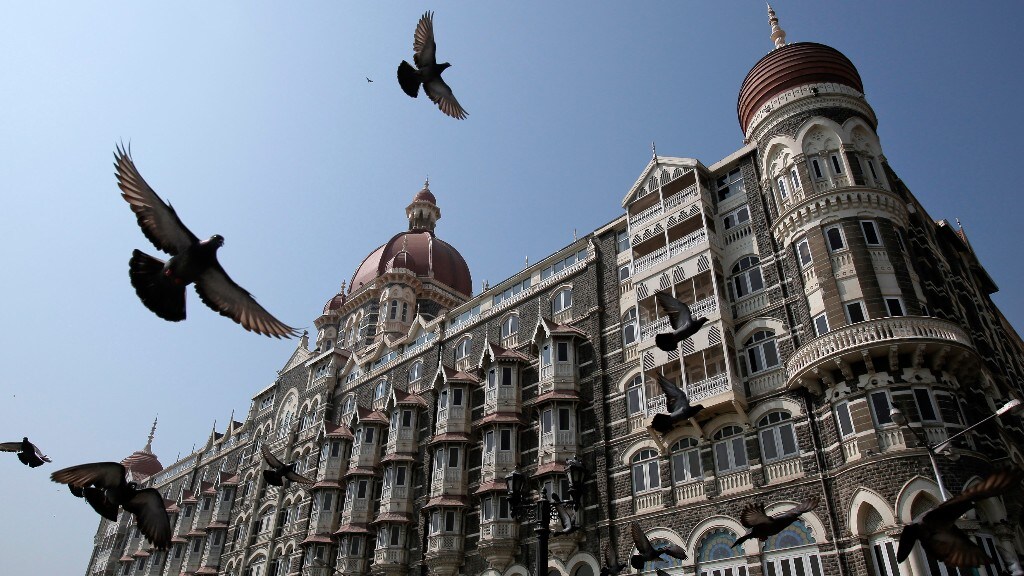
Indian Hotels & Co. plans to challenge a retrospective demand for additional lease rentals after the Mumbai Port Authority notified new rates.
The parent of Taj chain of hotels received demand notices for differential amount worth Rs 764 crore for the period between October 2012 and October 2022, according to its exchange filing. Indian Hotels call the claims "exorbitant and untenable" and, based on legal advice, is preparing to challenge the "additional differential demand" in the Bombay High Court.
Higher rentals are expected impact users of port land across Mumbai. And the additional demand stems from delay in rolling out new rates due to a legal tussle between the MBPT and Tariff Authority of Major Ports over the jurisdiction to raise tariffs. The new rates were rolled out after MBPT withdrew its case from the Bombay High Court.
The Mumbai Port Trust owns about 944 hectares of land in India's financial capital. The trust last fixed lease rentals in 1982. The Tariff Authority for Major Ports was established in 1997.
In 1982, when the port trust raised the tariff, that led to numerous litigations, which culminated with the Supreme Court passing an order to uphold lease rentals from 1982 up to Sept. 30, 2012 based on a compromise formula arrived between the tenants and the Mumbai Port Trust.
The Ministry of Shipping advised the port trust in May 2019 to fix the schedule of rates for all areas of Mumbai port, including townships, with effect from Oct. 1, 2012. The rates were to be decided based on the 2015 amended land policy guidelines for land management by major ports.
According to the guidelines, the rentals have to be determined on the basis of:
State government's ready reckoner of land values in the area, if available for similar classification or activities.
Highest rate of actual relevant transactions registered in the last three years in the ports vicinity (decided by the respective port trust boards) with an appropriate annual escalation rate to be approved by the board.
Highest accepted tender-cum-auction rate of port land for similar transaction updated on the basis of the annual escalation rate approved by the board.
Rate arrived at by an approved valuer appointed for the purpose by the port.
Other relevant factor as may be identified by the Port.
The Mumbai Port Trust Board came up six separate proposals seeking to fix, with retrospective effect, lease rentals for non-home occupations or residential and mixed-used occupations or port trust structures in township areas of MBPT from Oct. 1, 2012 to Sept. 30, 2017 and then from Oct. 1, 2017 to Sept. 30, 2022.
Compromise Formula
The Ministry of Shipping's land policy guidelines require the lease rentals to be revised every five years based on the prevailing market value of the land. The ‘compromise formula' as upheld by the Supreme Court allowed the port to review and revise the letting rates after 20 years (from Oct. 1, 1992 to Sept. 31, 2012).
While the Tariff Authority of Major Ports notified these rentals on a retrospective basis, the existing tenants argued during the consultation process that it cannot be imposed on a retrospective basis.

-
Gold Is Rs 22,000 Cheaper Than A Month Ago. Should You Buy Amid The Wedding Season?

Gold's potential slide to $3,500 could save around Rs 4,700 per 10 grams, but a soft inflation print could just as easily push prices back up. One way to split the risk is to buy in parts, some now and the rest after the Fed's Dec. 9 decision.
-
AI Agents Are Gaining Power. Who Governs Them?
Artificial intelligence agents promise to transform productivity by moving machines from assisting decisions to executing them. But as organisations delegate greater authority to these AI-agents, they must first establish who controls that authority and who remains accountable when things go wrong.
-
Why Swapping Your Old Gold Can Trigger A Rs 5 Lakh Tax Bill, And How You Can Avoid It Legally
Swapping old gold for new is taxed as a sale and a fresh purchase. Getting your own gold remade can cut most of that bill, though it has its own costs.
-
The AI Trade is Done. The Real Opportunity for Investors Starts in 2027 | Unhedged Position
As pureplay AI stocks plunge and circular, capex-led financing unwinds, 2027 is set to be a year of reckoning for AI companies. Yet the bust clears the way for a better opportunity for investors in 2027 -- shifting the spotlight from AI builders to the companies using AI.
-
Leadership As Mission: Why The Age Of AI Demands More Human Leadership
Debjani Ghosh examines how AI is changing leadership, arguing that its success must be measured by its impact on people and the accountability of those guiding its use.
-
We May Need Another Tukaram Mundhe To Fight Air Pollution | The Reason Why
Developers may install basic measures such as sprinklers and green nets, resume work, and continue violating rules when this equipment stops working.
-
Extracting Value From Battery Scrap Could Be Challenging For India | The Reason Why
A discarded lithium-ion battery still contains valuable materials such as lithium, nickel and cobalt. These can be recovered and reused. When such batteries are crushed and shredded, they produce a dark powder called black mass.
-
One El Nino, India Can Handle. Two Could Break The Granary
India's grain stocks can absorb one bad year, but a second El Nino could drain the buffer in two to three years, economists say.
-
India's Troika Of Good Luck | Joining The Dots
As Jensen Huang's exit drags Nvidia down, a cooling AI trade and resilient earnings have revived investor interest in India. A likely RBI rate hike looms.
-
Talking Points This Week: Leadership Shock At Nvidia, Earnings Strength, And The Fog Over Hormuz
The Anthropic IPO pricing and first trading day, Nvidia's upcoming earnings, and any fresh signals from Iran will set the tone for the following week.









