MS Swaminathan Brought Food Security By Playing With Plant Dwarfing Genes
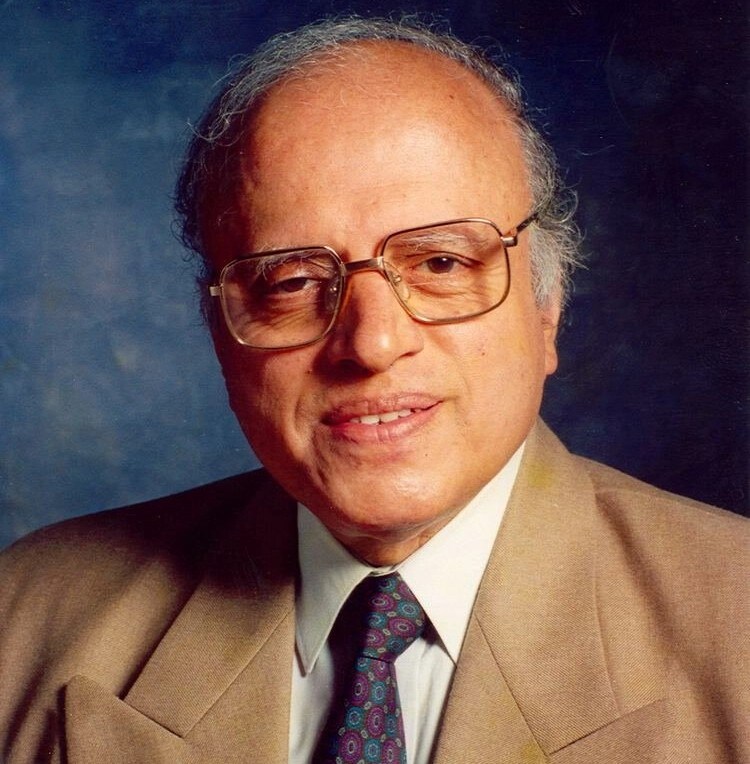
For the poor and the hungry God appears in the form of food; that god is none other than MS Swaminathan, an emotional AK Singh, director at Indian Agricultural Research Institute, said, paraphrasing Mahatma Gandhi when asked for his comments at the passing away of the well-known agricultural scientist and administrator.
Mankombu Sambasivan Swaminathan, who breathed his last on Thursday, 21 days after his 98th birthday on Aug. 7, had joined IARI in 1954 after a stint at the Central Institute of Rice Research (now National Rice Research Institute) Cuttack. There, while working on the Indica-Japonica rice hybridisation programme, he got insights which would influence his later work in wheat and rice.
Traditional wheat and rice varieties are tall and slender. They tend to flatten or ‘lodge' under the weight of heavy grains. Swaminathan realised that plants had to be shortened to get around this problem. But when he tried to introduce mutations with radiation and chemicals, he found that along with reduction in plant height there was a reduction in the panicles that contained the grains.
India in the 1960s was facing foodgrain scarcity. The successive droughts of 1965 and 1966 had left it at one time with stocks just enough to last two weeks. The country had to swallow its pride and queue up to import grain under America's Public Law 480.
It was around this time that Swaminathan learnt about ‘Norin-10,' a semi-dwarf wheat with large panicles, bred in Japan. After the Second World War and the American occupation of Japan, an American agronomist had brought it to the U.S. A plant breeder at Washington State University had used the variety to breed shorter stature winter wheat with high yields. According to some sources, Swaminathan contacted him in 1960 and was given the seeds. He was cautioned that it was winter wheat and perhaps not suitable for India. He was directed to the agricultural scientist Norman Borlaug, who had put the dwarfing genes in spring wheat varieties in Mexico. At Swaminathan's instance, the then director of IARI, BP Pal, invited Borlaug to India and initiated the wheat breeding programme with dwarf spring wheat from Mexico.
(According to another version, IARI had test planted a dwarf variety of wheat, samples of which had been sent in 1962 by the U.S. Department of Agriculture. MV Rao, an agricultural scientist at IARI had noticed that they could bear the weight of heavier grain unlike traditional Indian wheat stalks. He had showed them to the head of botany, MS Swaminathan, who in turn, had contacted Borlaug).
When the potential of the new seeds was shown to the new dynamic agriculture minister C Subramaniam, he was excited. He gave permission for direct farmer trials in 150 fields. He even sowed the hybrid seed in the lawns of his bungalow in New Delhi. That's how the Green Revolution began in India.
The same strategy was followed in rice. The International Rice Research Institute developed IR-8, a high-yielding rice variety using Taiwan's Taichung (Native) 1, a dwarf rice plant with the mutant gene ‘Dee-geo-Woo-gen'.
The dwarfing genes were also transferred to traditional basmati varieties under the guidance of Swaminathan. Basmati used to fetch a high price in the domestic and export markets. But its yield was around 1.5 to 2 tonnes per hectare as against 5-7 tonnes per hectare of high-yielding non-basmati varieties like IR8 and Jaya. Farmers in traditional basmati-growing areas in Punjab, Haryana and western Uttar Pradesh in India, and Pakistan were making more money from high-yielding common rice, EA Siddiq, who had joined IARI in 1962 and was a doctoral student of Swaminathan, told me in 2017 when I met him in Hyderabad. As a result, area under basmati was shrinking. The trend was reversed after the release of high-yielding semi-dwarf Pusa Basmati-1 1989. The IARI team worked on it for almost 24 years.
Swaminathan himself did not develop high-yielding wheat and rice varieties. But he inspired other breeders.
While Swaminathan wanted the Green Revolution to be an evergreen revolution, he did not quite warm up to the Gene Revolution. The Green Revolution is input intensive. But we need to get more output from less inputs to make agriculture less greenhouse gas producing. That can be done through genetic modification and gene editing technologies. Swaminathan wrote in 2018 that GM cotton, which had made India an exporter of cotton (from being a net importer), was a failure. He was criticised for that article. Geneticist and former Vice-Chancellor of Delhi University Deepak Pental, who developed GM mustard which the government approved for seed production last year, said Swaminathan was “pandering to ideologues who are sold on vague ideas of ‘naturalness,' ‘genetic pollution,' ‘playing with nature,' and ‘spiritual agriculture". Swaminathan is believed to have prompted the moratorium on genetically modified Bt Brinjal in 2010, which continues. (But Bangladesh grows it).
Swaminathan was deeply concerned about farmers and their livelihoods. As chairman of the National Commission on Farmers in 2004-06, he said they the minimum support prices of various crops should be at least 50% more than their weighted average cost. In 2018, the Commission for Agricultural Costs and Prices, while recommending the MSP for 14 crops, fixed it at 50% more than the paid-out costs and imputed value of family labour after the prime minister had announced that it would be so.
Swaminathan was an institution builder. He was the recipient of many prestigious awards. For helping pull millions of people out of poverty and ensuring they have enough to eat, he will be remembered.
Vivian Fernandes has more than 30 years of practice in journalism.
The views expressed here are those of the author and do not necessarily represent the views of BQ Prime or its editorial team.

-
The Curious Case of Equitas Small Finance Bank And A CEO Who Quit For Stock

PN Vasudevan believes persistent investor concerns over a perceived conflict of interest had become a governance overhang on Equitas Small Finance Bank's stock, even as the lender improved profitability and asset quality.
-
Talking Points This Week: AI Cash Burn, A Tiger Comeback And An India That Still Finds Its Own Path
India is not immune to higher oil or tighter global liquidity, yet its earnings base is broader, its domestic policy levers are still available.
-
Foreign Investors Own Half Of HDFC Bank and ICICI Bank. An LTCG Cut Could Matter Most Here
Foreign portfolio investors have US$115 billion parked in HDFC Bank, ICICI Bank. If the government cuts long-term capital gains tax, Jefferies says returning foreign money could land here first.
-
'Never Seen This Level Of Negativity': Sandeep Tandon Says The Next Rally May Be Closer Than You Think
Veteran investor Sandeep Tandon says foreign selling is easing, large-caps are due a comeback and mid-caps are crowded, while he turns positive on gold, power and pharma this Diwali.
-
Indians Stay With Family, Not In Hotels | The Reason Why
India still lacks enough clean, reliable and affordable hotels for budget-conscious travellers.
-
The Economic Imperative: Analysing The Material Driving Force Behind India-Canada Strategic Reset
This economic complementarity is further reinforced by deep institutional investment ties and talent mobility, which form the bedrock of the bilateral framework.
-
Medicine Pricing: Where Must Profit Stop?
India must confront excessive margins, hidden incentives and regulatory gaps that threaten the integrity of medicine.
-
Why Amazon And Flipkart Are Struggling To Beat Meesho In India's Smaller Cities
With 274 million users and lowest-cost logistics, Meesho is defending its value commerce crown against giants like Amazon and Flipkart.
-
High US Salaries, No Green Card Certainty: The Financial Calculation Facing Indian H-1B Families
The suspension of PERM processing at eight technology employers does not cancel existing H-1B visas. What it does is force a question many Indian families have been avoiding: is the US salary worth tying your career and family plans to one employer?
-
Swiggy vs Eternal: Food Delivery's Two Rivals Are No Longer In The Same Race
Eternal is building a private AI assistant, dark.ai. Swiggy is still working out how to make Instamart pay, with an operating loss of Rs 895 crore in the July-September quarter while Blinkit stayed profitable.










