More Top-Performing CEOs Now Have Engineering Degrees Than MBAs
Yet another reason to consider urging your kids to go into engineering: For the second year in a row, the best-performing CEOs in the world were more likely to have an engineering degree than an MBA.
Harvard Business Review, the management bible, released its annual ranking Monday of the top-performing CEOs around the globe. It found that engineering degrees are actually slightly more prevalent among these top corner office occupants than the finance- and strategy-focused MBA, a trend that could reflect strong performance among tech-driven CEOs but also a possible openness to engineering backgrounds among a wider range of companies.
Thirty-four of the top 100 CEOs in 2018, according to the HBR report, had an engineering degree, compared with 32 who had an MBA. Eight of the top CEOs had both degrees. In 2017, 29 CEOs had MBAs and 32 had engineering degrees, the first time that there were fewer MBAs than engineers since 2014, when it began tracking the degree question.
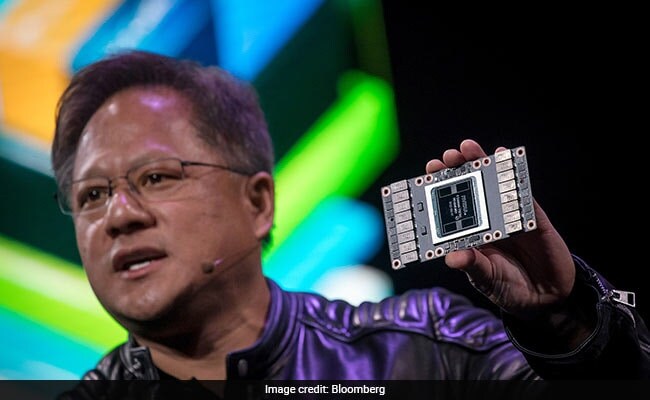
While the top spot isn't held by an engineer - that nod went to Pablo Isla, CEO of Spanish retailer Inditex - 10 of the top 20 ranked CEOs in this year's survey have an engineering degree, including No. 2-ranked Nvidia CEO Jensen Huang, compared with four MBAs. (HBR's ranking examines the change in market capitalization and total shareholder return, adjusted by both country and industry, over the entire tenure of CEOs in the global S&P 1200, and adds in data that rates the company's performance on environmental, social and governance issues during the CEO's time in charge.)
The most likely explanation for the trend is that the number of technology CEOs on the list have expanded as the industry has seen exponential growth in recent years -- there were just eight technology CEOs on the list in 2014, but 22 in 2018.
It's also possible the result might be partly explained by a quirk in HBR's methodology. Senior editor Dan McGinn said HBR made a change to its methodology in 2015, when it added the ESG component to its analysis and the list became somewhat more populated by European companies. Its data show that more engineering degrees are held by European CEOs, while a preponderance of the MBAs are held by U.S. CEOs, so it's possible that differing educational backgrounds in different regions could contribute.
Yet the skills one learns in an engineering degree also have obvious applications for management roles. McGinn said that after HBR first began asking about educational degrees, it spoke with management experts who noted engineering's focus on problem solving, analytical skills and structural methods of thinking.
"That has obvious advantages if you're running an I.T. company, but it probably also has advantages if you're trying to problem-solve in everyday business situations," McGinn said.
One of the CEOs on this year's list, Jeffrey Sprecher, the CEO of Intercontinental Exchange, which owns the New York Stock Exchange, holds both an MBA and an engineering degree but said in a video posted on Facebook by his alma mater, University of Wisconsin, that he's never had a job that relates to his chemical engineering degree. Still, he said, it "taught me about problem-solving, and complex systems and the way things relate to each other, and business is really just that."
Others suggested there could one day be more CEOs with that background, especially at a time when technology and digitization is increasingly important for every company -- even those well outside the I.T. sector -- and as more people come out of school with those degrees. Robert Sutton, a professor of management science and engineering at Stanford University, said that it's becoming more important for executives to have some understanding of computer science.
"This is not a surprise given that technology, especially computer science, is so important," he said. "Every organization I talk to says they're doing 'digitization.' "
Still, HBR's ranking looks at the educational backgrounds of only the 100 top-performing CEOs globally; educational data for CEOs in the S&P 500 and Fortune 500 show a slightly different story. An annual report produced by executive search firm Crist Kolder Associates shows that 26.4 percent of those CEOs had engineering degrees in 2018, slightly down from 27.4 percent in 2017 and 28.4 percent in 2016.
Peter Crist, the firm's chairman, said "it's a terrible generalization, but I think boards will look at people with engineering degrees and basically make the assumption that they're smart. I constantly caution them on 'has that lent to their accomplishments?' Have they grown a business? Don't get hung up on the pedigrees."
Steve Mader, a retired vice chairman of the search firm Korn Ferry, said he hasn't seen a big shift in sensitivity by boards toward CEOs with engineering backgrounds, even if there may be more openness to it. The relationships made during an MBA program are still highly valuable, he said, but what's learned in either degree really isn't essential once the discussion turns to a CEO job.
"By the time your'e selecting a chief executive officer, there are far more relevant issues to compare and contrast," he said. "The degree virtually never comes up."
(Except for the headline, this story has not been edited by NDTV staff and is published from a syndicated feed.)

-
The Curious Case of Equitas Small Finance Bank And A CEO Who Quit For Stock

PN Vasudevan believes persistent investor concerns over a perceived conflict of interest had become a governance overhang on Equitas Small Finance Bank's stock, even as the lender improved profitability and asset quality.
-
Talking Points This Week: AI Cash Burn, A Tiger Comeback And An India That Still Finds Its Own Path
India is not immune to higher oil or tighter global liquidity, yet its earnings base is broader, its domestic policy levers are still available.
-
Foreign Investors Own Half Of HDFC Bank and ICICI Bank. An LTCG Cut Could Matter Most Here
Foreign portfolio investors have US$115 billion parked in HDFC Bank, ICICI Bank. If the government cuts long-term capital gains tax, Jefferies says returning foreign money could land here first.
-
'Never Seen This Level Of Negativity': Sandeep Tandon Says The Next Rally May Be Closer Than You Think
Veteran investor Sandeep Tandon says foreign selling is easing, large-caps are due a comeback and mid-caps are crowded, while he turns positive on gold, power and pharma this Diwali.
-
Indians Stay With Family, Not In Hotels | The Reason Why
India still lacks enough clean, reliable and affordable hotels for budget-conscious travellers.
-
The Economic Imperative: Analysing The Material Driving Force Behind India-Canada Strategic Reset
This economic complementarity is further reinforced by deep institutional investment ties and talent mobility, which form the bedrock of the bilateral framework.
-
Medicine Pricing: Where Must Profit Stop?
India must confront excessive margins, hidden incentives and regulatory gaps that threaten the integrity of medicine.
-
Why Amazon And Flipkart Are Struggling To Beat Meesho In India's Smaller Cities
With 274 million users and lowest-cost logistics, Meesho is defending its value commerce crown against giants like Amazon and Flipkart.
-
High US Salaries, No Green Card Certainty: The Financial Calculation Facing Indian H-1B Families
The suspension of PERM processing at eight technology employers does not cancel existing H-1B visas. What it does is force a question many Indian families have been avoiding: is the US salary worth tying your career and family plans to one employer?
-
Swiggy vs Eternal: Food Delivery's Two Rivals Are No Longer In The Same Race
Eternal is building a private AI assistant, dark.ai. Swiggy is still working out how to make Instamart pay, with an operating loss of Rs 895 crore in the July-September quarter while Blinkit stayed profitable.










