Moody’s Places Yes Bank Under Rating Review For Downgrade
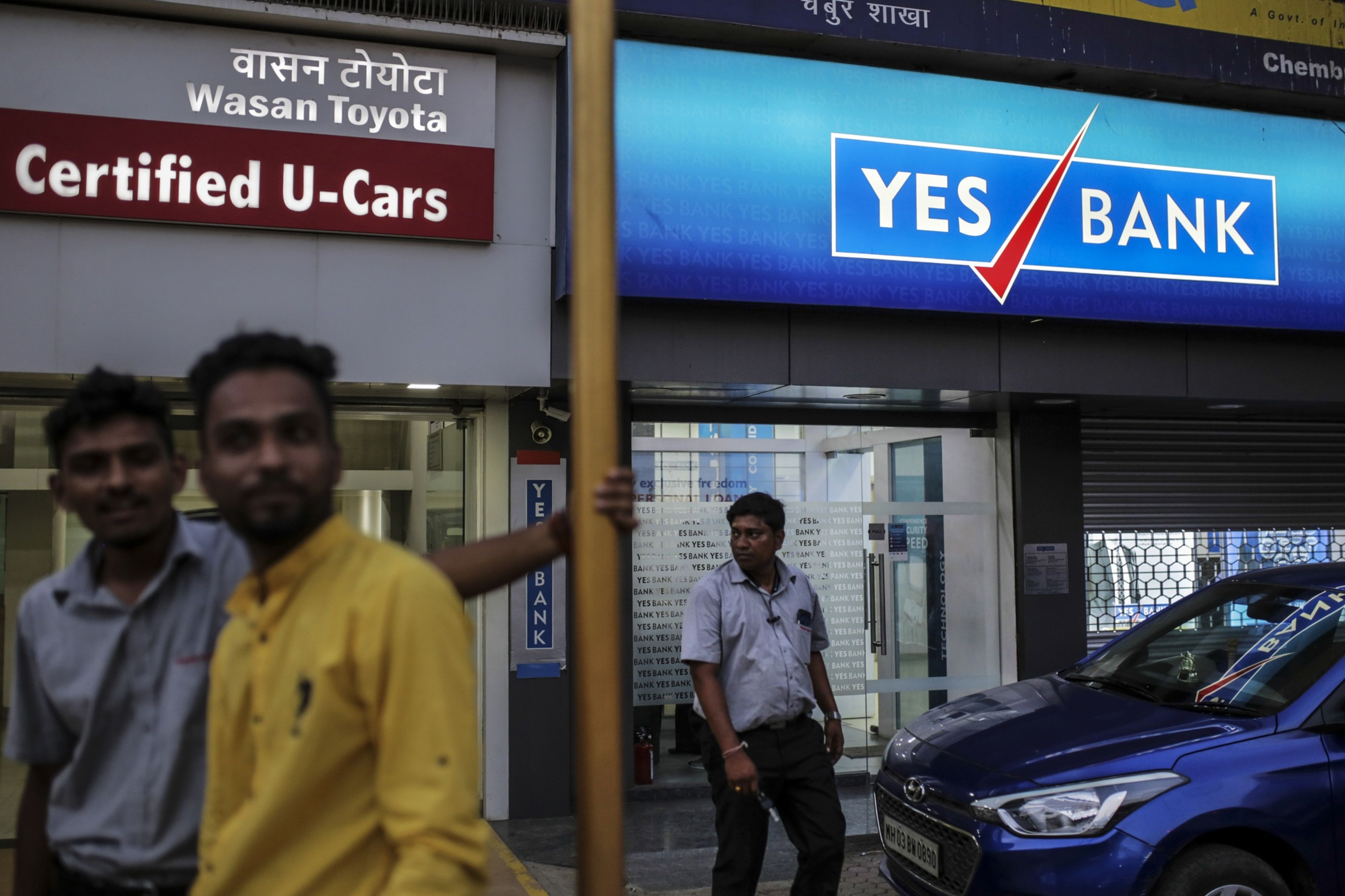
Moody's Investors Service placed Yes Bank Ltd.'s credit rating under review for a potential downgrade due to the bank's weak financial position and exposure to stressed borrowers.
The rating agency said that Yes Bank's asset quality has substantially deteriorated with gross non-performing loans rising to 7.6 percent as of September from 3.2 percent in March. With around Rs 31,400 crore worth of loans and investments made by the bank rated below investment grade level, the rating agency expects about 30-40 percent of the loans and investments to turn into non-performing assets in the next few quarters.
The rating agency estimates Yes Bank's total stressed assets stood at around 12 percent of its loans and investments as of Sept. 30, after considering the reported NPAs and the management's expectation of further stress emanating from the below investment grade rated exposures and other stressed assets, it said.
Credit Ratings Under Review For Downgrade:
- Long-term foreign and local current bank deposits: Ba3
- Foreign currency senior unsecured medium-term-notes: (P)Ba3
- Long-term counterparty risk assessment: Ba2(cr)
- Foreign currency counterparty risk rating: Ba2
- Baseline credit assessment: b1
For Yes Bank's IFSC Banking Unit Branch, Moody's has placed its long-term credit rating of Ba2 (cr), its foreign currency senior unsecured medium-term-notes rating of (P)Ba3 and the long-term domestic and foreign currency counterparty risk rating of Ba2, under review for downgrade.
Moody's said it could downgrade the bank's credit rating if the lender is unable to raise capital or there's a deterioration in asset quality and the bank's fundraising and liquidity position weakens.
Adding risk to asset quality is the increased pace of corporate downgrades from the bank's portfolio of investment grade to sub-investment grade rated companies. In addition, the ongoing liquidity pressures on Indian finance companies and the commercial real estate sector can further erode Yes Bank's asset quality, given the bank's sizeable exposure to weaker companies in the sectorMoody's Investors Service
Yes Bank had a 6 percent exposure to housing financiers and non-bank lenders as of September. It also had a 7.2 percent direct exposure to commercial and residential real-estate sector.
The rating agency said the bank has a weak “loan-loss coverage” ratio or provisions buffer against stressed assets at 30-35 percent, given the experience of loan defaults of the wider Indian banking system.
While the bank's common equity tier-1 ratio improved to 8.7 percent by September after an equity fundraise in August, the planned $1.2 billion equity infusion will improve Yes Bank's capital base by 270 basis points to 11.4 percent and help absorb losses, Moody's said.
The rating agency, however, said there are significant execution risks around the timing, price and regulatory approvals required and an inability to raise the planned equity capital will negatively impact Yes Bank's credit profile and ratings.
Watch | Reasons behind Moody placing Yes Bank under ratings review.
Moody's said the bank's fundraising ability and liquidity position is weak when compared with other private lenders. These aspects of its business could come under pressure if the bank's unable to strengthen its solvency in the next
few quarters, it said.
Moody's said it's unlikely to upgrade Yes Bank's credit rating over the next 12-18 months. The rating agency, however, said it could change the outlook for the bank to ‘stable' if the current asset-quality profile is maintained, adequate provisions against stressed assets are made and if the equity capital raise is executed so that the bank's loss-absorbing buffers are strengthened.

-
Foreign Investors Own Half Of HDFC Bank and ICICI Bank. An LTCG Cut Could Matter Most Here

Foreign portfolio investors have US$115 billion parked in HDFC Bank, ICICI Bank. If the government cuts long-term capital gains tax, Jefferies says returning foreign money could land here first.
-
'Never Seen This Level Of Negativity': Sandeep Tandon Says The Next Rally May Be Closer Than You Think
Veteran investor Sandeep Tandon says foreign selling is easing, large-caps are due a comeback and mid-caps are crowded, while he turns positive on gold, power and pharma this Diwali.
-
Indians Stay With Family, Not In Hotels | The Reason Why
India still lacks enough clean, reliable and affordable hotels for budget-conscious travellers.
-
The Economic Imperative: Analysing The Material Driving Force Behind India-Canada Strategic Reset
This economic complementarity is further reinforced by deep institutional investment ties and talent mobility, which form the bedrock of the bilateral framework.
-
Medicine Pricing: Where Must Profit Stop?
India must confront excessive margins, hidden incentives and regulatory gaps that threaten the integrity of medicine.
-
Why Amazon And Flipkart Are Struggling To Beat Meesho In India's Smaller Cities
With 274 million users and lowest-cost logistics, Meesho is defending its value commerce crown against giants like Amazon and Flipkart.
-
High US Salaries, No Green Card Certainty: The Financial Calculation Facing Indian H-1B Families
The suspension of PERM processing at eight technology employers does not cancel existing H-1B visas. What it does is force a question many Indian families have been avoiding: is the US salary worth tying your career and family plans to one employer?
-
Swiggy vs Eternal: Food Delivery's Two Rivals Are No Longer In The Same Race
Eternal is building a private AI assistant, dark.ai. Swiggy is still working out how to make Instamart pay, with an operating loss of Rs 895 crore in the July-September quarter while Blinkit stayed profitable.
-
Where You Live Shapes How You Get To Work | The Reason Why
Two-wheelers are the most popular way to get to work in India, accounting for nearly 43% of workplace commutes.
-
Unhedged Position: Can India See An Indonesia-Style Time Correction?
The Nifty is trading below levels it first clocked in 2024. Is there, then, as I have suggested in the headline, potential that the current time correction drags on painfully for the next three-five, even ten years?










