Moody’s Upgrades Yes Bank’s Rating After FPO
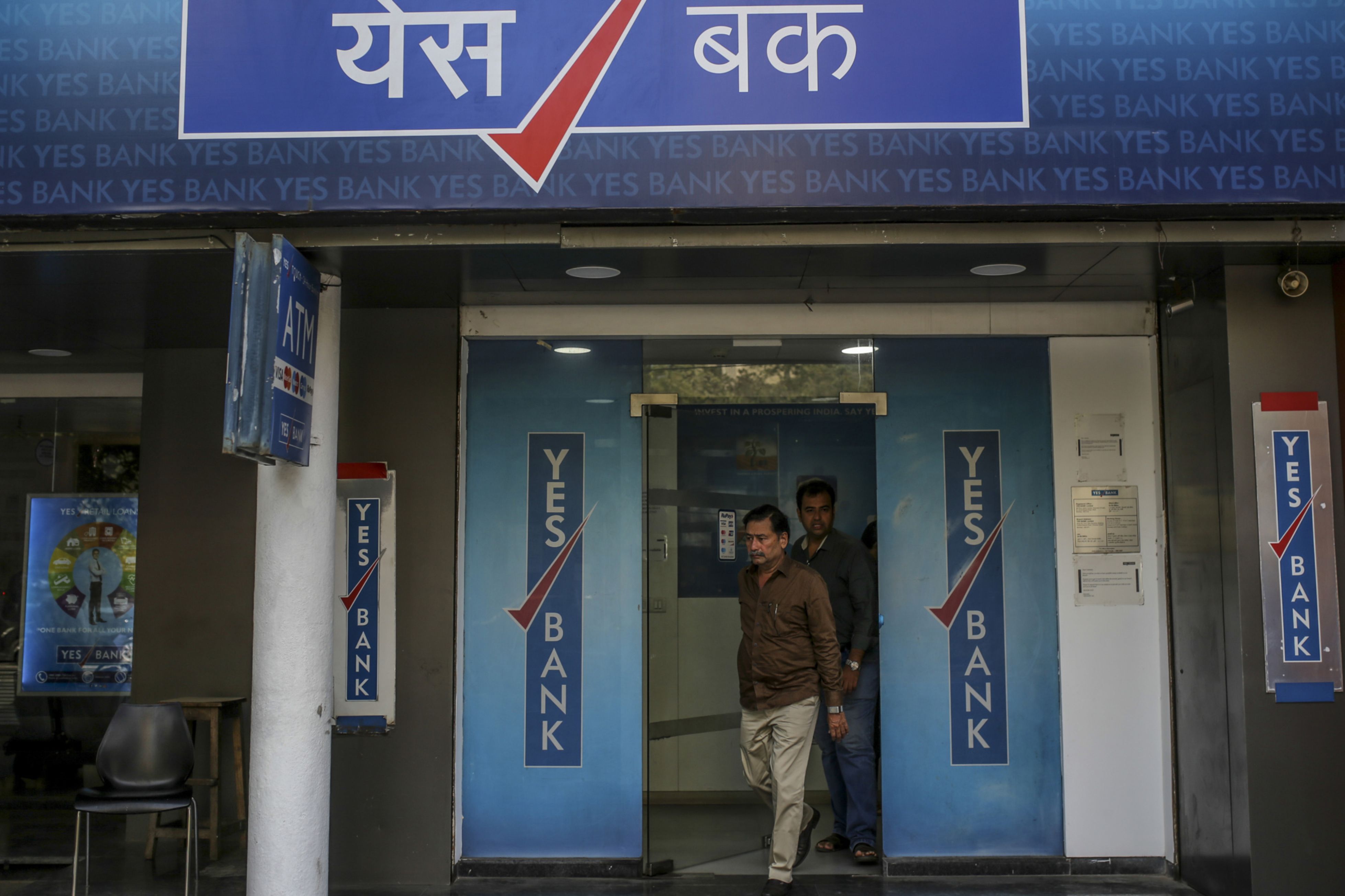
Moody's Investors Service upgraded Yes Bank Ltd.'s long-term foreign currency issuer rating by a notch after the private lender raised Rs 15,000 crore in a follow-on public offer last month.
The rating agency upgraded Yes Bank from Caa1 to B3, according to its statement on Monday. Under Moody's rating scale, Caa1 indicates poor quality with a very high credit risk. B3, though better, still represents a speculative investment with high credit risk.
Moody's also upgraded the bank's long-term foreign and local currency bank deposit ratings to B3 from Caa1, and its foreign currency senior unsecured MTN program rating to (P)B3 from (P)Caa1.
The fundraising “has bolstered its [Yes Bank's] solvency and is the main driver of the ratings upgrade," the rating agency said. "The successful equity raising showcases Yes Bank's regained access to external market funds, which is a result of its improving financial strength and will support depositor confidence.”
Moody's also raised the baseline credit assessment for Yes Bank to caa2 from ca earlier. The caa2 rating, it said, reflects the expectation of a high level of support from Government of India, in times of need.
In July, the private bank raised Rs 14,267 crore through a follow-on public offer, raising funds from investors including State Bank of India, Life Insurance Corporation of India, SBI Life Insurance Co., Punjab National Bank, Union Bank of India, Edelweiss, U.S.-based investor Tilden Park and HDFC Standard Life Insurance Co., among others. The pending amount was subscribed to by SBI Capital, which had underwritten the issue.
The FPO helped Yes Bank in increasing its Tier-1 capital adequacy ratio to 13.5%, from 8.5% earlier, while its total capital adequacy ratio now stands at 20% as on June 30.
“The significantly improved solvency ratio strengthens the bank's resilience to potential asset quality risks resulting from the ongoing impact of the economic slowdown and coronavirus-related disruptions on India's economy,” Moody's said. The higher solvency ratio, it said, will also aid in upside potential for Yes Bank's baseline credit assessment and its ratings in the next 12-18 months.
In the first quarter of the current financial year, Yes Bank also saw an improvement in its deposit base. Total deposits rose 11.4% quarter-on-quarter to Rs 1.17 lakh crore at the end of June. The lender's CASA ratio stood at 25.8%. Current account deposits rose 26% during the three-month period, while savings account deposits fell 1%. Term deposits rose 13%, led by a 30% increase in certificates of deposits.
Despite the improvement in its deposit base, Moody's expects it will be challenging for Yes Bank to restore its low-cost current and savings account deposits to pre-March 2020 rescue levels.
According to Moody's, Yes Bank continues to face the risk of a further deterioration in asset quality in light of the ongoing economic disruption caused by the coronavirus outbreak. About 40-45% of the bank's loans were under a repayment moratorium as of mid-April 2020. Any further deterioration in asset quality will strain the bank's already weak profitability.
The rating agency could consider a downward revision in ratings if the bank's capital adequacy ratio deteriorates significantly or if its liquidity position worsens to an extent where further government or regulatory support is necessary in the next 12-18 months.

-
The Economic Imperative: Analysing The Material Driving Force Behind India-Canada Strategic Reset

This economic complementarity is further reinforced by deep institutional investment ties and talent mobility, which form the bedrock of the bilateral framework.
-
Medicine Pricing: Where Must Profit Stop?
India must confront excessive margins, hidden incentives and regulatory gaps that threaten the integrity of medicine.
-
Why Amazon And Flipkart Are Struggling To Beat Meesho In India's Smaller Cities
With 274 million users and lowest-cost logistics, Meesho is defending its value commerce crown against giants like Amazon and Flipkart.
-
High US Salaries, No Green Card Certainty: The Financial Calculation Facing Indian H-1B Families
The suspension of PERM processing at eight technology employers does not cancel existing H-1B visas. What it does is force a question many Indian families have been avoiding: is the US salary worth tying your career and family plans to one employer?
-
Swiggy vs Eternal: Food Delivery's Two Rivals Are No Longer In The Same Race
Eternal is building a private AI assistant, dark.ai. Swiggy is still working out how to make Instamart pay, with an operating loss of Rs 895 crore in the July-September quarter while Blinkit stayed profitable.
-
Where You Live Shapes How You Get To Work | The Reason Why
Two-wheelers are the most popular way to get to work in India, accounting for nearly 43% of workplace commutes.
-
Unhedged Position: Can India See An Indonesia-Style Time Correction?
The Nifty is trading below levels it first clocked in 2024. Is there, then, as I have suggested in the headline, potential that the current time correction drags on painfully for the next three-five, even ten years?
-
Navigating Friction And Energy Realities: An Analysis Of Marco Rubio's October Visit To India
Occurring at a critical juncture marked by stalled trade negotiations and escalating geopolitical pressures over global energy supplies, the visit offers a profound window into modern US-India relations.
-
India Exports Capital. Why Not Export Trusteeship?
The big question, then, is whether India can build an institution that global borrowers, investors, banks, and lawyers can trust, even without an Indian connection.
-
France's Economy & Politics Are In Crisis | The Reason Why
Let's look at how the French economy and politics evolved under Nicolas Sarkozy, Franois Hollande and Emmanuel Macron.










