Money Flow Into Financial Savings Increased Post Notes Ban: RBI Deputy Governor
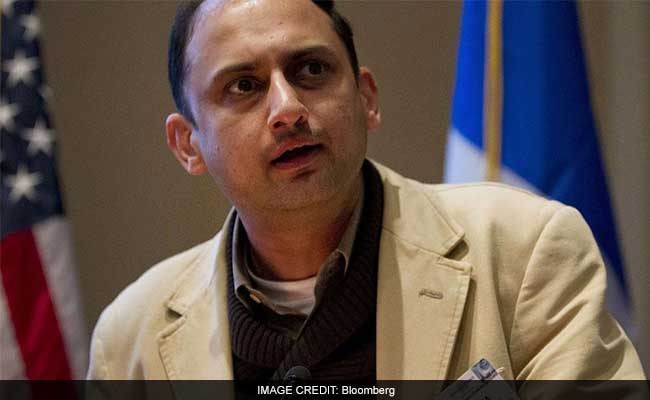
New Delhi: Post demonetisation, there has been a visible channelising of money towards financial assets like insurance and mutual funds, Reserve Bank of India (RBI) Deputy Governor Viral Acharya said on Saturday.
"It will take us many years to understand the outcome of demonetisation. I sense that in financial assets, something has changed as black money transactions are now not easy," Acharya said at the Delhi Economics Conclave 2017 here organised by the Finance Ministry.
"Insurance premium collection is on rise since November. If it continues, it will change the valuation of financial assets," he said.
There has been a non-linear shift since November-December last year, the Deputy Governor noted.
Bond holding is not attractive for tax evasion, he said.
According to Acharya, people earlier a very clear intention to invest black money in real estate and gold.
He said it would take many years to understand the real outcome of the November 8, 2016 demonitisation.
However, former IMF chief economist Kenneth Rogoff, who is presently at the Harvard University, pointed out that demonetisation was flawed in that it phased out high denomination notes overnight.
"Indian demonetisaion was flawed in some respect. My book, 'The Curse of Cash', argues for taking five-seven years to phase out big bills. India did this almost overnight," he said.
Few people realise that it takes six months to one year to print a new currency supply due to technical difficulties in producing counterfeit resistant currency.
India's biggest problem was that it did not have nearly enough new notes in hand to exchange the old ones, Rogoff said.
"My recommendation is to very gradually over 5-7 years eliminate large denomination notes. It is important to move slowly, so to avoid collateral damage," he said.
He argued that some countries had approached demonetisation in a better way like Europe phasing of 500 euro notes, Singapore's discontinuation of $10,000 notes and Australia on discontinuing $100.
However, the Harvard professor said it will take years to judge the full impact of India's demonetisation move in accelerating electronic payments and the larger picture is that the government has done much to promote financial inclusion.
"The basic idea is to make it more difficult for people to carry out large scale transactions in cash for purposes of crime and tax evasion. The case for limiting use of cash is not a moral question but one of regulatory balance. It is important to be able to retain cash for privacy. The question is scale," he said.
"Indian demonetisation might yield long-run benefits but also shows things to avoid," he added.
Supporting government's Aadhaar initiative, Rogoff said that in advanced economies, mandatory biometrics, identification is not likely given concerns about privacy.
(This story has not been edited by NDTV staff and is auto-generated from a syndicated feed.)

-
We May Need Another Tukaram Mundhe To Fight Air Pollution | The Reason Why

Developers may install basic measures such as sprinklers and green nets, resume work, and continue violating rules when this equipment stops working.
-
Extracting Value From Battery Scrap Could Be Challenging For India | The Reason Why
A discarded lithium-ion battery still contains valuable materials such as lithium, nickel and cobalt. These can be recovered and reused. When such batteries are crushed and shredded, they produce a dark powder called black mass.
-
One El Nino, India Can Handle. Two Could Break The Granary
India's grain stocks can absorb one bad year, but a second El Nino could drain the buffer in two to three years, economists say.
-
India's Troika Of Good Luck | Joining The Dots
As Jensen Huang's exit drags Nvidia down, a cooling AI trade and resilient earnings have revived investor interest in India. A likely RBI rate hike looms.
-
Talking Points This Week: Leadership Shock At Nvidia, Earnings Strength, And The Fog Over Hormuz
The Anthropic IPO pricing and first trading day, Nvidia's upcoming earnings, and any fresh signals from Iran will set the tone for the following week.
-
Signature Play: The Classic Cocktail Is Dead. Or Is It?
Classic cocktails are disappearing from India's cocktail menus. But they're still being ordered, taught to bartenders and borrowed from. So, who's really having the last drink?
-
A New Samvat Wishlist: Inclusive Prosperity And Human Development
India has strengthened its economic foundations through infrastructure, digital access and enterprise. Its next growth chapter must deepen productivity, create better livelihoods and widen participation in prosperity.
-
Love, Sex Aur Dhokha: The Audacious Plot To Spy On Jensen Huang
A Taipei dinner, a Singapore chip buyer and a suspected Chinese asset: inside the alleged spy operation that got close to NVIDIA's Jensen Huang.
-
Ten Things I Learnt This Samvat
Patience can be a trap. Cheap stocks can stay cheap. Leverage can wipe you out. What did Samvat 2082 teach us? Niraj Shah writes on 10 lessons from the year gone by.
-
Talking Points This Week: Tech Nerves, FII Buying, And A Faraway Banking Shock
The global markets are not shining this Diwali. The exception in the large markets is, India.









