Modi’s Health Insurance Plan Will Be Bigger Than Planned
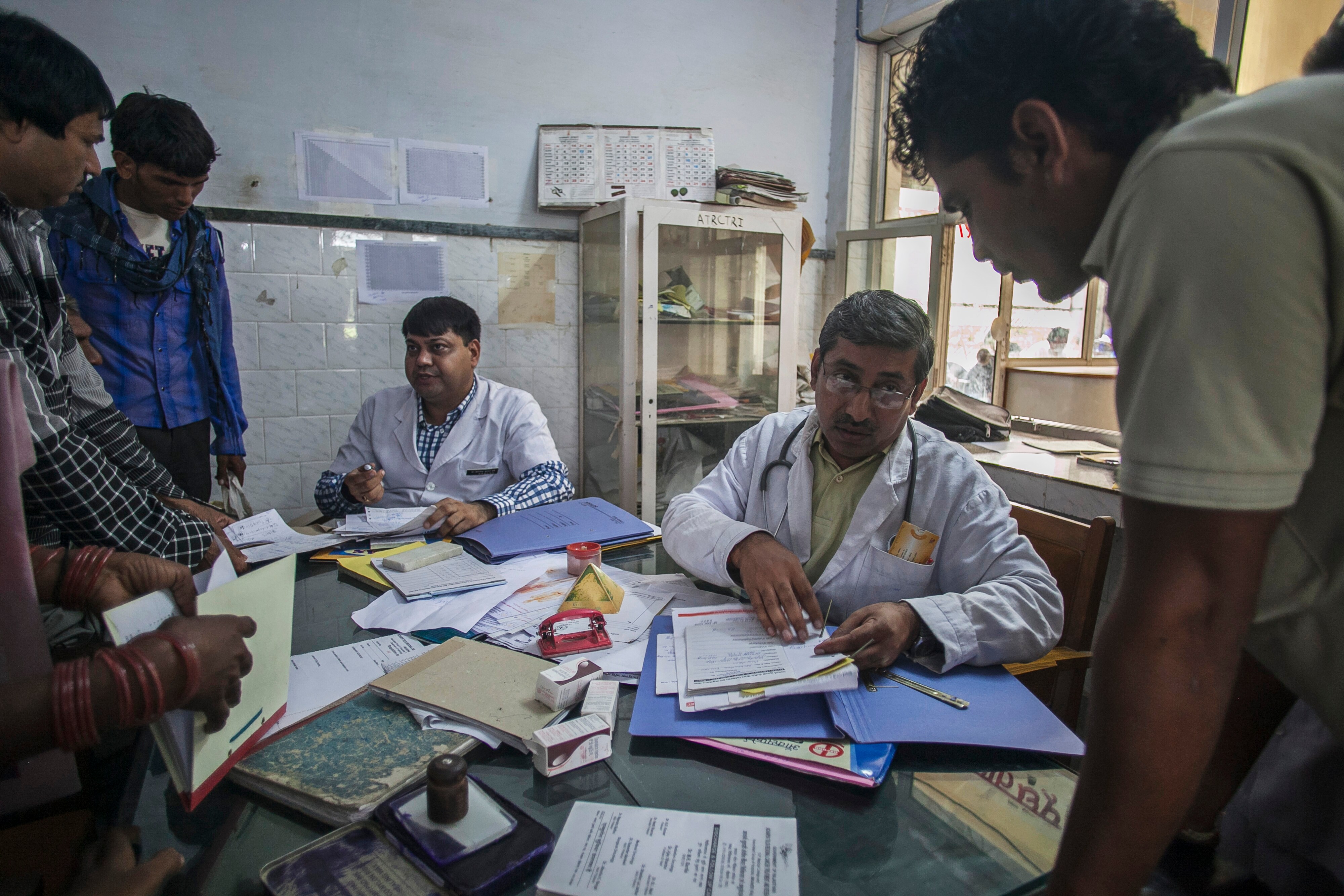
Prime Minister Narendra Modi's national health scheme will end up covering 15 crore families—5 crore more than originally planned—as it will subsume the existing health benefits offered by states, a senior government official aware of the matter told BloombergQuint requesting anonymity.
The central scheme will provide a Rs 5 lakh annual cover for every family below the poverty line. The beneficiaries will be selected based on the 2011 socio-economic census. Most states already provide a cover of up to Rs 2 lakh to families who aren't necessarily below the poverty line. Their schemes will be merged into the national programme, increasing the number of beneficiaries.
“It is not that the math that has gone wrong, but the basis on which the scheme was planned,” said Sakthivel Selvaraj, senior health economist at Public Health Foundation of India, a research institution. “The problem is not just that the socio-economic census data is outdated, but the parameters used by states to assess poverty are also widely different.”
Gujarat, for example, covers families earning an annual income of up to Rs 1.2 lakh per annum. Tamil Nadu and Jharkhand have set the income cap lower at Rs 72,000 a year. Andhra Pradesh, Maharashtra, Kerala, Arunachal Pradesh and West Bengal also cover above-poverty line families, state and central government employees and pensioners. Meghalaya and Assam, on the other hand, cover all citizens.
The national scheme, which Modi is expected to unveil on Independence day on Aug. 15, is part of the plan to push India's public health expenditure from 1 percent to 2.5 percent of the GDP by 2025. It will provide health coverage to about 40 percent of the population in a nation where about 62 percent of healthcare expenses are borne out-of-pocket, according to the World Bank report.
Emailed queries to the Union Health Minister and National Health Protection Mission remained unanswered.
Will Costs Rise?
BloombergQuint reported earlier that the government planned to spend Rs 16,717 crore over the first two years to run its free health insurance programme—split in 60:40 ratio between the centre and states. Will additional beneficiaries increase costs?
The government is likely to go with a mixed approach to finance premium for those who do not fall under the 2011 census database, the official quoted earlier said. States will transfer the existing funds they had set aside for their insurance schemes to a separate trust, he said. The rest will be contributed by the Centre to bring the sum insured to Rs 5 lakh, the official said.
If the number of families covered is increased to 15 crore, that will increase the initial premium outgo for both the centre and states, by nearly Rs 8,000 crore,” said Selvaraj. Assuming a premium of Rs 1,000 a family, the total expenditure is expected to rise roughly to Rs 24,000 crore for two years, he said.
Joydeep Roy, insurance leader at PwC India, said it may result in just a 15 percent higher cost for the government considering administrative costs will remain roughly the same and utilisation may not go up proportionately.
A 50 percent increase in the number of families will not translate into a 50 percent rise in claims, he said. “The population cohort added would include above-poverty line families with better health conditions and access to medical infrastructure compared to those below the poverty line.”
Can the ambitious scheme work? Watch this interview with Vinod KUmar Paul, full-time member of NITI Aayog, Indu Bhushan, CEO of the Ayushman Bharat National Health Protection Mission and Vinod Kumar Monga, honorary finance secretary of the Indian Medical Association.

-
We May Need Another Tukaram Mundhe To Fight Air Pollution | The Reason Why

Developers may install basic measures such as sprinklers and green nets, resume work, and continue violating rules when this equipment stops working.
-
Extracting Value From Battery Scrap Could Be Challenging For India | The Reason Why
A discarded lithium-ion battery still contains valuable materials such as lithium, nickel and cobalt. These can be recovered and reused. When such batteries are crushed and shredded, they produce a dark powder called black mass.
-
One El Nino, India Can Handle. Two Could Break The Granary
India's grain stocks can absorb one bad year, but a second El Nino could drain the buffer in two to three years, economists say.
-
India's Troika Of Good Luck | Joining The Dots
As Jensen Huang's exit drags Nvidia down, a cooling AI trade and resilient earnings have revived investor interest in India. A likely RBI rate hike looms.
-
Talking Points This Week: Leadership Shock At Nvidia, Earnings Strength, And The Fog Over Hormuz
The Anthropic IPO pricing and first trading day, Nvidia's upcoming earnings, and any fresh signals from Iran will set the tone for the following week.
-
Signature Play: The Classic Cocktail Is Dead. Or Is It?
Classic cocktails are disappearing from India's cocktail menus. But they're still being ordered, taught to bartenders and borrowed from. So, who's really having the last drink?
-
A New Samvat Wishlist: Inclusive Prosperity And Human Development
India has strengthened its economic foundations through infrastructure, digital access and enterprise. Its next growth chapter must deepen productivity, create better livelihoods and widen participation in prosperity.
-
Love, Sex Aur Dhokha: The Audacious Plot To Spy On Jensen Huang
A Taipei dinner, a Singapore chip buyer and a suspected Chinese asset: inside the alleged spy operation that got close to NVIDIA's Jensen Huang.
-
Ten Things I Learnt This Samvat
Patience can be a trap. Cheap stocks can stay cheap. Leverage can wipe you out. What did Samvat 2082 teach us? Niraj Shah writes on 10 lessons from the year gone by.
-
Talking Points This Week: Tech Nerves, FII Buying, And A Faraway Banking Shock
The global markets are not shining this Diwali. The exception in the large markets is, India.









