Modi Has Reputation of Being Decisive, Focused: Cisco Chief
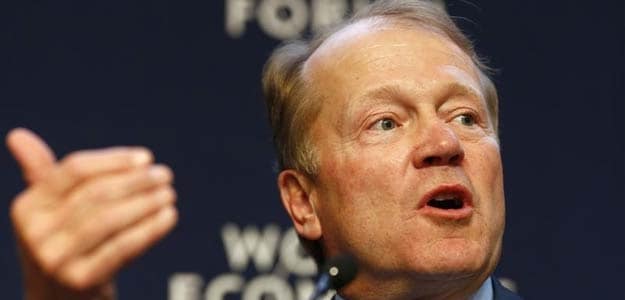
Narendra Modi, India's newly appointed Prime Minister, has an excellent reputation as being "decisive and focused" on business, which is going to be "very good" for the country, tech giant Cisco chairman John Chambers has said.
The three-time Gujarat Chief Minister has steered the BJP to a landslide victory in general elections, with the party winning a majority in Parliament. It is the first time since 1984 that a single party has won a majority on its own.
"The new government came in without forming a coalition, and Narendra Modi as a PM has an excellent reputation as being decisive and focused on business," Mr Chambers told reporters here.
"I think that is going to be very good for the country and I am very optimistic of what that means to the country's economic growth," he added.
On the past issues of policy paralysis and the way ahead, he said India has a chance to get economic growth going again and what is needed for the young people.
"I am very much a believer in India and the rule of law. India has 600,000 engineers, English-speaking... It has tremendous resource to focus in on," Mr Chambers said.
He added: "I think that India as a country is very resilient... I am very committed to see our business in India not stay at one and a half per cent or so but a number much higher than that.
"But I think, having a government that has a majority by itself will allow for tough decisions to be made as well as good decisions to be made... So I am very optimistic about the new PM. I think that I will be surprised if India does not grow its GDP well over the next 3 or 4 years."
Cisco is "deeply committed" to India and the company expects to increase its business well over the 2 per cent, he said.
"We are committed to the long run," Mr Chambers added.
Cisco has over 10,000 employees in India across cities like Bangalore, Delhi-NCR, Mumbai, Chennai, Kolkata, Pune and Hyderabad. Of these, 8,000 people are part of the R&D set up.
Although the company gets about 2 per cent of its over $48 billion global revenues from India, it is confident of growing the share. It expects to garner 5 per cent of its revenues from the Indian market in the next five years with business growing over 20 per cent.
On his letter to US President Barack Obama about the National Security Agency's (NSA) spying practices, Mr Chambers said: "This is not about the US or Cisco. This is about how do we get consistency in the global supply chain, because the global supply chain almost touches all your countries. And today there are no rules. It's like the wild, wild West."
He added: "We have to as a country and as a world come together to maintain the power of the Internet to all of us."
Mr Chambers said however that one does not know if alleged instances of NSA intercepting products from the IT industry are true or not true.
"We have not found any issue that indicates that they intercepted our products," he said.
On the damage done by the NSA scandal to business, he said: "Basically, everybody needs to take a step back and say we need to address the supply chain. This is not unique to one country and is not unique to one company. This is a healthy debate. We need rules. I think without that it slows IT growth."
Talking about the challenge for Cisco in the emerging markets, Mr Chambers said there are unique challenges like population, income levels and so on.
"But I think there are unique opportunities too. There are advantages of not having a given structure where you can skip a generation and look to the future and advantages far outweigh the disadvantages," he added.

-
Signature Play: The Classic Cocktail Is Dead. Or Is It?

Classic cocktails are disappearing from India's cocktail menus. But they're still being ordered, taught to bartenders and borrowed from. So, who's really having the last drink?
-
A New Samvat Wishlist: Inclusive Prosperity And Human Development
India has strengthened its economic foundations through infrastructure, digital access and enterprise. Its next growth chapter must deepen productivity, create better livelihoods and widen participation in prosperity.
-
Love, Sex Aur Dhokha: The Audacious Plot To Spy On Jensen Huang
A Taipei dinner, a Singapore chip buyer and a suspected Chinese asset: inside the alleged spy operation that got close to NVIDIA's Jensen Huang.
-
Ten Things I Learnt This Samvat
Patience can be a trap. Cheap stocks can stay cheap. Leverage can wipe you out. What did Samvat 2082 teach us? Niraj Shah writes on 10 lessons from the year gone by.
-
Talking Points This Week: Tech Nerves, FII Buying, And A Faraway Banking Shock
The global markets are not shining this Diwali. The exception in the large markets is, India.
-
Midterm Rally Lasted A Day. The Hard Reality Of A Divided US May Last Two Years | Opinion
Between a contested AI boom, a debt ceiling that arrives in 2027 and a president with every incentive to act alone, the next two years may prove more volatile than the first day's rally suggests.
-
Blue Wave Will Derail the AI Trade but Won't Dismantle the AI Era | Unhedged Position
The Democrats' sweep of the US Congress will see politics collide with economic forces both over the long and short term.
-
It's Time To Take The GST Council's Bet On Trust Global
Payment records can prove India's services exports, and clear, proportionate rules can bring foreign digital sellers into the tax net.
-
Opinion | India at 38: From Innovation Overperformer to Innovation Powerhouse
India now has 453 VC-backed deep science startups, 18 of them late-stage, after 117 percent growth since 2020. Laurus Labs, at USD 9.3 billion, is the most valuable deep science company in any middle-income economy outside China.









