Modi Effect: Sensex Seen at 1 Lakh by 2020
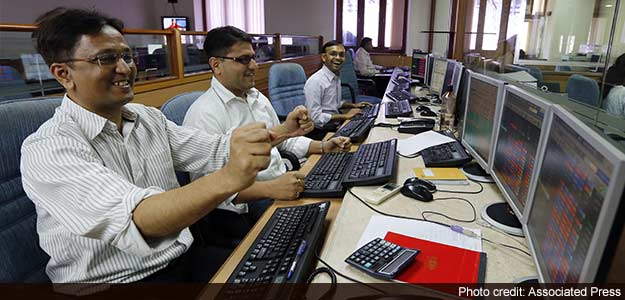
The naming of Narendra Modi as the BJP's prime ministerial candidate in September 2013 triggered a bull run in Indian stock markets that culminated with the BSE Sensex hitting an all-time high of 25,375.63 on May 16, the day when election results were announced.
The Sensex is up almost 25 per cent since mid-September and in a span of six-eight months India has gone from one of the most vulnerable emerging countries to one of the favourites among foreign investors; overseas funds have poured more than $20 billion into Indian stocks and bonds in the past six months.
The big question after the sharp run-up is what next? Most analysts are of the view that India is now in a long-term bull market. According to billionaire investor Rakesh Jhunjhunwala Indian stock markets are heading for the mother of all bull runs, which could last for 10-20 years. (Read the full story here)
Ridham Desai, managing director of Morgan Stanley India, quantified this optimism last week when he told NDTV that the Sensex can hit 75,000 in the next 10 years if Indian equities can deliver 12-14 per cent return per annum over the decade. (Watch)
Now, domestic brokerage Karvy has gone a step further and said the Sensex can rise to 1,00,000 by December 2020.
"Falling cost of equity, an earnings growth between 20-25 per cent and multiple rerating (earnings) from 15 times to 16-17 times in the next few years could lead to a 25 per cent compounding of Sensex returns, which will take it to 100,000 levels by Calendar year 2020," said Varun Goel of Karvy.
Can Indian markets grow at such a pace for five to six years at a stretch? Goel says there have been several instances of such rapid growth in the past.
The Dow Jones Average experienced its most spectacular rise in 1980s, when the 30-share index surged from 769 in 1982 to 2,742 in 1987 (3.6 times in a span of five years). America's most tracked index jumped from 2,344 in 1990 to 11,750 in 2000 (5 times in a span of 10 years).
This period of high returns in the US coincided with an economic revival after a period of stagflation in 1970s, which led to aggressive monetary tightening by Federal Reserve Governor Paul Volcker, Goel says, arguing that conditions in India are ripe for an economic rebound.
"The challenge for the new government in India is to quickly revive the investment cycle. Big infrastructure projects need to be provided quick access to capital, speedy environmental and forest clearances and policy support... Quick execution of such projects will provide massive employment, provide quick transportation for goods, lead to productivity gains and will have large trickle down effects on the adjoining towns and villages leading to revival in consumption demand," Mr Goel says.
The other thing which can lead to increase in GDP growth is making India a big player in the manufacturing space, Mr Goel added.
"There is no reason that India can't see a prolonged economic growth cycle with low inflation. The prolonged economic growth can create similar equity market returns in India as seen in United States in 1980s," Mr Goel said.

-
Navigating Friction And Energy Realities: An Analysis Of Marco Rubio's October Visit To India

Occurring at a critical juncture marked by stalled trade negotiations and escalating geopolitical pressures over global energy supplies, the visit offers a profound window into modern Washington-New Delhi relations.
-
India Exports Capital. Why Not Export Trusteeship?
The big question, then, is whether India can build an institution that global borrowers, investors, banks, and lawyers can trust, even without an Indian connection.
-
France's Economy & Politics Are In Crisis | The Reason Why
Let's look at how the French economy and politics evolved under Nicolas Sarkozy, Franois Hollande and Emmanuel Macron.
-
You May Inherit The Business. You Must Earn Its Credibility.
Succession tests the founder's ability to share authority as much as it tests the next generation's readiness to assume it.
-
Signing Deals Is One Thing; Making Them Work Is Another | The Week In Whys
Sometimes, things don't turn out as planned. Indian companies have lost some bids to rivals, some projects won't produce until 2030.
-
FOMC Wall, PERM Suspension, Hospital Stocks | Talking Points This Week
A PERM suspension would directly affect green-card sponsorship rather than H-1B visas, so the near-term earnings impact could remain relatively limited. The key question is whether this marks a new phase in US scrutiny of Indian IT.
-
Everything, Everywhere, All At Once: Dalal Street's Week To Forget | Joining The Dots
Visa curbs, a Starlink spat and cancer drug caps: what connects this week's shocks for Indian markets
-
India Is Going Abroad For Critical Minerals. But It May Take Years To Pay Off | The Reason Why
Although India's steps are in the right direction, they remain modest compared with India's growing dependence.
-
When Everyone Has AI, What Gives You An Edge?
India's young workforce is entering an uncertain world of work where powerful AI tools are becoming widely accessible. The advantage will belong to those who combine deep expertise with digital fluency, and the distinctly human capabilities that technology cannot manufacture.
-
Wrong Labels, High Pesticide Residues Holding Back Agri Exports | The Reason Why
India needs stronger domestic food-safety and labelling standards, with best practices becoming part of everyday business for farmers, traders and food companies.










