Modi Effect: Sensex Seen at 1 Lakh by 2020
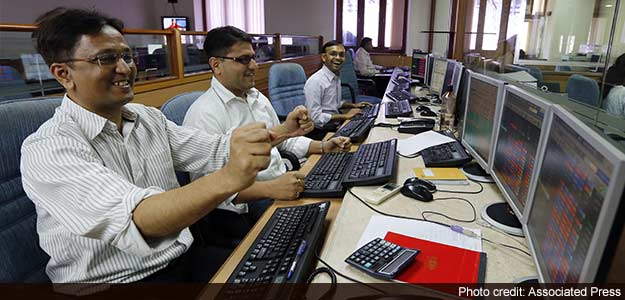
The naming of Narendra Modi as the BJP's prime ministerial candidate in September 2013 triggered a bull run in Indian stock markets that culminated with the BSE Sensex hitting an all-time high of 25,375.63 on May 16, the day when election results were announced.
The Sensex is up almost 25 per cent since mid-September and in a span of six-eight months India has gone from one of the most vulnerable emerging countries to one of the favourites among foreign investors; overseas funds have poured more than $20 billion into Indian stocks and bonds in the past six months.
The big question after the sharp run-up is what next? Most analysts are of the view that India is now in a long-term bull market. According to billionaire investor Rakesh Jhunjhunwala Indian stock markets are heading for the mother of all bull runs, which could last for 10-20 years. (Read the full story here)
Ridham Desai, managing director of Morgan Stanley India, quantified this optimism last week when he told NDTV that the Sensex can hit 75,000 in the next 10 years if Indian equities can deliver 12-14 per cent return per annum over the decade. (Watch)
Now, domestic brokerage Karvy has gone a step further and said the Sensex can rise to 1,00,000 by December 2020.
"Falling cost of equity, an earnings growth between 20-25 per cent and multiple rerating (earnings) from 15 times to 16-17 times in the next few years could lead to a 25 per cent compounding of Sensex returns, which will take it to 100,000 levels by Calendar year 2020," said Varun Goel of Karvy.
Can Indian markets grow at such a pace for five to six years at a stretch? Goel says there have been several instances of such rapid growth in the past.
The Dow Jones Average experienced its most spectacular rise in 1980s, when the 30-share index surged from 769 in 1982 to 2,742 in 1987 (3.6 times in a span of five years). America's most tracked index jumped from 2,344 in 1990 to 11,750 in 2000 (5 times in a span of 10 years).
This period of high returns in the US coincided with an economic revival after a period of stagflation in 1970s, which led to aggressive monetary tightening by Federal Reserve Governor Paul Volcker, Goel says, arguing that conditions in India are ripe for an economic rebound.
"The challenge for the new government in India is to quickly revive the investment cycle. Big infrastructure projects need to be provided quick access to capital, speedy environmental and forest clearances and policy support... Quick execution of such projects will provide massive employment, provide quick transportation for goods, lead to productivity gains and will have large trickle down effects on the adjoining towns and villages leading to revival in consumption demand," Mr Goel says.
The other thing which can lead to increase in GDP growth is making India a big player in the manufacturing space, Mr Goel added.
"There is no reason that India can't see a prolonged economic growth cycle with low inflation. The prolonged economic growth can create similar equity market returns in India as seen in United States in 1980s," Mr Goel said.

-
Signature Play: The Classic Cocktail Is Dead. Or Is It?

Classic cocktails are disappearing from India's cocktail menus. But they're still being ordered, taught to bartenders and borrowed from. So, who's really having the last drink?
-
A New Samvat Wishlist: Inclusive Prosperity And Human Development
India has strengthened its economic foundations through infrastructure, digital access and enterprise. Its next growth chapter must deepen productivity, create better livelihoods and widen participation in prosperity.
-
Love, Sex Aur Dhokha: The Audacious Plot To Spy On Jensen Huang
A Taipei dinner, a Singapore chip buyer and a suspected Chinese asset: inside the alleged spy operation that got close to NVIDIA's Jensen Huang.
-
Ten Things I Learnt This Samvat
Patience can be a trap. Cheap stocks can stay cheap. Leverage can wipe you out. What did Samvat 2082 teach us? Niraj Shah writes on 10 lessons from the year gone by.
-
Talking Points This Week: Tech Nerves, FII Buying, And A Faraway Banking Shock
The global markets are not shining this Diwali. The exception in the large markets is, India.
-
Midterm Rally Lasted A Day. The Hard Reality Of A Divided US May Last Two Years | Opinion
Between a contested AI boom, a debt ceiling that arrives in 2027 and a president with every incentive to act alone, the next two years may prove more volatile than the first day's rally suggests.
-
Blue Wave Will Derail the AI Trade but Won't Dismantle the AI Era | Unhedged Position
The Democrats' sweep of the US Congress will see politics collide with economic forces both over the long and short term.
-
It's Time To Take The GST Council's Bet On Trust Global
Payment records can prove India's services exports, and clear, proportionate rules can bring foreign digital sellers into the tax net.
-
Opinion | India at 38: From Innovation Overperformer to Innovation Powerhouse
India now has 453 VC-backed deep science startups, 18 of them late-stage, after 117 percent growth since 2020. Laurus Labs, at USD 9.3 billion, is the most valuable deep science company in any middle-income economy outside China.









