Moderna Reports $3.6 Billion Loss On Covid Supply Writedowns
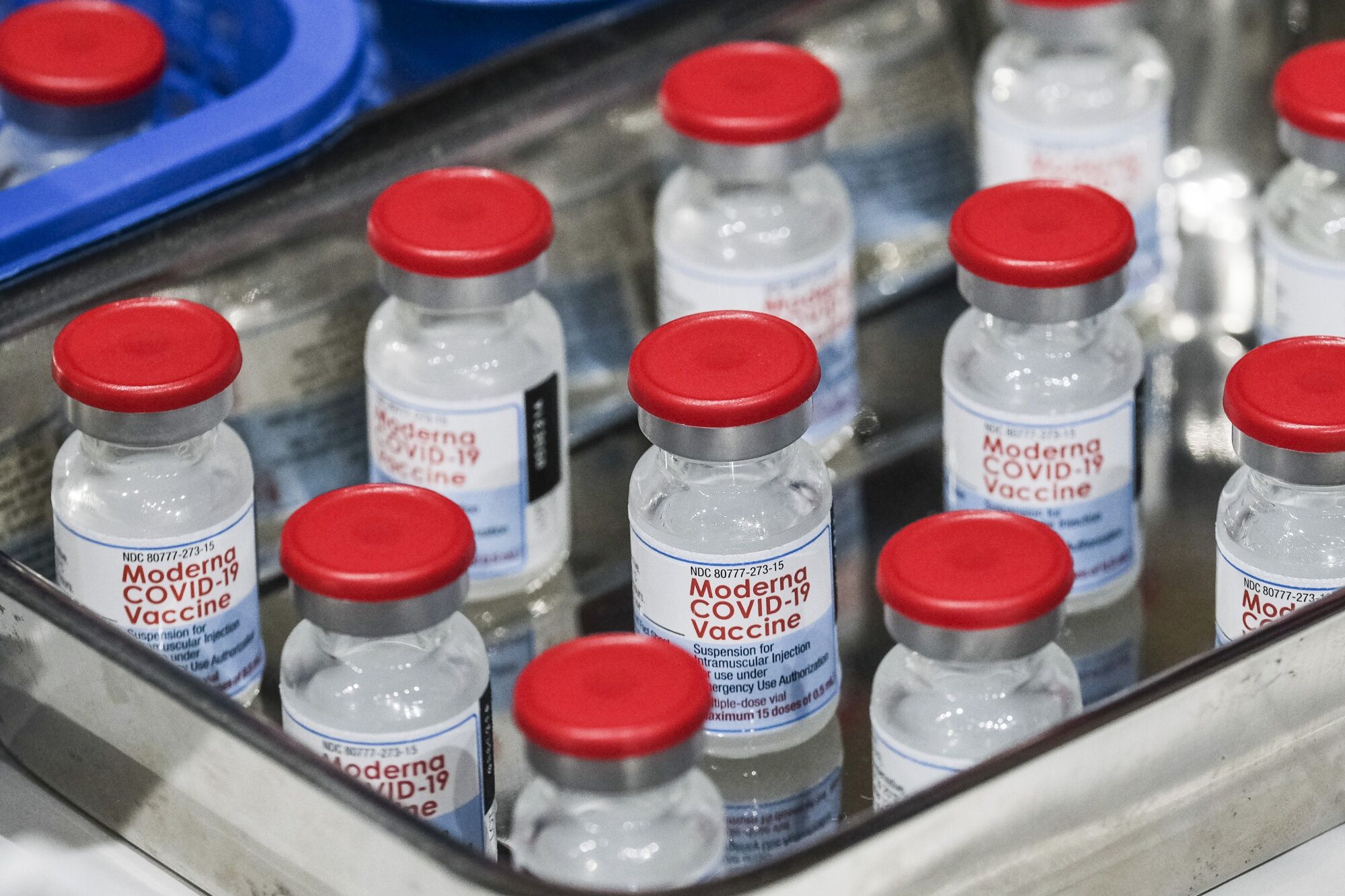
(Bloomberg) -- Moderna Inc. reported a larger-than-expected loss in the third quarter after registering a $3.1 billion charge to write down excess Covid shots and reduce its manufacturing footprint as the vaccine maker prepares for a post-pandemic era.
The writedown caused a net loss of $3.6 billion — much bigger than Wall Street had expected. The company's sales of $1.8 billion, meanwhile, were above the average analyst estimate.
The shares fell as much as 4.2% then pared losses before the US markets opened Thursday. They had lost 58% this year through Wednesday's close.
Moderna now anticipates reporting at least $6 billion in sales for the year. That's the low end of the range that it had previously projected for 2023. Moderna sees revenue declining to about $4 billion next year, with sales growth resuming in 2025 as new vaccines hit the market.
Costs for the quarter included $1.3 billion for inventory writedowns related to excess and obsolete Covid-19 shots, and roughly $500 million charge related to a contract manufacturing wind-down, Moderna said in a statement. The company also reported a $1.7 billion non-cash charge related to a valuation allowance on deferred tax assets. Most of the charges were non-cash, the company said.
“What we really wanted to do was reset the business cost structure to be adapted to where we are going forward,” Chief Executive Officer Stephane Bancel said in an interview. “The world has changed from a pandemic to an endemic” situation, he added.
Since Moderna relied heavily on contract manufacturing during the pandemic, the manufacturing downsizing was largely done by ending contracts with outside contractors and didn't involve internal job cuts, Bancel said. Moderna expects Covid vaccination rates to be similar to last fall, he added in the interview.
In its statement, the company said it expected the overall US market for fall 2023 will be at least 50 million Covid shot doses. Moderna splits the Covid shot market with its competitor Pfizer Inc.
Dwindling Demand
In recent weeks, the company's investors had erased billions of dollars in market value after its rival, Pfizer Inc. cut its profit outlook, sounding the alarm on dwindling demand for its Covid shots and pills.
Moderna has been struggling to appease investors now that the emergency phase of the pandemic is over. The company is turning on a firehose of spending to expand beyond Covid shots and develop new vaccines for flu, RSV and cancer, among other diseases. But those products still need to be approved, and developing them will be expensive. The company needs consistent revenue from Covid vaccines, its only commercial product for now, to help fund its ambitious strategy.
Both Moderna and Pfizer have faced challenges with their Covid vaccines this fall. The rollout got off to a rocky start, with some pharmacies canceling appointments due to a lack of supply.
There are also new dynamics at play. Before the Covid public health emergency ended in May, the US government paid for vaccines and allocated them to states, essentially streamlining the process. Now, consumers, retailers, distributors and insurers are for the first time navigating booster rollout in the commercial market. There's also vaccine fatigue among consumers more than three years after the pandemic began.
Public health experts have been disappointed by the uptake for the Covid vaccines so far. A survey presented last week found only 7% of U.S. adults and 2% of children have gotten new versions of the Covid-19 vaccines.
(Updates with income tax charge in fifth paragraph.)
More stories like this are available on bloomberg.com
©2023 Bloomberg L.P.

-
Talking Points This Week: Leadership Shock At Nvidia, Earnings Strength, And The Fog Over Hormuz

The Anthropic IPO pricing and first trading day, Nvidia's upcoming earnings, and any fresh signals from Iran will set the tone for the following week.
-
Signature Play: The Classic Cocktail Is Dead. Or Is It?
Classic cocktails are disappearing from India's cocktail menus. But they're still being ordered, taught to bartenders and borrowed from. So, who's really having the last drink?
-
A New Samvat Wishlist: Inclusive Prosperity And Human Development
India has strengthened its economic foundations through infrastructure, digital access and enterprise. Its next growth chapter must deepen productivity, create better livelihoods and widen participation in prosperity.
-
Love, Sex Aur Dhokha: The Audacious Plot To Spy On Jensen Huang
A Taipei dinner, a Singapore chip buyer and a suspected Chinese asset: inside the alleged spy operation that got close to NVIDIA's Jensen Huang.
-
Ten Things I Learnt This Samvat
Patience can be a trap. Cheap stocks can stay cheap. Leverage can wipe you out. What did Samvat 2082 teach us? Niraj Shah writes on 10 lessons from the year gone by.
-
Talking Points This Week: Tech Nerves, FII Buying, And A Faraway Banking Shock
The global markets are not shining this Diwali. The exception in the large markets is, India.
-
Midterm Rally Lasted A Day. The Hard Reality Of A Divided US May Last Two Years | Opinion
Between a contested AI boom, a debt ceiling that arrives in 2027 and a president with every incentive to act alone, the next two years may prove more volatile than the first day's rally suggests.
-
Blue Wave Will Derail the AI Trade but Won't Dismantle the AI Era | Unhedged Position
The Democrats' sweep of the US Congress will see politics collide with economic forces both over the long and short term.
-
It's Time To Take The GST Council's Bet On Trust Global
Payment records can prove India's services exports, and clear, proportionate rules can bring foreign digital sellers into the tax net.
-
Opinion | India at 38: From Innovation Overperformer to Innovation Powerhouse
India now has 453 VC-backed deep science startups, 18 of them late-stage, after 117 percent growth since 2020. Laurus Labs, at USD 9.3 billion, is the most valuable deep science company in any middle-income economy outside China.









