M&M Unveils XUV400 To Take On Tata Motors' Nexon Electric SUV
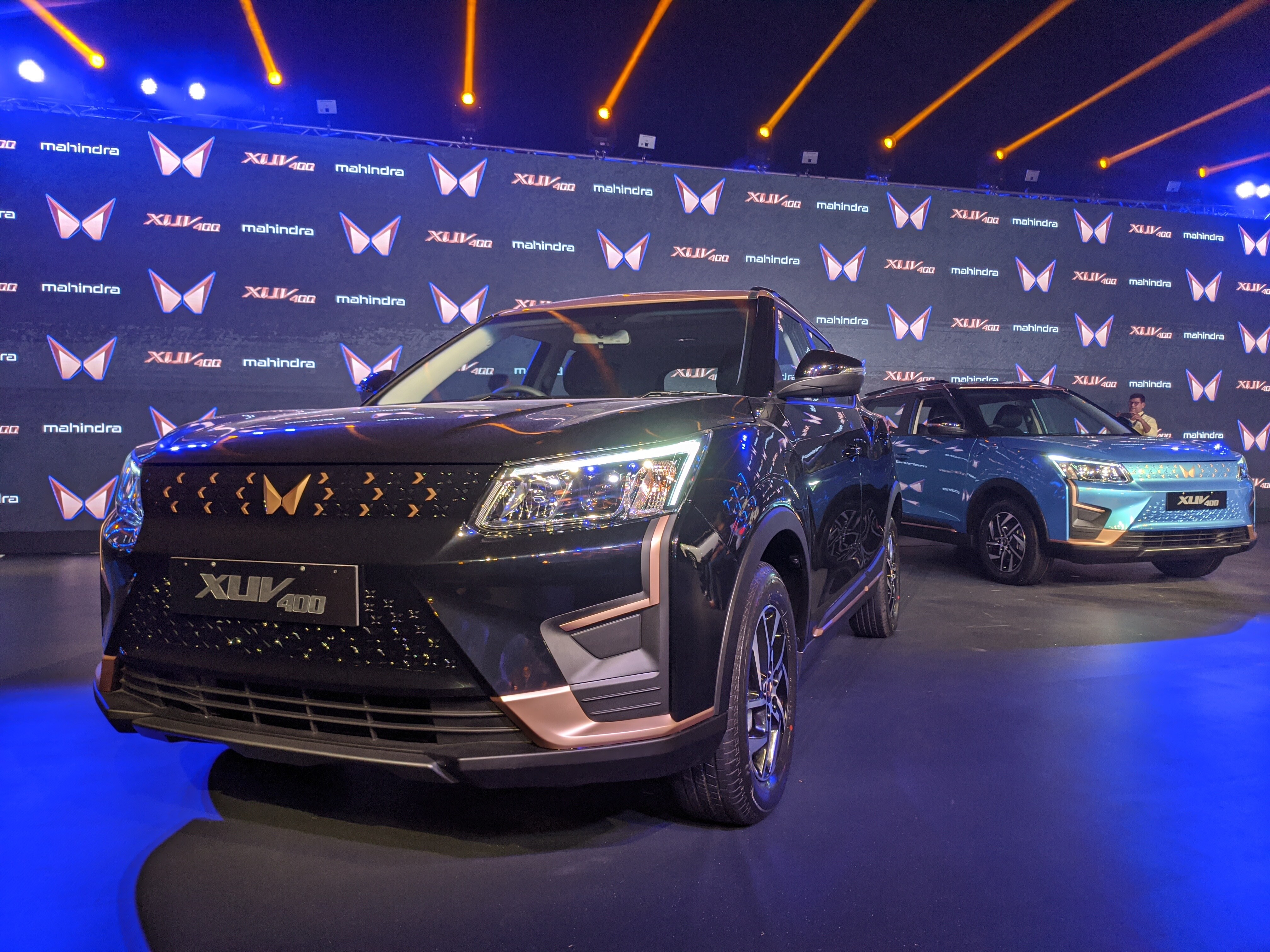
Mahindra & Mahindra Ltd. unveiled its electric sport utility vehicle XUV400 on Thursday, marking its entry into the nascent yet closely watched space.
“Our strategy is to create a market because it's a non-existent market right now,” Rajesh Jejurikar, executive director of auto and farm sector at M&M, said.
The electric vehicle is likely to compete with Tata Motors Ltd.'s Nexon EV or the Nexon EV Max.
With penetration of electric vehicles still at lower levels, the company said it is looking to drive higher penetration instead of grabbing market share from competitors.
However, the XUV400 with a 39.5 kilowatt hour battery, giving a range of 456 km, is likely to be priced higher than the Nexon, which offers a range of 312 km with a battery of 30.2 kilowatt hour.
The Nexon EV Max, the upgraded version of the Nexon EV, comes with a range of 437 km and is powered by a battery of 40.5 kilowatt hour.
Production of the vehicle will be ramped up from next month, while deliveries will start towards the end of January, the company's management said at the unveiling.
The price of the vehicle will also be revealed in early January, after getting feedback on the product from consumers through test drives and showroom displays, the company said.
"With a product like the Nexon, Tata Motors is way ahead in terms of reliability, durability, right word of mouth, proven mileage and charging station network along with dealer understanding," Puneet Gupta, director at S&P Global Mobility, said.
But Mahindra's XUV400 will bring them closer to the customer base and help in gaining a lot of on-ground feedback, which can be utilised in improving the products, he said.
They will be able to gauge the challenges, what the consumer wants and how the product is reacting to various adverse conditions, Gupta said.
M&M expects that a quarter of its total SUV sales will be electric by 2027. It has already unveiled its plans to launch five electric sport utility vehicles. The first four will be launched between 2024 and 2026, while the launch timeline of the fifth vehicle hasn't been shared yet.
The five SUVs will include the XUV.e8 and the XUV.e9 under the existing XUV badge, with a twin-peak logo in copper. The rest will be under a new electric-only brand ‘BE'—the BE.05, BE.07 and BE.09.
"They based XUV400 on XUV300 to make it affordable, given the small size and to roll it out faster since it's based on an already existing platform, instead of working on a new platform," Gupta said.
According to him, being a major diesel player, it's important for them to get into electric vehicles as fast as possible. "You never know how the scenario for diesel vehicles will change amid increased focus of government on reducing emissions," he said.
Mahindra plans to invest $1 billion (about Rs 8,000 crore) on its electric vehicle business between FY24 and FY27. In July, it raised Rs 1,925 crore from U.K.'s development finance institution British International Investment for a new EV arm.
Rivals Hyundai Motor India Pvt. and Tata Motors Ltd. have already announced plans to launch multiple battery-powered models over a similar period, as Indian automakers firm up plans to transition towards electric mobility.
However, India's largest carmaker Maruti Suzuki India Ltd. is placing its bet on hybrid vehicles over electric ones.
(Corrects an earlier version that mentioned incomplete name of S&P Global Mobility.)

-
Signature Play: The Classic Cocktail Is Dead. Or Is It?

Classic cocktails are disappearing from India's cocktail menus. But they're still being ordered, taught to bartenders and borrowed from. So, who's really having the last drink?
-
A New Samvat Wishlist: Inclusive Prosperity And Human Development
India has strengthened its economic foundations through infrastructure, digital access and enterprise. Its next growth chapter must deepen productivity, create better livelihoods and widen participation in prosperity.
-
Love, Sex Aur Dhokha: The Audacious Plot To Spy On Jensen Huang
A Taipei dinner, a Singapore chip buyer and a suspected Chinese asset: inside the alleged spy operation that got close to NVIDIA's Jensen Huang.
-
Ten Things I Learnt This Samvat
Patience can be a trap. Cheap stocks can stay cheap. Leverage can wipe you out. What did Samvat 2082 teach us? Niraj Shah writes on 10 lessons from the year gone by.
-
Talking Points This Week: Tech Nerves, FII Buying, And A Faraway Banking Shock
The global markets are not shining this Diwali. The exception in the large markets is, India.
-
Midterm Rally Lasted A Day. The Hard Reality Of A Divided US May Last Two Years | Opinion
Between a contested AI boom, a debt ceiling that arrives in 2027 and a president with every incentive to act alone, the next two years may prove more volatile than the first day's rally suggests.
-
Blue Wave Will Derail the AI Trade but Won't Dismantle the AI Era | Unhedged Position
The Democrats' sweep of the US Congress will see politics collide with economic forces both over the long and short term.
-
It's Time To Take The GST Council's Bet On Trust Global
Payment records can prove India's services exports, and clear, proportionate rules can bring foreign digital sellers into the tax net.
-
Opinion | India at 38: From Innovation Overperformer to Innovation Powerhouse
India now has 453 VC-backed deep science startups, 18 of them late-stage, after 117 percent growth since 2020. Laurus Labs, at USD 9.3 billion, is the most valuable deep science company in any middle-income economy outside China.









